
Net 30 Invoicing: A CFO's Guide to Cash Flow Control
A guide to mastering net 30 invoicing. Learn to reduce DSO, improve cash flow, and leverage AR automation for faster, more predictable payments.
Net 30 invoicing is the default payment term in business-to-business commerce. It means full payment is due 30 calendar days after the invoice date.
For a finance operator at a professional services firm, this term is a constant trade-off between securing revenue and managing working capital.
Understanding how to control the net 30 cycle is fundamental to financial stability.
The Strategic Impact of Net 30 on Working Capital

In professional services, offering net 30 is a standard operational requirement. It removes payment friction for large clients with structured procurement processes.
However, this standard practice creates an immediate cash flow gap. You deliver work and incur payroll costs today, but the cash will not arrive for at least 30 days.
This gap directly impacts your cash conversion cycle and requires disciplined financial management.
Quantifying the Cash Flow Gap
Consider a $50,000 invoice issued on the first of the month. That capital has already been spent on salaries and overhead. With net 30 terms, the $50,000 is an account receivable, not cash.
For a finance operator, net 30 isn't a passive deadline. It is an active measure of how much working capital you are willing to deploy to finance your clients' operations. Each invoice represents a short-term, interest-free loan to your customer.
The 30-day window became the B2B standard as a practical compromise, giving buyers time to process payments and suppliers a reasonable timeline for cash return.
Why Net 30 Became the Default
The term balances risk and opportunity, creating a predictable framework for both parties.
- For Buyers: A 30-day term provides the necessary time to route an invoice through internal approvals and payment runs without disruption.
- For Sellers: Offering the most common payment term makes your firm an easy choice, particularly for large organizations with rigid procurement policies.
Mastering net 30 is not about eliminating it; it is about controlling it. This requires a system that ensures consistency, minimizes delays, and turns accounts receivable into a predictable source of cash.
The Hidden Costs of Standard Net 30 Terms

While net 30 is often non-negotiable for winning enterprise work, finance leaders must account for the inherent risks that directly impact the balance sheet.
The most immediate effect is on Days Sales Outstanding (DSO). Extending 30-day terms means floating your business for at least a month, assuming perfect on-time payment.
In practice, DSO for professional services firms often drifts to between 45 and 55 days. This delay is a direct drag on working capital.
How Much Working Capital Is at Risk?
Consider a $5 million professional services firm invoicing approximately $417,000 per month. The choice of payment terms dictates the amount of cash tied up in operations.
- Net 15 Terms: The firm has ~$208,500 in receivables at any given time.
- Net 30 Terms: This figure doubles to $417,000.
That $208,500 difference is the opportunity cost of offering standard terms. It is working capital financing your client’s operations instead of your own.
The Operational Drag of Manual Collections
Beyond the direct cash impact, net 30 invoicing introduces hidden costs that erode profitability. These are the costs of the manual labor required to manage a 30-day collections cycle.
A firm’s accounts receivable process is either a source of predictable cash flow or a source of persistent operational friction. With net 30, the default is often friction unless a clear system is in place.
Manual collections consume finance team resources with low-value tasks: sending reminders, making calls, and reconciling payments. Learn more about the true cost of AR inefficiency in professional services.
The Strategic Price of Slow Payments
The longer an invoice remains unpaid, the probability of non-collection increases. Bad debt risk is a direct threat to the bottom line. Once an invoice ages past 90 days, the likelihood of full recovery drops significantly.
This problem is amplified as large buyers push for net 60 or net 90 terms, using their suppliers as an informal line of credit.
This cash squeeze constrains your firm’s ability to:
- Invest in growth: Hire key personnel or launch new service lines.
- Maintain reserves: Build cash buffers for economic uncertainty.
- Act on opportunities: Execute strategic initiatives.
This is why firms are implementing accounts receivable automation. A systematic approach to outreach and collections mitigates the hidden costs of net 30 invoicing and restores control over financial health.
Structuring Invoices and Contracts for Control

Control over accounts receivable begins with the client engagement structure, long before an invoice is issued. The contract and invoice are the foundational defense for predictable cash flow.
A vague invoice invites payment delays. It provides a client's AP department with a valid reason to de-prioritize it. Each invoice must be a clear, unambiguous demand for payment.
The objective is to eliminate any potential for questions. An inquiry from a client means the invoice has already introduced friction into the payment process.
Essential Invoice Components for Prompt Payment
To ensure timely payment, an invoice must be easy for a client’s internal systems to process. A single missing field can stall payment for weeks.
A common failure point is a missing Purchase Order (PO) number. For large companies, its absence renders an invoice invisible to their payment systems.
This checklist outlines the non-negotiable components that minimize friction.
Component | Purpose | Example |
|---|---|---|
Unique Invoice Number | Essential for tracking and reconciliation on both sides. | INV-2024-00123 |
Clear "Bill To" Information | Ensures it reaches the right legal entity and department. | Acme Corporation, Attn: Accounts Payable |
Purchase Order (PO) Number | Often a hard requirement for payment processing in larger firms. | PO-98765 |
Explicit Payment Terms | Leaves no room for interpretation about when payment is due. | Net 30 |
Itemized Services/Products | Details what the client is paying for, preventing disputes. | Project Alpha: Phase 2 Deliverables - $10,000 |
Clear Payment Instructions | Makes it easy for the client to pay you. | ACH Routing: XXXXX, Account: XXXXX |
Including these details is a core part of building a functional payment process. This client invoicing project illustrates how complex invoicing is handled in practice.
Fortifying Your Position with Contractual Language
An invoice is a request for payment. A contract provides the authority for that request. Strong contractual language establishes expectations and provides a legal framework for enforcement.
An invoice tells a client what to pay. The contract tells them why they must, and what happens if they don't. This framework is the basis for a disciplined collections process.
Effective contracts move beyond "net 30" to proactively address potential failures. This includes clauses for late fees, suspension of work, and dispute resolution. Review these procedures for accounts receivable that work for a solid foundation.
Your Master Services Agreement (MSA) should include specific protective clauses.
- Late Payment Penalties: Specify an interest charge on overdue balances, such as 1.5% per month, to create a financial incentive for on-time payment.
- Right to Suspend Services: State that work will be paused if an invoice is unpaid for a defined period, such as 60 days past due.
- Dispute Resolution: Define a process for handling charge disagreements, preventing a client from withholding an entire payment over a minor disputed item.
By embedding these controls into contracts and ensuring invoices are precise, you convert net 30 invoicing from a source of financial uncertainty into a reliable component of your cash flow engine.
The Metrics That Define AR Performance
For a finance operator, what isn't measured cannot be managed. Offering net 30 invoicing terms requires disciplined data analysis to identify what is working and what is failing.
Subjective assessments of collections are insufficient. You need quantitative indicators that act as early warnings before problems impact cash reserves.
The two most critical metrics are Days Sales Outstanding (DSO) and the Accounts Receivable Aging Report.
Days Sales Outstanding: The Cash Flow Velocity Metric
Days Sales Outstanding (DSO) measures the average number of days required to convert services into cash. A low DSO indicates efficient collections. A rising DSO is a primary warning that your cash conversion cycle is deteriorating.
The calculation is straightforward:
DSO = (Total Accounts Receivable / Total Credit Sales) x Number of Days in Period
If your firm holds $500,000 in receivables at the end of a quarter with $1,500,000 in credit sales, your DSO is approximately 30 days. This indicates that clients, on average, are adhering to payment terms.
If that DSO increases to 45 or 55 days, it signals a systemic problem tying up working capital. Monitoring the DSO trend provides a high-level view of your AR portfolio's health.
***
Visual Idea 1: DSO Trend Analysis Chart. A clean line chart shows DSO rising from 33 to 48 days over six months. A horizontal red line at 45 days marks the "Warning Threshold," indicating a negative performance trend that requires intervention.
***
The AR Aging Report: A Diagnostic Tool
While DSO measures overall velocity, the AR Aging Report provides a granular diagnosis. It segments total AR into time-based buckets based on invoice due dates.
Standard buckets include:
- Current: Invoices within 0-30 day terms.
- 1-30 Days Past Due: Initial payment delays.
- 31-60 Days Past Due: Increased risk to cash flow.
- 61-90+ Days Past Due: High probability of becoming bad debt.
For a firm on net 30 terms, a healthy aging report should have over 85% of its receivables in the "Current" bucket. When a significant percentage moves into the "31-60 Days" category, it signals a need for immediate action.
This report enables active management. It identifies which clients are chronically late, which invoices are stalled, and where internal processes are failing. It is a playbook for collections, not just a report.
***
Visual Idea 2: Cinematic Focus on AR Aging Report. An image focused on a controller's monitor displaying a clear AR Aging Report. The "61-90+" column is highlighted in red. A sticky note on the monitor reads, "ACTION: Call Client X & Y." The mood is one of focused control.
***
Pairing high-level DSO analysis with a granular AR aging review provides a complete picture of accounts receivable. This data-driven approach is essential for any firm serious about improving cash flow. It turns AR from a source of risk into a predictable financial asset, a key outcome of effective tools like QuickBooks AR automation or specialized AR software for professional services.
Systematizing AR with Automation
For professional services firms exceeding $3M in revenue, manual AR processes become a significant operational risk. Managing net 30 invoicing with spreadsheets and calendar reminders is inefficient and a direct threat to cash flow.
This approach also allocates your most skilled finance personnel to low-value, repetitive tasks.
The solution is not more manual effort but a smarter operational layer. Accounts receivable automation introduces discipline and consistency to the collections process. Modern AI AR automation platforms manage the entire collections workflow, from intelligent invoice delivery to automated cash application.
Identifying Key Automation Opportunities
The primary value of automation is its ability to execute routine tasks with perfect consistency, freeing human operators to manage exceptions.
An intelligent system can differentiate between client types. A long-term, strategic partner may receive a gentle, relationship-focused reminder. An account with a history of late payments might trigger a more direct, multi-channel follow-up cadence.
This is a targeted approach designed to reduce DSO without damaging client relationships. The objective is to make payment simple, timely, and professional.
Measuring the Impact on Cash Flow
The business case for automation is quantifiable and appears directly on financial statements. The goal is to tighten the cash conversion cycle and improve revenue predictability.
- DSO Reduction: Firms adopting AR automation typically see a 10-25% reduction in DSO within 6-9 months. For a $10M firm with a 50-day DSO, this unlocks over $270,000 in cash.
- Efficiency Gains: Automation can eliminate 60-80% of the manual labor associated with collections, such as sending reminders and matching payments.
- Improved Forecasting: Systematic collections make cash inflow predictable, leading to more accurate financial planning and capital allocation.
This cycle of diagnosis, measurement, and action is fundamental to AR health.
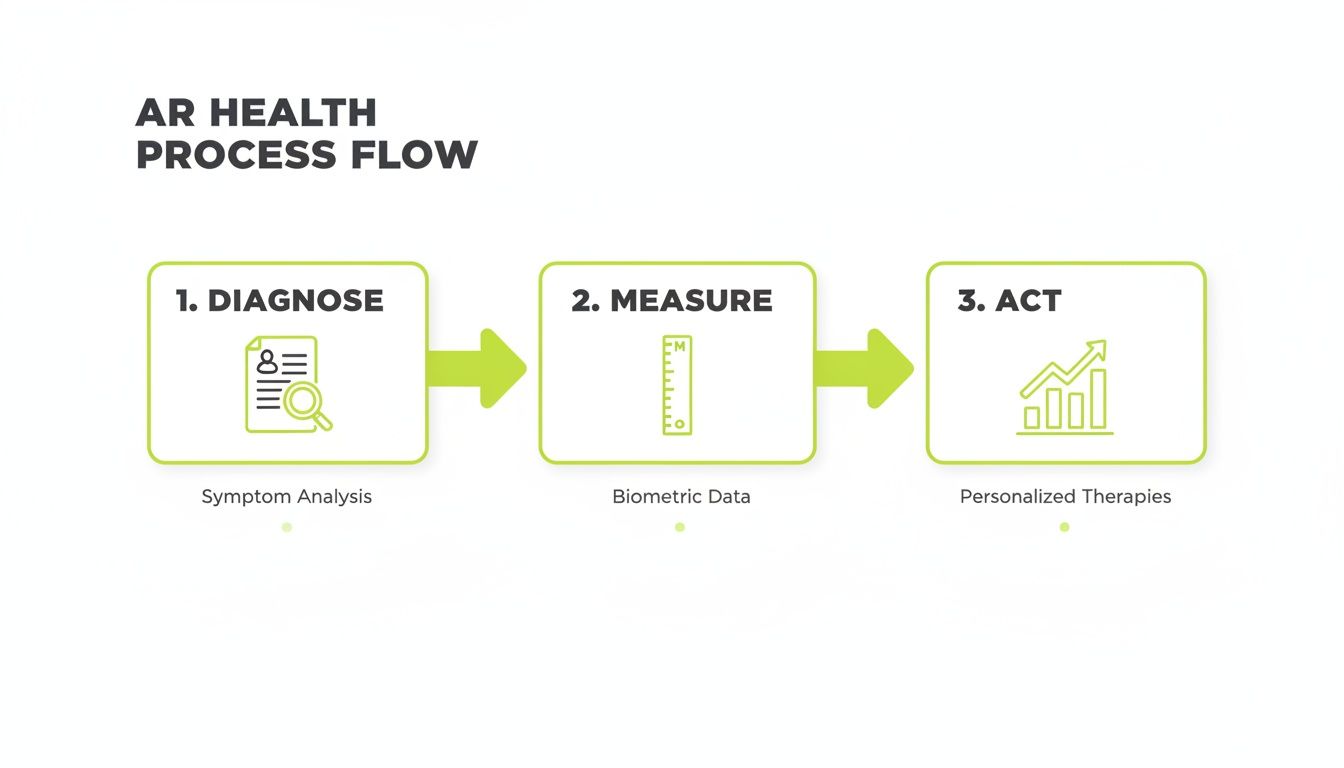
Effective AR performance results from shifting from reactive problem-solving to a proactive, data-driven system of continuous improvement.
From Manual Process to Strategic Control
While net 30 invoicing is a long-standing B2B convention, manual management is a growing liability.
The right AR software for professional services is not just a reminder tool; it is a command center. It integrates with accounting platforms like QuickBooks, synchronizing data without manual entry.
The purpose of automation isn’t to replace a finance team, but to empower it. It removes repetitive tasks, providing the tools to focus on strategic functions like risk analysis and client financial relationship management.
By implementing this technology, a firm elevates its AR function from a reactive cost center to a proactive asset that directly contributes to financial stability. Explore the tangible accounts receivable automation benefits for a deeper analysis.
Building a Predictable Cash Flow Engine
Mastering net 30 invoicing is about building a predictable and efficient financial operation. This requires integrating clear contracts, precise metrics, and intelligent automation into a single, cohesive system.
When executed correctly, AR evolves from a reactive collections function into a strategic asset. You move from chasing overdue payments to controlling your firm's cash flow.
From Reactive Collections to Proactive Strategy
A predictable cash flow engine is the result of a deliberate shift from a manual, passive approach to a proactive, data-driven one. You stop reacting to late payments and start analyzing patterns to mitigate risk.
This requires an understanding of how to revenue forecast accurately, a process directly impacted by payment terms like net 30. This foresight enables better resource allocation based on known cash inflows.
The core components of this shift are:
- Systematized Outreach: Consistent, automated follow-up cadences that adapt to client payment behavior, ensuring no invoice is overlooked.
- Data-Driven Decisions: Using DSO and aging reports as active management tools to focus collection efforts and correct process failures.
- A Modern Client Experience: Providing a simple payment portal that removes friction from the client's side of the transaction.
Integrating People, Process, and Technology
Technology accelerates the process, but the system relies on skilled personnel and disciplined workflows. Tools like AI AR automation handle repetitive tasks, while your finance team applies judgment to complex exceptions.
Accounts receivable is no longer a back-office function; it is a critical component of the firm's financial architecture. An efficient AR system translates directly to a stronger balance sheet and increased operational agility.
This integrated approach enables your firm to manage a high volume of net 30 invoicing without administrative drag. Combining technology like QuickBooks AR automation with smart internal workflows creates a scalable system that supports business growth.
Key Operational Questions on Net 30
These answers address practical questions that finance operators face when managing net 30 terms.
When Should We Offer Terms Shorter Than Net 30?
Shorter terms like Net 15 or 'Due on Receipt' should be used surgically to mitigate specific risks. Apply them to new clients without a payment history or for smaller, one-off projects.
For a client that consistently pays late, shifting to shorter terms on future work is a direct method to pull cash flow forward. Be prepared for pushback from larger clients with standardized payment cycles.
What Is the Best Way to Handle Chronically Late Payers?
First, remove emotion and inconsistency from the process. Use accounts receivable automation to ensure follow-ups are persistent and professional. Second, enforce the late-fee policy outlined in your contract.
For repeat offenders, a systemic fix is required. This may involve requiring partial payment upfront or formally shortening their payment terms. A disciplined, non-emotional approach is the only way to correct the behavior and protect your working capital.
A chronically late-paying client isn't just a cash flow problem; they're an operational drag. The goal is to be exceptionally clear and consistent, using automation to enforce the rules you've already set.
How Can We Move Beyond Basic QuickBooks AR Reminders?
QuickBooks provides a starting point, but scaling firms require more sophisticated tools to reduce DSO. A dedicated AR software for professional services that integrates with your accounting system adds critical capabilities.
These tools offer features native QuickBooks AR automation lacks:
- Intelligent Outreach: Tailors the timing, channel, and tone of reminders based on a client's risk profile and payment history.
- Modern Payment Portals: A self-service portal for ACH or card payments can reduce payment times by 10–20 days.
- Automated Cash Application: Eliminates the manual, error-prone task of matching payments to invoices, freeing up team resources for analysis.
These capabilities provide the control needed to improve cash flow and convert AR management into a strategic advantage.
--- Resolut automates AR for professional services—consistent, accurate, and human. Learn more at https://www.resolutai.com.