Dunning Letters: A Practical Guide to AR Control for Professional Services Firms
Discover what is dunning letter and how a structured AR process boosts cash flow, lowers DSO, and protects client relationships.
A dunning letter is a communication sent to a client about an overdue invoice. But framing it as a mere demand letter overlooks its strategic function.
It is a critical instrument for financial control—a methodical process designed to manage accounts receivable, reduce Days Sales Outstanding (DSO), and protect cash flow without degrading the client relationship.
This is not about chasing payments. It's about implementing a disciplined financial system.
Defining the Dunning Process

For professional services firms, a dunning letter is not an aggressive tactic. It is an operational necessity.
It’s a measured, sequential communication that professionally signals an invoice has passed its due date. Its function is to recover overdue revenue systematically, which directly shores up your firm’s financial health.
The term itself dates to the 17th century, an accounting term for demanding payment of a debt. Today, the modern dunning process is a systematic, professional approach for managing overdue accounts. You can learn more about the history of dunning communications.
Purpose and Financial Impact
The dunning process must be viewed as a matter of operational precision. A well-managed system is not just about collections; it’s about maintaining predictable cash flow.
An effective dunning strategy ensures your firm's working capital remains fluid and available for growth, not locked in aging invoices.
The effect on key financial metrics is direct and measurable:
- Reduced DSO: An effective dunning sequence can shorten the average collection period. For a firm with $10M in annual revenue, cutting DSO by just five days frees up nearly $137,000 in cash.
- Improved Cash Flow: Consistent, professional follow-up turns outstanding invoices into accessible capital, stabilizing your financial position.
- Operational Efficiency: Systematizing this process with accounts receivable automation frees your finance team from manual follow-up, allowing a focus on high-value analysis.
A dunning letter is a fundamental component of your financial controls—a mechanism to protect your revenue with accuracy and professionalism.
***
Before creating templates, it is crucial to understand the components of an effective dunning letter. Each piece of information serves a specific function, from identifying the debt to outlining next steps.
Key Components of an Effective Dunning Letter
Component | Purpose | Example |
|---|---|---|
Clear Subject Line | States the context and purpose immediately. | "Invoice #12345 - Past Due" or "Reminder: Invoice #12345" |
Client & Company Information | Ensures the communication is directed to the correct entity. | Your Company Name & Address; Client's Name & Company Name |
Invoice Details | Provides all necessary information to identify the specific debt. | Invoice number, original due date, and the outstanding amount. |
Clear Call-to-Action | Tells the client exactly what to do next. | "Please submit your payment of $1,500 by [Date]." |
Payment Options | Reduces friction by making payment simple. | Include a payment portal link, ACH instructions, or credit card options. |
Contact Information | Gives the client a clear path to resolve issues or ask questions. | "If you have questions, please contact Jane Doe at [email/phone]." |
Including these elements in every communication removes ambiguity and helps your firm maintain a professional, organized collections process.
***
The Financial Drag of Delinquent Accounts
Unmanaged accounts receivable is more than an administrative issue. It is a drag on growth.
Every dollar tied up in an overdue invoice is a dollar that cannot be invested in talent, technology, or business development. This is a direct strain on working capital and a significant opportunity cost.
The financial impact is immediate. High delinquency rates force reliance on lines of credit, driving up financing costs and eroding margins. For a $10M firm, even a small percentage of severely overdue invoices can lock up capital that should be fueling the business.
Quantifying the Impact on Cash Flow
This problem is widespread. Recent industry data paints a stark picture. Dun & Bradstreet’s Q3 2023 report found that in some professional sectors, over 70% of accounts receivable dollars were more than 91 days past due.
This creates a ripple effect. Finance teams spend their time chasing payments instead of focusing on strategic work, which constrains the ability to scale.
A structured dunning process, powered by AR software for professional services, is not an administrative chore—it's a critical financial control.
A disciplined dunning process transforms accounts receivable from a reactive cost center into a predictable, strategic asset. It’s about controlling your capital, not just collecting it.
Many firms find that proven healthcare revenue cycle optimization strategies offer valuable lessons that apply well beyond medicine. The core principle is the same: build efficient, repeatable systems.
The True Cost of Inaction
Failing to build a systematic dunning process means accepting a higher Days Sales Outstanding (DSO) and unpredictable revenue.
The goal is to implement a system that is both persistent and professional, helping you secure payment without damaging client relationships. For more on this, see our guide on practical ways to increase cash flow for your business.
Effective accounts receivable automation, especially tools offering QuickBooks AR automation, provides the framework to execute this with precision. It is about ensuring every invoice is managed, not just sent.
Building A Strategic Dunning Sequence
An effective dunning process is not a single event. It is a carefully orchestrated sequence. Think of it as a predictable system that escalates with precision, designed to prompt payment while preserving the client relationship. This is not about aggression; it is about bringing control and clarity to your finances.
The goal is to create a repeatable framework that nudges a client toward resolution. Each stage adjusts its tone and urgency based on the age of the invoice, ensuring a proportional and professional response.
For professional services firms, where relationships are paramount, this balance is non-negotiable. You need a sequence firm enough to improve cash flow but professional enough to maintain client trust.
The Four-Stage Escalation Framework
A structured approach typically involves four distinct stages, each with a specific objective. This progression ensures you apply the right pressure at the right time.
- Stage 1: The Gentle Reminder (1-15 Days Past Due): Assumes the missed payment was an oversight. The tone is helpful and collaborative. The goal is friction-free resolution.
- Stage 2: The Firm Notice (16-30 Days Past Due): The tone shifts to a direct, professional notice. The message clearly states the invoice is overdue and reiterates the payment deadline, emphasizing the need for prompt action.
- Stage 3: The Urgent Alert (31-60 Days Past Due): The communication signals increased seriousness. It may mention potential service interruptions or late fees as outlined in your agreement. The goal is to convey that inaction has consequences.
- Stage 4: The Final Demand (61+ Days Past Due): This is the last internal communication before potential escalation. The tone is firm and final. It states the outstanding balance and provides a hard deadline before the account is passed to a third party.
This structured process is critical, considering nearly 50% of B2B invoices in the U.S. become overdue. A dunning schedule aligned with aging reports at 30, 60, and 90 days helps you manage this reality.
The table below outlines how these stages work together.
Dunning Escalation Framework
Stage | Timing (Days Past Due) | Tone | Primary Objective |
|---|---|---|---|
1. Gentle Reminder | 1-15 Days | Helpful, collaborative | Resolve simple oversights |
2. Firm Notice | 16-30 Days | Direct, professional | Emphasize the due date |
3. Urgent Alert | 31-60 Days | Serious, consequential | Signal potential consequences |
4. Final Demand | 61+ Days | Firm, final | Set a hard deadline before escalation |
This framework is about communicating with intent, protecting both your cash flow and client relationships.
From Sequence To System
Managing this sequence manually is prone to errors and inconsistency. This is where accounts receivable automation becomes a strategic advantage.
An intelligent AR platform can execute this sequence flawlessly, adjusting timing and tone based on client history, invoice value, and firm policies.
The flowchart below shows how unmanaged AR becomes a financial drag.
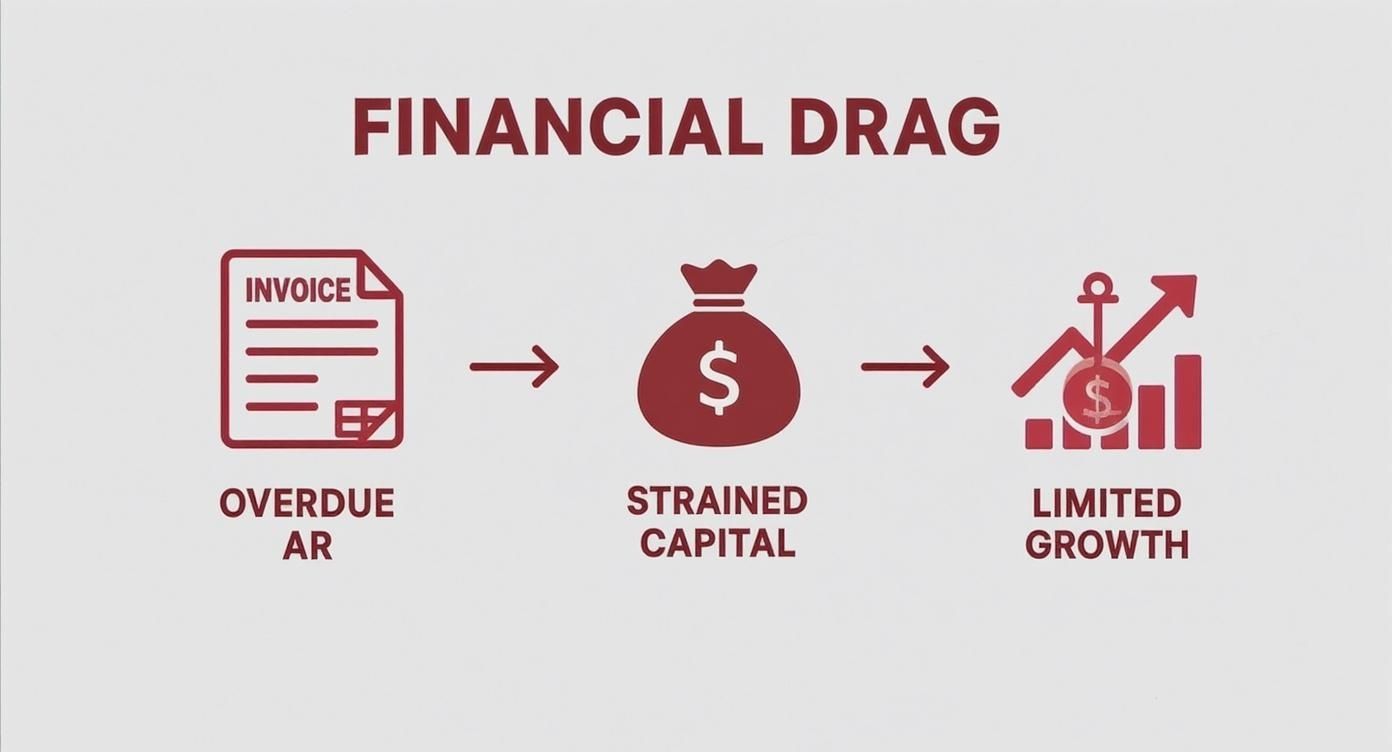
As you can see, overdue accounts directly strain capital, which in turn limits investment in growth. It’s a quiet killer of momentum.
If you’re looking to improve your AR process, learning effective strategies for collecting unpaid invoices can provide a broader operational context.
A well-defined dunning sequence—powered by smart AR software for professional services—transforms collections from a reactive chore into a proactive system that protects your firm’s financial health.
Dunning Process Dos and Don'ts
Executing a dunning sequence requires a balance of persistence and professionalism. The line between recovering an overdue invoice and damaging a client relationship is thin.
For finance leaders, setting clear rules of engagement is essential for maintaining control over the entire AR process. These principles ensure your efforts are effective, compliant, and reflect the standards of your firm.
The Dos: Maintain Control and Accelerate Cash Flow
Following a structured set of best practices transforms dunning from a reactive chore into a strategic asset that accelerates payment.
- DO personalize your communications. Use the contact’s name and reference specific invoice numbers. A personal note shows you are paying attention and increases the likelihood of a response.
- DO provide clear, multiple payment options. Make it easy for clients to pay. Include a direct link to a payment portal, along with ACH and credit card options. Less friction means faster payment.
- DO maintain a human touch, even with automation. Automation should handle repetitive work, not remove humanity from communications. Set rules so high-value clients receive a personal call. Relationships cannot be automated.
- DO document every interaction. Log every email, call, and letter. This creates a clear audit trail, which is critical if an account requires legal action. It also provides data to refine your process.
These steps are the foundation of a repeatable system. For a closer look, see these proven procedures for accounts receivable that work.
The Don'ts: Reduce Risk and Protect Relationships
Avoiding common mistakes is as important as following best practices. A few wrong moves can turn an overdue invoice into a legal issue or a lost client.
An effective dunning process is about consistency and professionalism. Every communication should reflect your firm’s discipline, not your frustration.
- DON'T use accusatory or threatening language. Phrases like "you have failed to pay" put clients on the defensive. Use neutral language like, "this invoice remains outstanding." Focus on solving the problem, not placing blame.
- DON'T send a notice without verifying payment. Sending a dunning letter for a paid invoice damages relationships. Ensure your accounting software and AR systems are synced in real-time.
- DON'T overlook legal and compliance rules. Regulations like the Fair Debt Collection Practices Act (FDCPA) have strict guidelines. Ignoring them creates unnecessary legal risk.
By avoiding these traps, you ensure your AR process remains a professional and effective financial control.
Automating AR with Intelligent Orchestration
A manual dunning process is better than none, but it is constrained by human limitations. Your team has a finite capacity for follow-up. This is where modern accounts receivable automation becomes an operating system for your firm.

Effective automation is not about sending robotic reminders. It’s about intelligent orchestration—using technology to execute a nuanced, personalized dunning strategy at scale with perfect consistency.
Intelligent AI AR automation acts as a conductor for your accounts receivable, adjusting the approach based on real-time data and client-specific context.
Moving Beyond Simple Reminders
Most automation tools just schedule emails. Intelligent orchestration analyzes client data to determine the right action at the right time, tailoring the dunning sequence accordingly.
This approach weighs multiple factors to personalize outreach:
- Client Payment History: A client with a history of late payments receives a firmer sequence than a long-term partner with a perfect payment record.
- Invoice Value: A $50,000 invoice requires a different level of attention—perhaps a direct phone call—than a $500 one.
- Communication Preferences: The system learns whether a client responds better to email, formal letter, or a call, then adjusts its strategy.
This data-driven method focuses AR efforts where they will have the greatest impact, which is how you reduce DSO. For instance, one firm saw a 19% reduction in DSO within 90 days of implementing an intelligent dunning solution, freeing their team from manual follow-up.
Orchestration and Measurable Outcomes
This technology drives measurable financial results and provides operational leverage. By orchestrating a mix of emails, calls, and notices tailored to different client segments, you achieve consistency without losing the human element.
This directly impacts key financial metrics:
- Predictable Cash Flow: Automation smooths collections, making revenue forecasting more reliable.
- Reduced Operational Drag: It frees your finance team from repetitive tasks, allowing them to focus on credit risk, payment trend analysis, and strategic planning.
- Seamless Integration: Modern platforms offer native QuickBooks AR automation, ensuring dunning efforts are based on real-time payment data. This prevents dunning a client for a recently paid invoice.
Intelligent orchestration transforms AR from a manual task into a data-driven system for financial control. It’s about applying the right pressure, in the right way, at the right time.
This systematic approach is a cornerstone of effective financial management. To go deeper, explore our complete guide on receivable management services.
The goal is to create a dunning process that runs with machine-like precision but communicates with human awareness, improving financial health while protecting client relationships.
Measuring the Health of Your AR Process
Managing a collections strategy without clear metrics is ineffective. To improve cash flow, you must focus on the right key performance indicators (KPIs).
For finance leaders, this is about understanding the story behind the numbers. With the right KPIs, you can identify patterns in client payment behavior and measure the velocity of cash through your firm.
Core AR Health Metrics
These three metrics provide a clear picture of your collection efficiency and potential bottlenecks.
- Days Sales Outstanding (DSO): The average time it takes to collect payment after a sale. A lower DSO indicates that it takes a company fewer days to collect its accounts receivable.
- Average Days Delinquent (ADD): This metric measures the average number of days invoices are past due, providing a clear view of the severity of late payments.
- Collection Effectiveness Index (CEI): CEI measures a company's ability to collect its receivables during a specific period. A result closer to 100% indicates a highly effective collections process.
An optimized dunning sequence requires continuous review and adjustment based on performance data. This is where AR software for professional services provides its greatest value.
Pairing these diagnostics with automation transforms your AR department. You gain the insights to refine your dunning cadence, identify emerging risks, and ultimately improve cash flow.
With AI AR automation, every reminder, follow-up, and escalation is executed with precision, consistency, and a human touch.
A Few Common Questions
When Is It Time to Escalate to a Collections Agency?
This decision should be driven by a clear internal policy, typically after an invoice is 90-120 days past due and your final dunning communication has received no response.
Before escalating, weigh the invoice amount against the agency’s fees and the value of the client relationship. Your final internal notice should clearly state that agency involvement is the next step.
How Can We Automate Dunning Without Sounding Like a Robot?
Effective accounts receivable automation uses smart templates and segmentation to maintain a human touch.
You can create different communication styles for different client tiers. A strategic partner might receive a lighter, more collaborative reminder. You can also set rules that flag high-value accounts for a manual review before any automated communication is sent.
The goal is not to replace your team. It is to handle repetitive work with perfect consistency, freeing up your people to apply their judgment where it matters most.
What’s the Best Metric for Dunning Success?
Days Sales Outstanding (DSO) is a standard metric, but the Collection Effectiveness Index (CEI) provides a sharper view.
CEI is a cleaner metric. It isolates your team's ability to collect what's owed within a specific period, filtering out the noise from fluctuating sales or changing credit terms that can skew DSO. It tells you how well your dunning process is actually working.
Tracking CEI is the most direct way to measure the impact of your collections strategy.
--- Resolut automates AR for professional services—consistent, accurate, and human. Learn more at https://www.resolutai.com.