
Master Template for Debt Collection Letter in 2026
A CFO's guide to the template for debt collection letter. Find copy-ready examples, compliance tips, and AR automation software to reduce DSO.
Unpaid invoices are not a rounding error in a services firm. They create real cash drag, extend DSO, and pull senior people into avoidable follow-up on approvals, scope questions, and old billing decisions.
In practice, late payment usually starts upstream. The invoice lacks enough context. The client gets a reminder without a clear payment path. The project lead assumes finance has handled it, while finance assumes the relationship owner already stepped in. By the time someone sends a formal collection letter, the delay is already baked in.
That is why a template for debt collection letter use should sit inside a defined collections process. Teams that collect well do not rely on one generic document. They use a staged sequence with clear ownership, timing, and escalation rules. Early reminders protect the relationship. Mid-stage notices tighten deadlines and remove ambiguity. Final-stage letters document the file and prepare the account for legal review, hold decisions, or outside collection.
The template still matters. Wording affects response rates, dispute handling, and whether your team can enforce terms consistently across clients and offices. But a template on its own does not fix weak follow-up discipline or scattered account history.
If you need a stronger final-stage document, this demand letter template proven to get invoices paid is a useful companion. The list below looks at letter templates through an operator’s lens: where they fit, what control they give you, and whether they support a scalable A/R process instead of another manual workaround.
1. Resolut
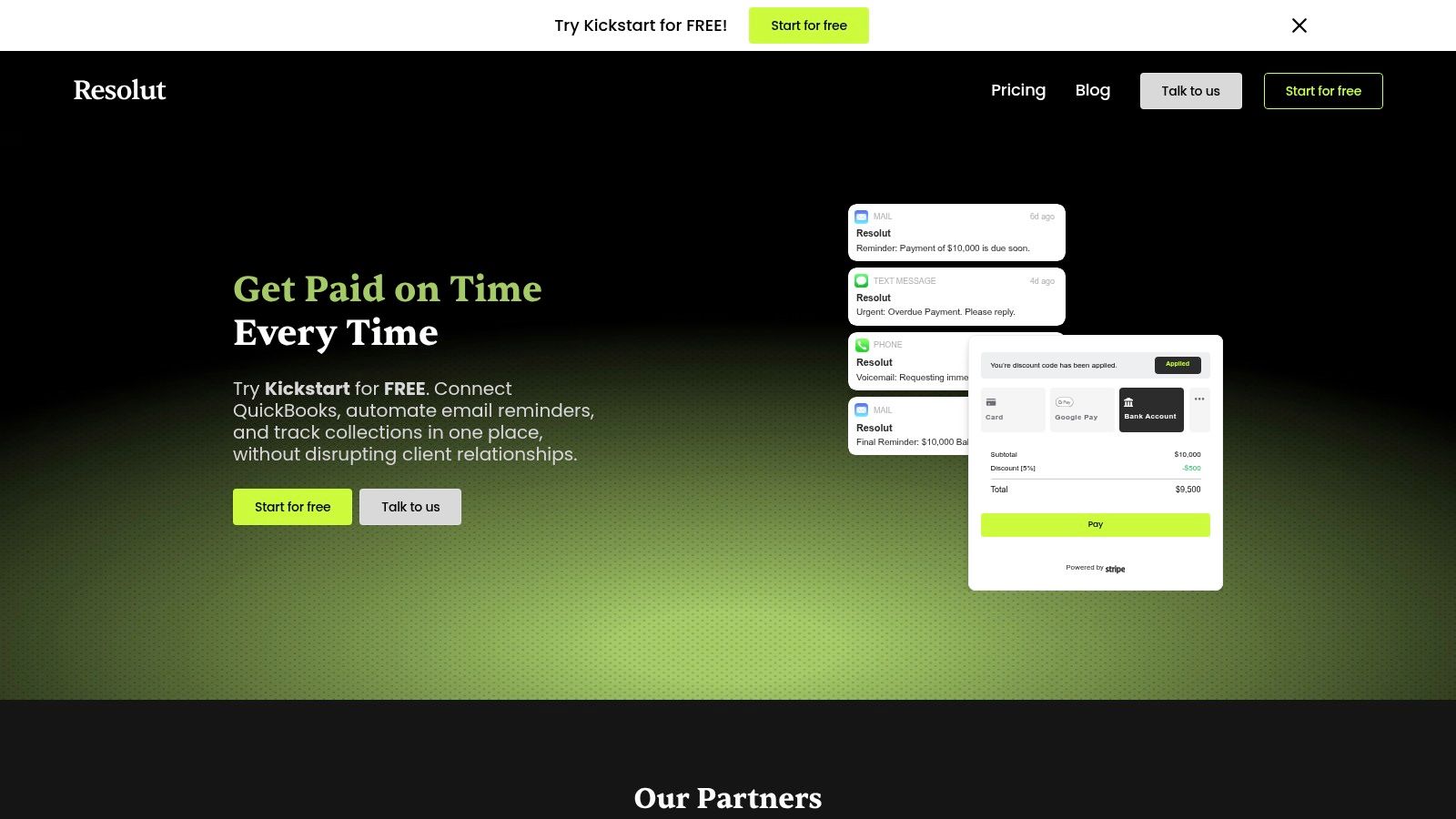
If you’re still thinking in terms of a standalone debt letter, Resolut changes the frame. It treats the template as one step inside a broader accounts receivable automation workflow, not the whole strategy. That matters for firms where collection delays often start before the letter stage, with weak invoice delivery, poor client follow-up, or no risk-based prioritization.
For a CFO or Controller, the value is operational control. You’re not just storing templates. You’re orchestrating billing, reminders, payment options, escalation, and cash application from one place through Resolut.
Where it fits best
Resolut makes the most sense when the problem is volume, inconsistency, or too much dependency on one AR person’s judgment. It combines collections outreach across email, SMS, phone, and voicemail with payment paths and escalation logic. That’s much closer to how overdue receivables get resolved than a Word file sitting in a shared drive.
This is also where AI AR automation becomes practical rather than theoretical. A system can flag at-risk invoices early, adjust cadence, and help teams move from “send something firm” to “send the right message on the right channel with context.”
Practical rule: If your team rewrites reminder language every month, your process isn’t standardized enough to scale.
What works and what to watch
There’s a reason digital-first outreach is now central to collections. SMS outreach in collections has shown a 45% higher response rate than email, with 98% open rates within 5 minutes. For firms trying to reduce DSO, a platform that combines formal letters with faster channels has a structural advantage over a template library alone.
A few trade-offs are worth being direct about:
- Best strength: Resolut connects outreach, payment, and follow-through. That’s stronger than using separate tools for letters, reminders, and reconciliation.
- Best fit: Teams that want QuickBooks AR automation, process discipline, and a clearer collections playbook without building one from scratch.
- Main caution: AI-driven escalation needs oversight. A law-firm-style final notice sent too early can damage a good client relationship if the account context is incomplete.
- Pricing reality: Public pricing detail appears limited beyond assumptions shown in its own materials, so larger teams will likely need a conversation to scope total cost.
If your current process depends on someone remembering when to send a firmer message, Resolut is the most complete operating model on this list.
2. PandaDoc Demand for Payment Letter Template
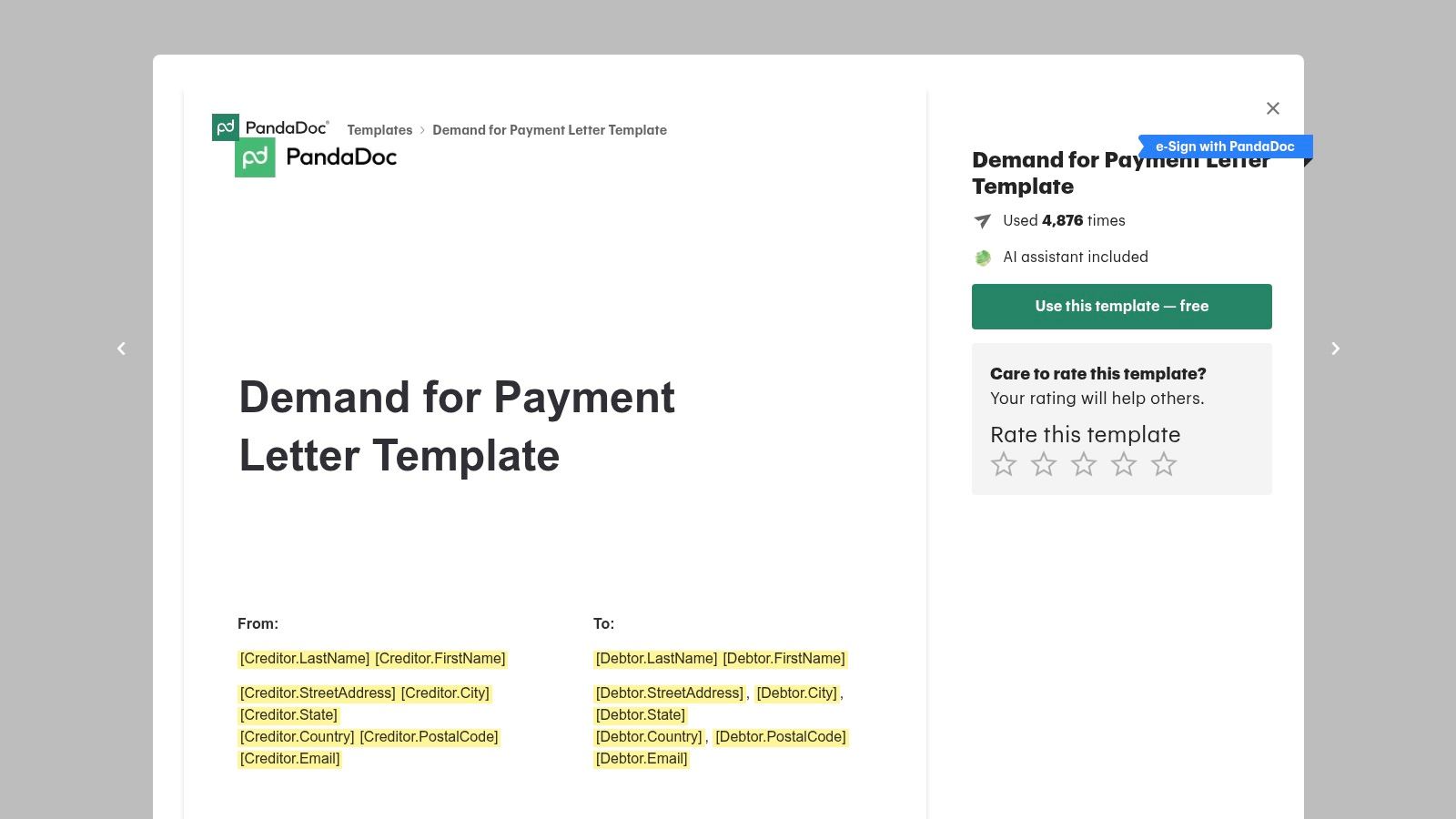
PandaDoc is a good middle-ground option when you want a cleaner, reusable template for debt collection letter workflows, but you’re not ready to overhaul your AR stack. The document experience is polished, and that matters more than people think. A sloppy collection letter signals internal disorder.
The main advantage here is structure. You can standardize due dates, payment language, supporting details, and related follow-up templates without asking your team to build formatting from scratch in Word.
Why finance teams like it
PandaDoc works well for firms that already manage proposals or agreements in document tools and want collections language to look equally controlled. It supports a staged process because you can pair the payment demand letter with past-due invoice notices and payment-plan versions.
If your team needs help tightening wording before automating anything, this guide on how to write collection letters is a practical reference alongside PandaDoc’s template.
- Good use case: Standardizing reminder and demand documents across multiple offices or partners.
- What’s strong: Guided editing, clean formatting, reusable sections, and e-signature workflows if you already use the platform.
- What’s weaker: It still centers on the document itself. It doesn’t solve collections sequencing, channel strategy, or payment reconciliation on its own.
Clean templates help. But if nobody owns send timing and escalation logic, the format won’t rescue the outcome.
PandaDoc is a document-first answer. For some firms, that’s enough. For firms trying to improve cash flow systematically, it’s usually one layer of the stack, not the whole solution.
3. Rocket Lawyer Demand for Money Owed
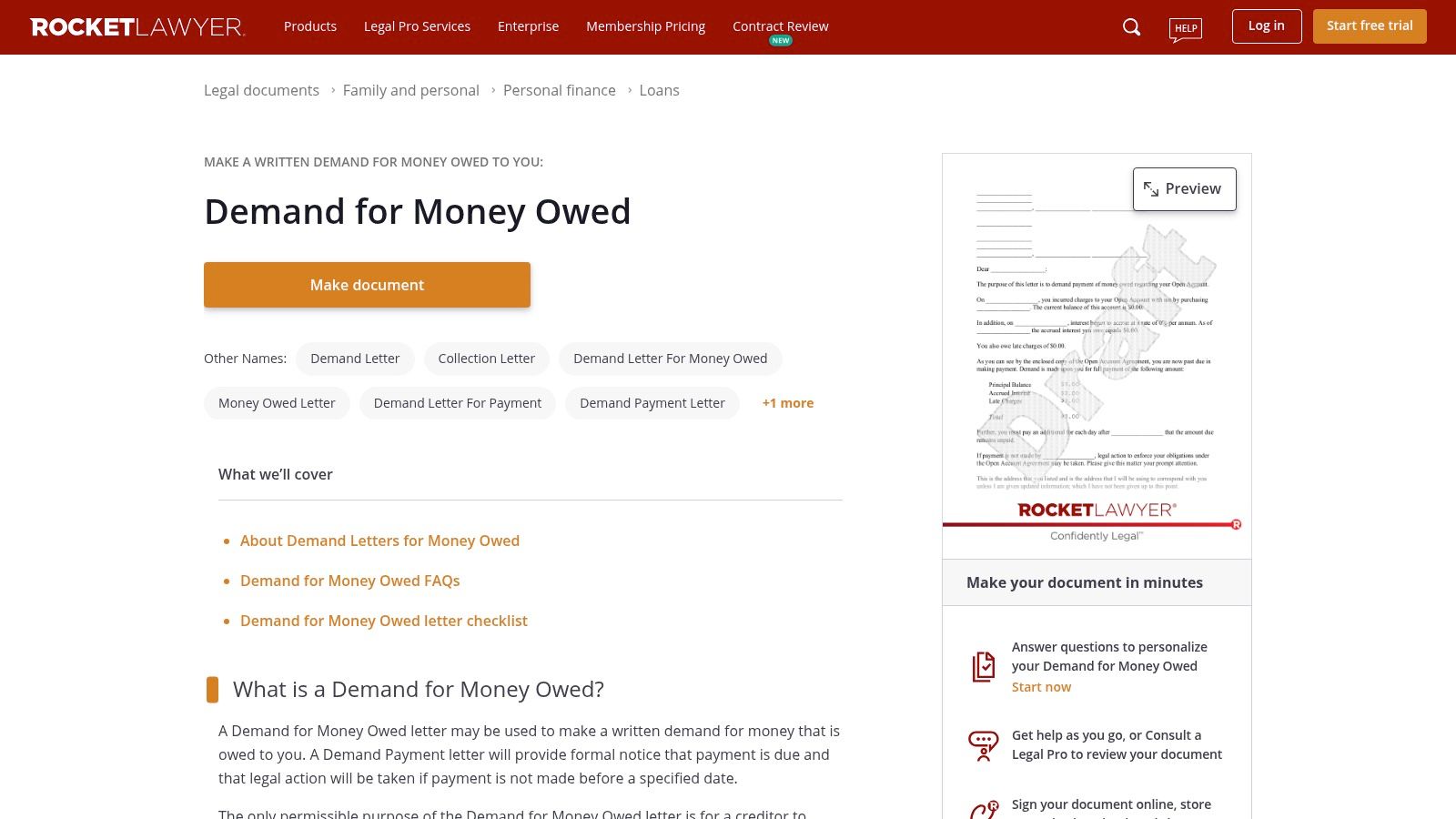
Rocket Lawyer is useful when the letter needs more legal framing than operational polish. Its builder is dynamic, and the path to legal review is easier than what you get from a generic business template site.
That makes it a strong option for disputed balances, broken payment plans, or situations where you may need counsel involved quickly. It’s less compelling for routine first and second notices.
Where it earns its place
Debt collection letters in the U.S. don’t just need firmness. They need compliance discipline. Under CFPB Regulation F, collection letters must preserve the statutory language tied to the debtor’s 30-day dispute rights, without changes that “overshadow” those rights. If your issue touches consumer debt or third-party collection rules, legal precision matters.
Rocket Lawyer’s advantage is that it keeps the legal context close to the template. You don’t have to draft, then separately research whether your wording created risk.
- Best for: More formal demand letters and edge cases where legal review may follow.
- Useful feature: Embedded legal guidance and the option to request attorney input.
- Trade-off: The tone can get heavy fast. For an otherwise good client who just needs a crisp reminder and payment path, it may feel too adversarial.
I’d use Rocket Lawyer later in the sequence, not early. It’s a stronger escalation document than it is a relationship-preserving reminder.
4. LawDepot Demand Payment Letter
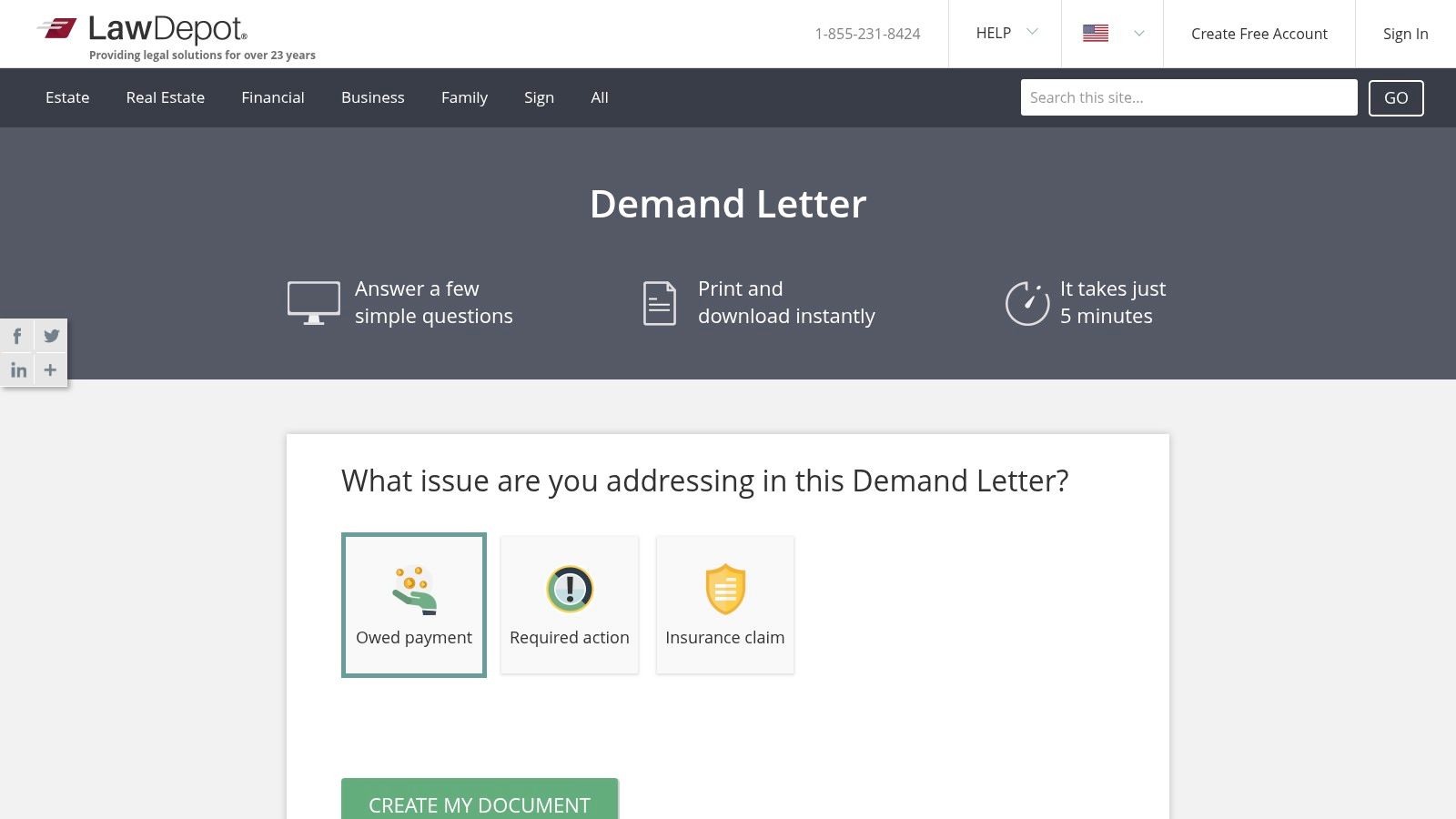
LawDepot fits the middle of a collections sequence well. It is more operational than a legal-first tool, and more structured than pulling a letter from an old sent folder. For finance teams that need a credible demand letter without a long drafting cycle, that balance matters.
Its real value is control. The builder pushes the sender to include the details that drive payment decisions and support escalation later, such as invoice references, service dates, supporting documents, payment terms, and any settlement or installment language. That reduces the risk of sending a vague letter that creates reply volume but does not get cash in.
I would use LawDepot after the first reminder stage, once the account needs firmer documentation and a cleaner record of outreach. It helps standardize a step that often breaks down in growing AR teams, especially when collectors, controllers, and owners all write in different styles.
Where it fits in the process
LawDepot works best as a controlled template inside a broader workflow. Set the trigger clearly, for example 30 or 45 days past due, require backup attachments, and define who approves any discount or payment plan language before the letter goes out. That turns the template into a repeatable collections action instead of a one-off document.
That distinction matters.
A good letter can improve response rates. A system improves DSO because every account gets the right message at the right stage, with the same documentation standard and escalation rules.
- Best for: Mid-sequence demand letters that need stronger documentation than a basic reminder.
- Useful feature: Prompts for evidence, settlement terms, and the practical details teams often skip.
- Trade-off: It stops at document creation. You still need a separate process for timing, channel follow-up, exception handling, and reporting.
If your bottleneck is inconsistent letter quality, LawDepot is a solid fix. If your bottleneck is scale, use it as one component in an automated collections system, not as the system itself.
5. LegalTemplates.net Demand for Payment Letter
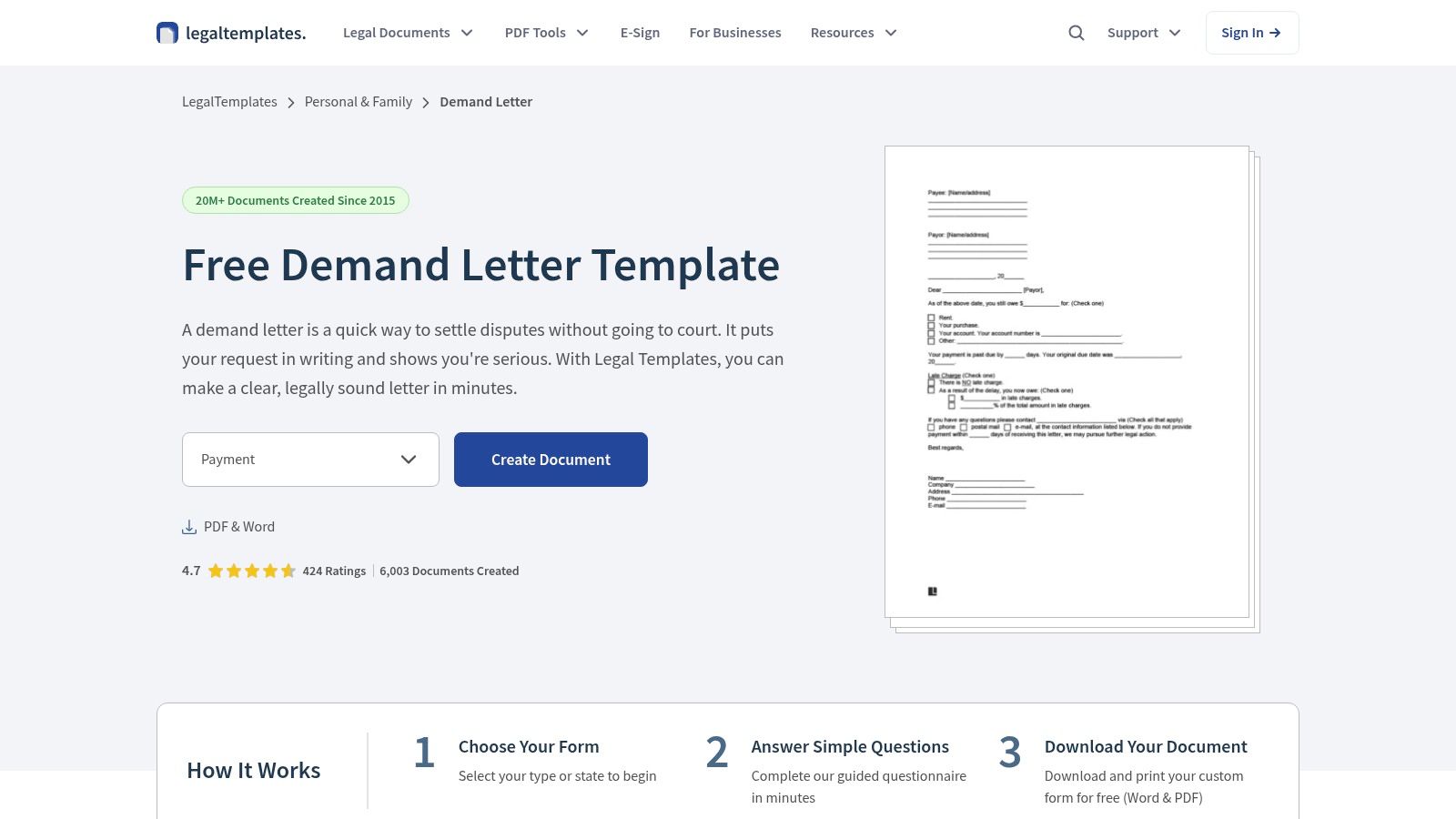
LegalTemplates.net is one of the cleaner low-friction options on this list. It’s simple, business-friendly, and easy to adapt to company letterhead. For many services firms, that’s enough for a final reminder or demand before involving counsel.
Its best use is speed with acceptable structure. The builder helps non-lawyers produce something coherent without a lot of back-and-forth.
Best for lean teams
If your AR process still runs through email drafts and shared folders, LegalTemplates.net gives you a baseline standard. You can get the wording out of individual inboxes and into a repeatable format.
What it doesn’t do is manage the broader collection cycle. There’s no deeper workflow around approvals, outreach tracking, or automated follow-up. That means someone still needs to decide when the tone shifts from polite to formal, and someone needs to make sure the right invoice backup is attached.
A usable template saves drafting time. A controlled process saves DSO.
I’d rate this one as a solid utility tool, especially for firms that want something cleaner than a free online sample but don’t need a full legal workflow.
6. eForms Debt Collections Letter Template
eForms is useful when a team needs a collections letter fast and needs it to cover the basic disclosure points that often get missed in rushed drafts. I see it as a control tool for standardization, not just a document download.
That distinction matters. A template can reduce drafting time, but the primary payoff comes when you slot it into a staged collections process with clear triggers, owner handoffs, and response tracking.
Good template hygiene for regulated collection steps
eForms does a decent job prompting for the facts that matter. Debt amount, creditor identity, account detail, and dispute language are all areas where inconsistent drafting creates avoidable risk. For teams handling third-party collections or formal escalations, that structure is helpful.
It also helps separate early reminder language from a more formal notice. If your team still mixes up those stages, this explanation of what a dunning letter means is a useful reference before you turn a sample into a live workflow.
What eForms does not provide is the operating discipline around the letter. There is no approval path, no automated timing logic, no audit trail for who sent what, and no mechanism for tying the notice back to invoice aging or collector performance. Those gaps matter if the goal is lower DSO instead of faster document creation.
- Best fit: Teams that need a formal baseline letter with the right fields in place.
- What works: Clear prompts that reduce omissions in higher-pressure collection notices.
- What is missing: Workflow control, send tracking, segmentation, and follow-up automation.
For one-off matters, that may be enough. In a scaled AR operation, eForms is the input. The system around it is what improves recovery rates.
7. Wonder.Legal U.S. Monetary Demand Letter
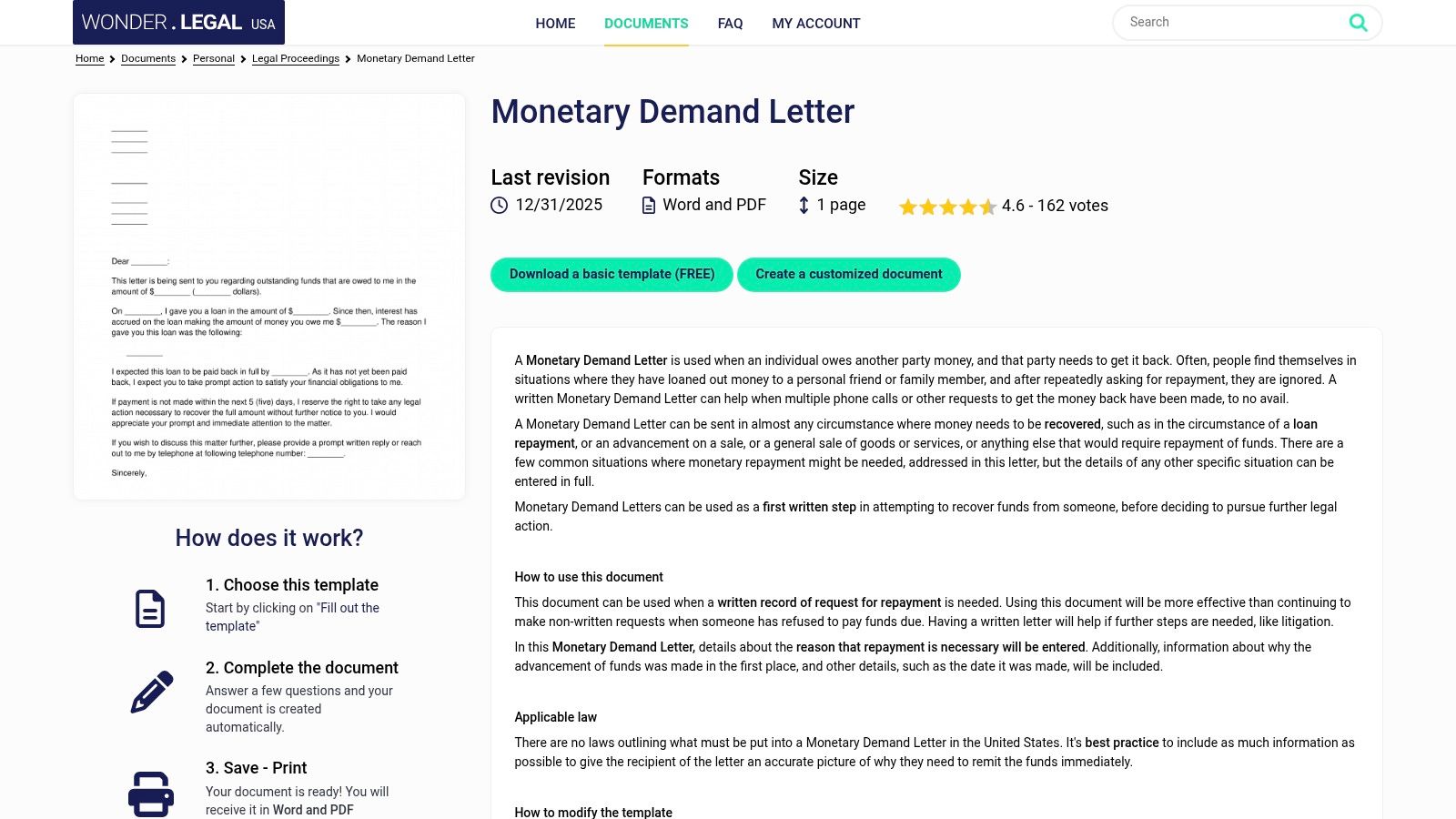
Wonder.Legal is a good pay-as-you-go option when you want a formal demand letter without entering a subscription. The interview flow is straightforward, and the output is usually cleaner than what a team creates from a blank page under deadline pressure.
I like it for occasional escalations. I wouldn’t use it as the backbone of a standing collections workflow.
A practical fit for occasional legal pressure
Wonder.Legal works when the matter has clearly moved beyond a friendly reminder. It helps frame a final ask with deadlines and a more formal statement of next steps. For firms that rarely need this level of severity, a pay-per-document approach is sensible.
If you’re still sorting out where a dunning notice ends and a formal demand begins, this explanation of dunning letter meaning is a useful reference before you generate the final version.
- Best fit: Low-volume final demands.
- What’s good: Simple customization and formal presentation.
- Missing piece: No e-sign, no send tracking, no channel orchestration, and no collections analytics.
This is a situational tool. It’s helpful when you need a stronger letter now, but it won’t help you standardize upstream reminders.
8. Business-in-a-Box Collection Letter Templates Library
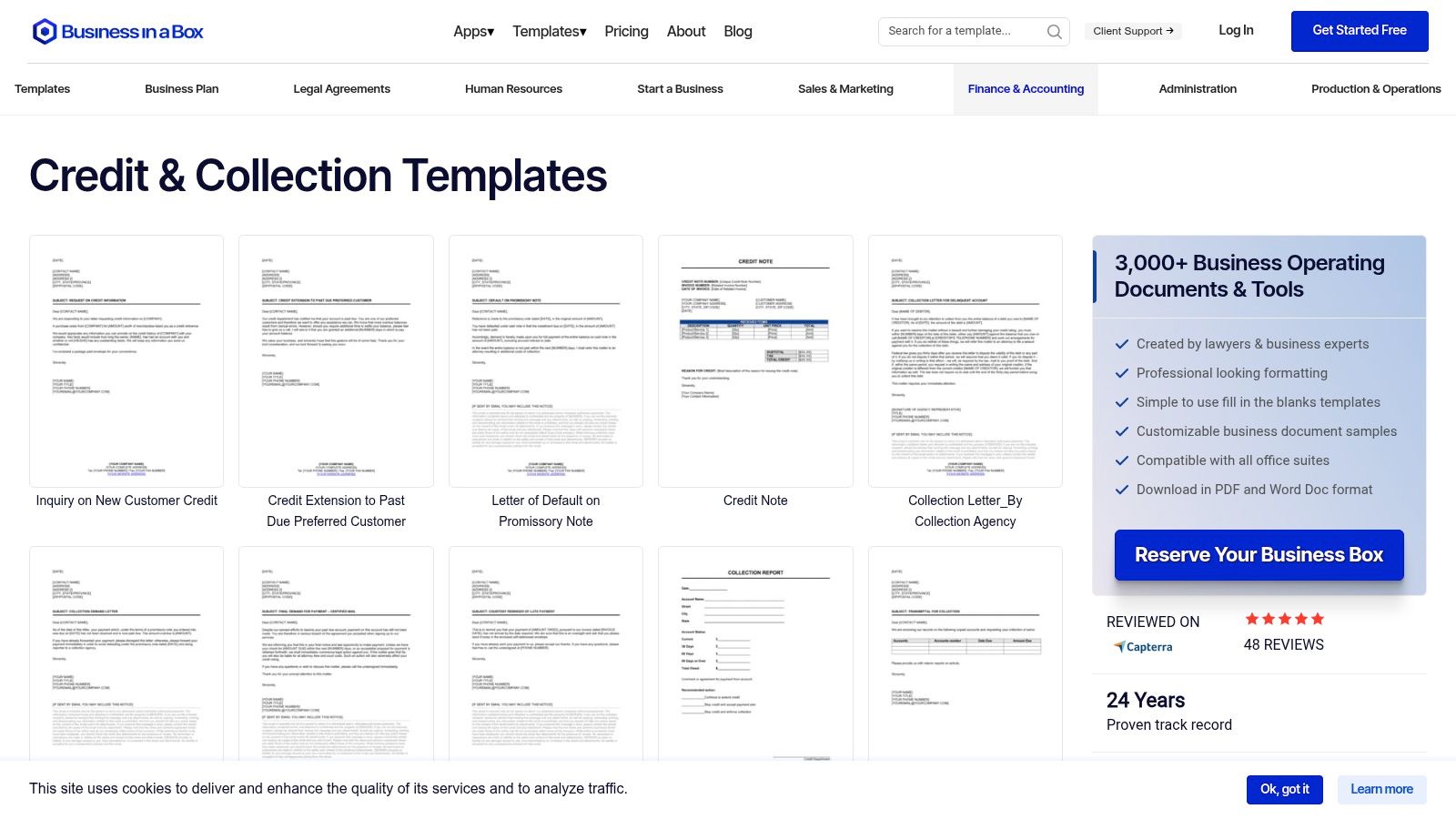
Business-in-a-Box is less about a single template and more about having a full document shelf. If you want multiple collection letter variants in editable Word format, it’s a practical library.
That can be useful for firms that prefer internal control over every document and want a staged ladder of communications on their own letterhead.
Good library, limited intelligence
The main advantage is consistency across stages. You can keep a uniform voice from first reminder through final notice, and that helps if multiple people touch AR. A finance manager, office lead, and owner can all work from the same structure.
The weakness is that template libraries are static by nature. They don’t tell you which clients should receive a softer reminder, which should get a payment-plan offer, and which account should escalate immediately based on risk or past behavior.
That gap matters because early-stage collection letters should feel different from late-stage demand letters. A library can support that if you design the process well. It won’t design the process for you.
9. UpCounsel Free Demand Letter for Payment
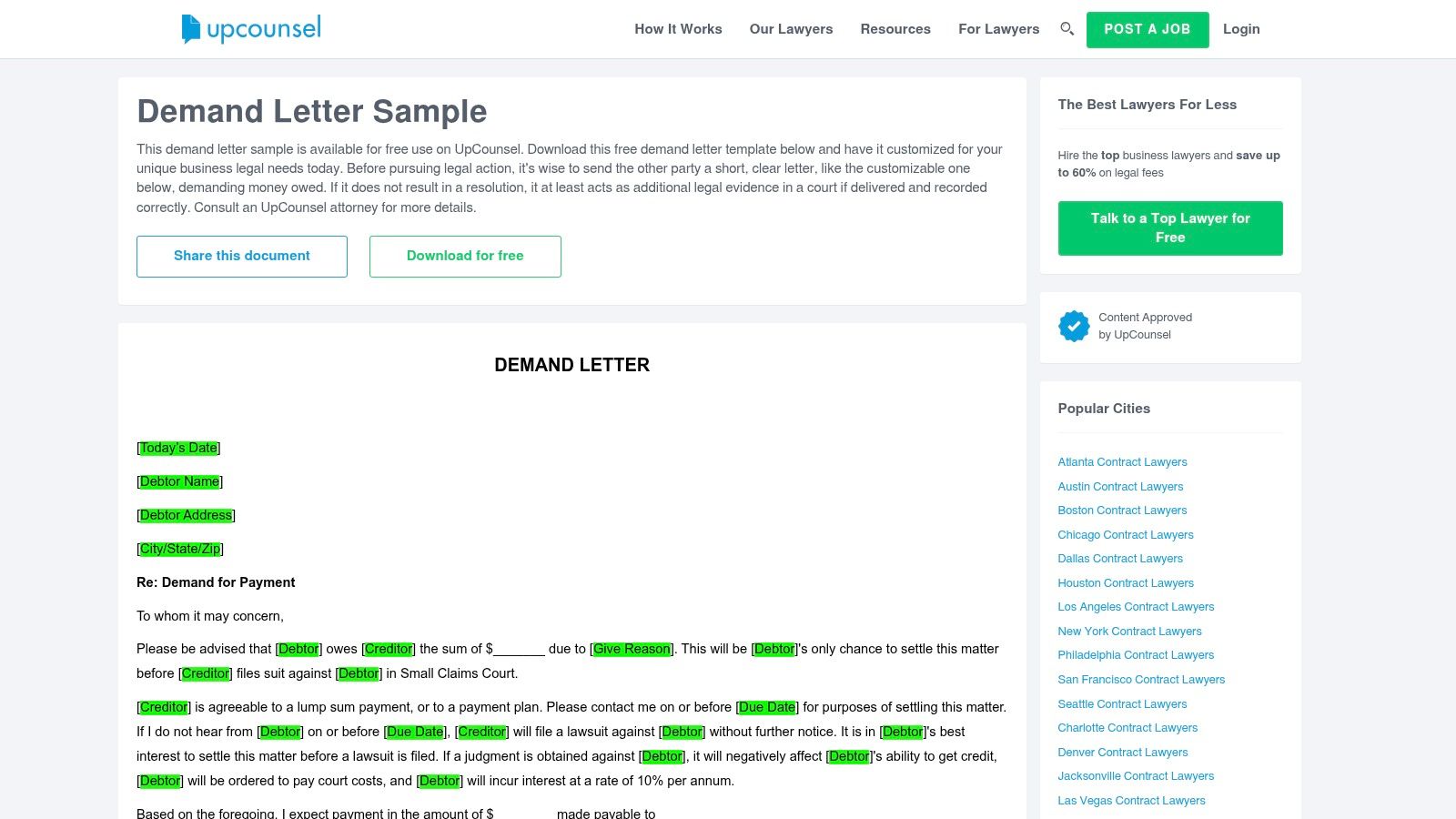
UpCounsel is the blunt instrument on this list. It gives you concise, lawyerly sample text that works well when the matter has already moved past courtesy and explanation.
That’s the appeal. No builder. No workflow. No polish layer. Just firm language you can adapt.
Best used at the end, not the start
I wouldn’t use UpCounsel for an initial or second notice. It’s too sharp for ordinary follow-up, especially in professional services where preserving the client relationship often matters as much as collecting the current invoice.
But for a final notice, simple can be useful. You can paste the text into your own letterhead, add invoice details, attach backup, and send a credible warning without paying for a larger tool stack.
- What works: Clear, direct, no-cost starting language.
- What doesn’t: No formatting help, no delivery tracking, no payment workflow, and no guidance on sequencing.
If your process is mature and you just need firmer copy for the last stage, UpCounsel is enough. If your process is immature, this can make the tone stricter without making the operation better.
10. PostGrid Past-Due A/R Collection Letter Templates
PostGrid stands out because it organizes collection letters by stage of delinquency. That matters more than having one polished template. Finance teams lower DSO by running a repeatable sequence with the right message at the right point in the aging cycle.
Useful for designing a real dunning flow
The practical value here is structure. PostGrid gives you sample language for first reminder, second reminder, and final notice, which makes it easier to map tone to risk. Early notices can stay service-oriented and invoice-focused. Later notices can narrow the ask, set a deadline, and document next steps.
That is how collections usually improve. Not from a stronger paragraph, but from a tighter process.
I’d use PostGrid during workflow design, especially if your team is still writing reminders from scratch or letting each collector improvise. The templates help standardize timing, wording, and escalation thresholds across accounts. They also translate well into email, printed mail, and AR automation rules if you are building the sequence inside another platform.
The template matters less than the trigger, the account context, and whether your team can send, track, and follow up on schedule.
The trade-off is straightforward. PostGrid is a planning resource. It does not handle delivery logic, payment capture, exception routing, or collector tasking. If you need examples to build a staged collections program, it is useful. If you need to execute that program at scale, you will still need systems around it.
Top 10 Debt Collection Letter Templates Compared
Product | Core features | UX / Quality | Value / Price | Target audience | Unique selling points |
|---|---|---|---|---|---|
Resolut 🏆 | Credit risk, omnichannel collections, dynamic billing, payments, automated cash application | ★★★★★, consumer-grade portal, Autopilot/Co‑pilot | 💰 Free Kickstart; ROI model assumes $149/mo starter | 👥 Finance & AR teams, mid-market → enterprise | 🏆 ✨ Full-cycle AI orchestration (credit→collections→legal) |
PandaDoc, Demand for Payment Template | Guided editor, merge fields, e-sign, downloadable templates | ★★★★☆, polished editor, reusable templates | 💰 Free template; advanced e-sign/collab on paid plans | 👥 SMBs, sales & ops teams | ✨ Easy online editing + built-in e-sign |
Rocket Lawyer, Demand for Money Owed | Dynamic Q&A builder, RocketSign, legal guidance, attorney consult | ★★★★☆, lawyer-reviewed content, secure signing | 💰 Free 7-day trial; membership for full access | 👥 Users needing legal-backed letters | ✨ Attorney review option & FDCPA guidance |
LawDepot, Demand (Payment) Letter | Interactive builder, settlement options, delivery guidance | ★★★★☆, guided, court-ready prompts | 💰 Preview free; downloads often require trial/subscription | 👥 Individuals & small businesses preparing legal-ready letters | ✨ Embedded sending/service best practices |
LegalTemplates.net, Demand for Payment Letter | Word/PDF downloads, step-by-step builder, serving guidance | ★★★☆☆, straightforward, minimal friction | 💰 Some free; gated features after trial | 👥 B2B teams wanting simple templates | ✨ Clean formatting for company letterhead |
eForms, Debt Collections Letter Template | Word/PDF templates, compliance checklist, related forms | ★★★☆☆, fast access, basic guidance | 💰 Free starter; advanced editing may need subscription | 👥 Teams needing immediate Word letters | ✨ Quick, compliance-minded starter templates |
Wonder.Legal (U.S.), Monetary Demand Letter | Online interview, Word/PDF output, pay-per-document | ★★★☆☆, tailored form, formal formatting | 💰 Pay-per-document (affordable one-off) | 👥 Users who want single, tailored letters | ✨ On-demand customization without subscription |
Business-in-a-Box, Collection Letter Library | Thousands of editable Word templates, staged letters | ★★★☆☆, consistent voice across docs | 💰 Paid library access (subscription) | 👥 Companies wanting full document library | ✨ Broad, versioned dunning ladder + business docs |
UpCounsel, Free Demand Letter for Payment | Copyable sample text, lawyerly phrasing, strong final notice | ★★★☆☆, concise, no-friction text | 💰 Free sample; paid lawyer consults optional | 👥 Cost-conscious businesses needing firm wording | ✨ Truly free, lawyer-toned final notice copy |
PostGrid, Past-Due A/R Collection Templates | Multi-stage templates, timing tips, tone guidance | ★★★☆☆, practical examples for dunning cadence | 💰 Free article/examples | 👥 AR teams designing sequences & cadence | ✨ Copy-ready multi-stage templates and timing tips |
From Templates to a System Activating Your AR Strategy
A large share of late invoices do not need legal action. They need a controlled follow-up process that starts early, stays consistent, and gives the client a fast way to pay. That is the difference between using a template once and running collections as an AR system.
A good debt collection letter supports that system. It does not carry it.
The letter should pull from the same record your team uses to manage the account. Include the work delivered, the invoice number, the due date, the balance, the payment terms, and the current owner of the conversation. In practice, this matters because vague notices create delay. A client who has to ask which invoice you mean, whether a credit was applied, or where to send payment is not closer to resolution.
Accuracy also lowers dispute volume. Even in B2B cases where consumer collection rules may not apply, the operating discipline still helps. Keep balances current. Separate principal from fees if fees are in play. Match the letter tone to the stage of delinquency. Keep the ask clear.
What a scalable process looks like
Strong AR teams do not send the same message on day 5 and day 55. They run a sequence with defined triggers, owners, and escalation rules.
A practical model looks like this:
- Early reminder: Confirm receipt, restate terms, include the invoice and payment link.
- Second notice: Set a firm date, show the full balance, and note any prior outreach.
- Escalation notice: Route to the right decision-maker, offer a call or payment plan if your policy allows it.
- Final demand: Use formal language, document prior attempts, and state the next internal step.
Automation improves this process because it removes timing drift. Staff do not have to remember which account is 18 days past due, which one disputed a charge last week, or which client always pays after a controller review. The system applies rules based on aging, account history, promise-to-pay status, and invoice risk. That is how finance teams reduce DSO without adding headcount.
The trade-off is control versus flexibility. A rigid workflow gets notices out on time, but it can mishandle exceptions if you do not define them well. Build pause rules for active disputes, approval rules for fee waivers, and clear handoffs for strategic accounts.
What works and what usually fails
Manual collections break in familiar ways. No one confirms the invoice was received. Follow-up depends on whoever remembers first. One collector is firm, another is apologetic, and the customer learns to wait out the softer contact. By the time a formal demand goes out, the account has aged far beyond the point where a simple reminder would have worked.
A better setup uses letters as one channel inside a broader collection motion. Email handles speed. Printed notices add formality when needed. A payment portal removes friction. Phone outreach covers high-balance accounts and stalled disputes. Cash comes in faster when each step has a purpose and the next action is already defined.
Internal visibility matters too. Teams usually improve faster when they can see aging by stage, broken promise-to-pay volume, dispute counts, and collector activity in one view. That turns collections from a reactive task into an operating metric.
If email response is weak, check delivery before rewriting all your copy. An email deliverability and spam checker can help confirm whether your reminders are landing where clients will see them.
The right template for debt collection letter use matches a specific point in the workflow. The stronger move is to build the workflow itself, then standardize the templates inside it. That is how AR gets more predictable, write-offs stay lower, and collections stop depending on memory.
Resolut automates AR for professional services. Consistent, accurate, and human.