Is Bad Debt Expense an Operating Expense?
Is bad debt expense an operating expense - Learn if bad debt expense is an operating expense under GAAP, how to record it, and its impact on margins and cash
Yes, bad debt expense is an operating expense under both GAAP and IFRS, typically reported within SG&A, and that classification follows the matching principle. The question isn't whether it belongs there, it's whether your AR process is catching the warning signs early enough to keep the expense from growing.
A controller can answer the accounting question in one line. A finance leader still has to manage the operational one, because bad debt is one of the clearest signals that collections discipline, customer credit quality, or billing hygiene is slipping.
The Short Answer to a Common Classification Question
A CFO reviewing the P&L usually wants the answer quickly. Yes, bad debt expense is classified as an operating expense because it is part of the normal cost of extending credit to customers in the ordinary course of business, and it is typically presented in SG&A or a similar operating line on the income statement.
That treatment is consistent with standard accounting guidance on bad debt and doubtful accounts. It also reflects a practical reality finance leaders deal with every month, credit sales create revenue now, while collectability risk shows up later in the receivables book.
On a real P&L, the placement matters. Bad debt expense does not reduce revenue directly. It flows through operating profit as an expense, which is why finance teams track it alongside collections performance, customer credit quality, and working capital pressure.
Practical rule: if a customer pays late but the payment is still likely, that is a collections issue. If your estimate of collectability is moving up, that is already a P&L issue.
That distinction matters for firms that bill on terms and live inside recurring client relationships. If the AR team only reviews write-offs after they happen, the finance team is seeing the end of the problem, not the early signal.
The better question for CFOs and controllers is how quickly the estimate changes, how it moves through the allowance, and whether the collections workflow can reduce the amount before it lands in operating expense.
Why Bad Debt Expense Belongs in Operating Expenses
What does bad debt expense really represent in day-to-day finance work? It reflects the normal credit risk that comes with selling on terms. When a firm extends credit, some invoices will not be collected, and the expected loss sits inside the cost of generating revenue, which is why it belongs in operating expenses rather than as a direct reduction of sales.
The matching principle drives the classification
The matching principle requires that the loss be recognized in the same period as the related revenue, not when the customer finally stops paying. Accounting guidance on uncollectible accounts follows that logic, and the allowance method is the standard approach for external reporting because it estimates credit losses before a formal default appears (UTS accounting text).
That is the part many owners overlook. Bad debt expense reflects expected credit loss across the receivable book.
If you tried to treat it as a reduction of revenue, you would blur two separate decisions. Revenue shows that the work was delivered or the goods were sold. Bad debt shows that part of the billed amount is unlikely to become cash. Finance leaders need both signals, because each one answers a different question about performance.
Why it sits in operating profit, not below the line
The operational reason matters just as much. Extending credit is part of how the business sells, bills, and keeps clients. Losses tied to that decision are part of the business model, so the expense flows through operating income instead of being treated like a financing item or a one-off charge. Ramp explains that treatment in a practical way.
That is why bad debt gets more attention in firms with meaningful B2B receivables. It is not a side issue. It is a real operating cost of selling on terms, and it belongs in the same P&L discussion as collections and customer credit quality.
The operational read is often more useful than the accounting label
A rising allowance estimate is often more actionable than a later write-off. It tells AR teams that customer payment behavior is weakening before the cash loss shows up in the bank account, which makes it a useful early warning signal for collections and billing controls. Allianz Trade makes that point clearly.
That signal matters in professional services, where client relationships can hide slow deterioration. A customer may keep approving work while paying later and later, and the P&L will start reflecting that pressure before the account ever becomes a formal write-off.
For controllers, the question is how quickly the estimate changes, how it moves through the allowance, and whether your AR process can reduce exposure before the expense hardens into the income statement. Tools that support net realizable value tracking can help finance teams see that risk earlier and keep the receivable book closer to reality.
How GAAP and IFRS Treat Credit Losses
GAAP and IFRS land on the same practical result, bad debt is treated as an operating expense tied to ordinary credit sales, not as a separate non-operating item. The labels and measurement approach differ, but the reporting logic is the same.
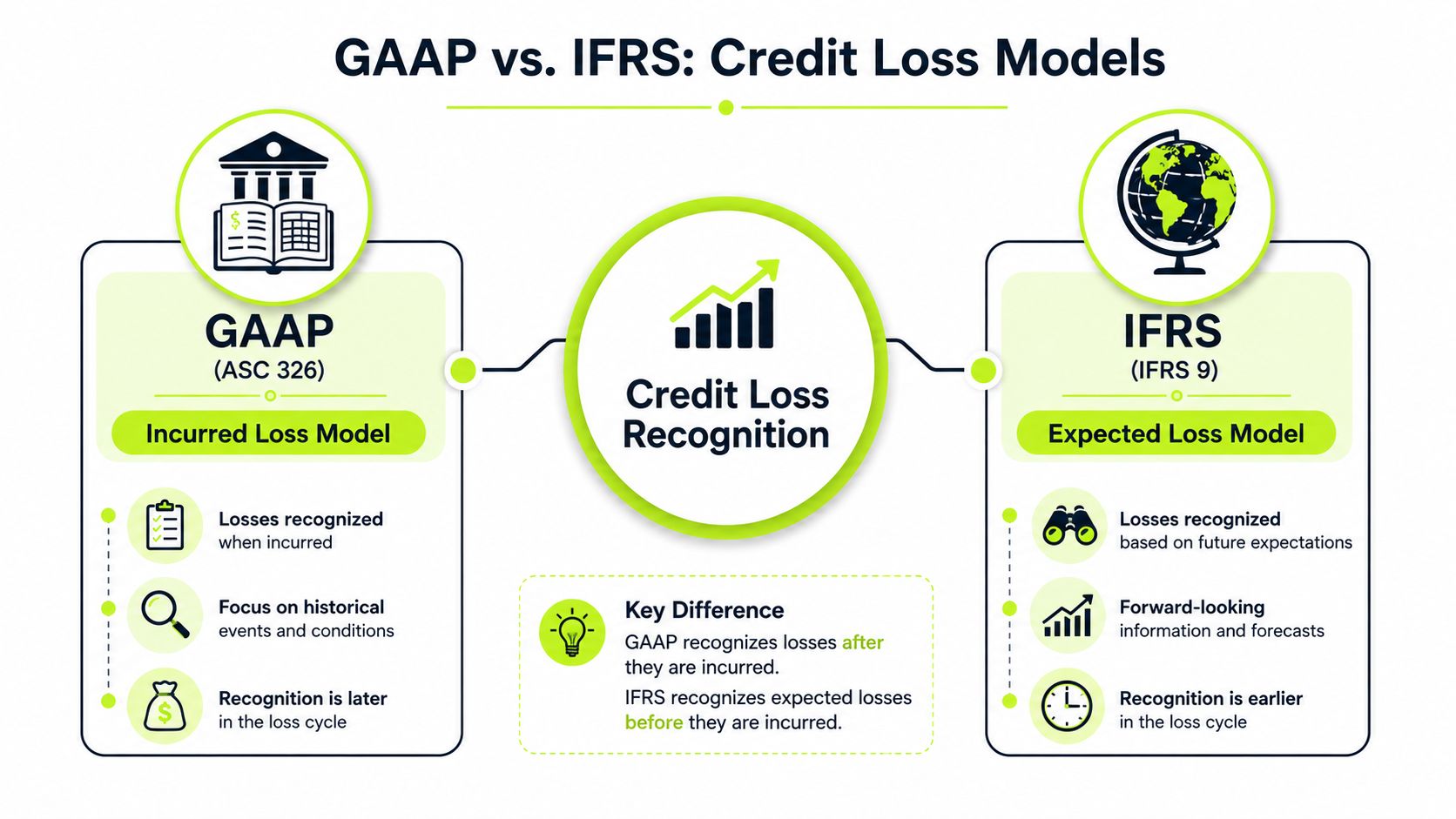
Same classification, different emphasis
Under GAAP-style reporting, the allowance method is the standard way to estimate uncollectible receivables. Under IFRS-style reporting, the framework also focuses on recognizing credit losses in a way that reflects expected collectability, which keeps the loss recognition aligned with the sale period rather than waiting for a formal default.
For controllers, the practical takeaway is consistency. If you manage professional services clients across jurisdictions, you still need one operating view of bad debt exposure, even when the terminology in the report package changes.
Why direct write-off still causes problems
The direct write-off method is simple, but it does not match expense to revenue in the right period. Educational accounting sources describe it as unsuitable for general financial reporting under GAAP, even though it may still show up in tax contexts or very limited situations (UTS accounting text).
For a finance leader, that simplicity is misleading. It gives you a cleaner books-and-records process in the moment, then a less reliable margin picture later when the write-off lands in a different period from the work that created it.
If you need a refresher on the receivable side of the calculation, the mechanics of net realizable value are covered in this guide on calculating net realizable value.
Visual implication for cross-border reporting
The classification stays the same, but process discipline has to be tighter when you report across systems, entities, or client portfolios. A shared allowance policy keeps the P&L and the balance sheet aligned, and that is where many AR teams lose consistency.
Recording Bad Debt the Allowance Method Way
How do you record bad debt without distorting the period that generated the revenue? The allowance method handles that by estimating expected losses first, then using that reserve when a specific receivable later proves uncollectible.
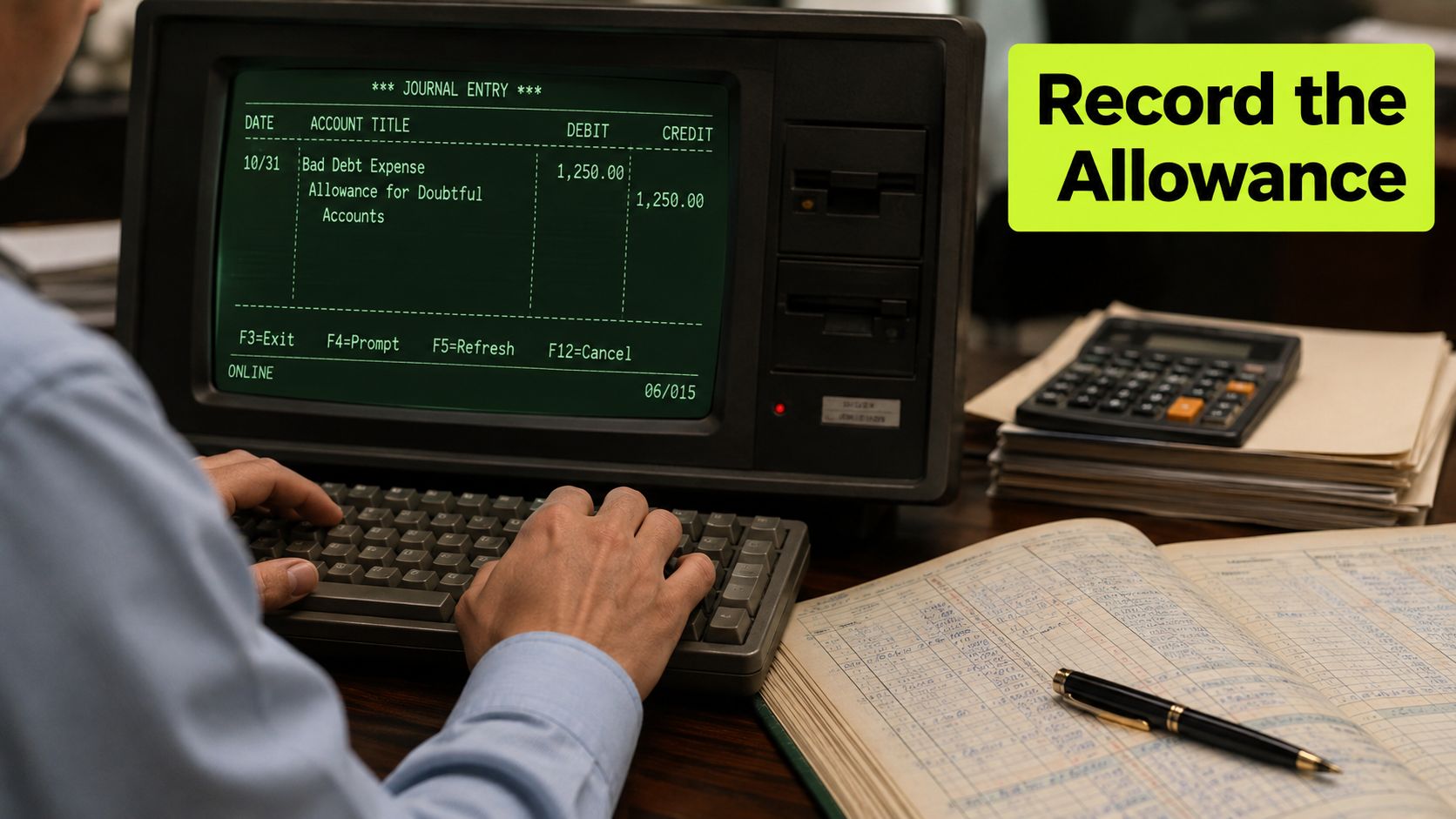
The first entry records the estimate
When you estimate expected losses, the journal entry is direct:
- Debit Bad Debt Expense
- Credit Allowance for Doubtful Accounts
That entry recognizes the expected loss in the current period and creates the contra-asset reserve that offsets accounts receivable on the balance sheet (NetSuite on bad debt expense).
The practical value is balance sheet discipline. Accounts receivable stays on the books, but it is carried at a net amount that better reflects what the company expects to collect.
The second entry removes the specific invoice later
When a specific account is finally written off, the entry does not hit bad debt expense again. Instead, the receivable is cleared against the allowance:
- Debit Allowance for Doubtful Accounts
- Credit Accounts Receivable
That distinction matters in practice. The estimate creates the expense. The later write-off is the operational cleanup of a customer balance that has already been reserved.
The allowance method keeps the cost in the period the revenue was earned, while the write-off removes the specific invoice when collection is no longer realistic.
Why this matters for professional services firms
For firms that bill projects, retainers, or recurring advisory work, the allowance process shows more than whether one invoice went stale. It shows whether the receivables book is trending toward slower payment patterns, tighter dispute cycles, or weaker credit quality.
That is why finance teams that use allowance for uncollectible accounts guidance treat estimate changes as part of AR monitoring, not just month-end bookkeeping. The reserve should tie back to the collection profile of the portfolio, and the process should connect cleanly to the margin calculation for SMEs.
Reading Bad Debt on the Income Statement and What It Means for Margins
How much of your margin pressure is coming from the work itself, and how much is coming from customers who do not pay?
Bad debt expense usually sits below gross profit, inside operating expenses, so it reduces operating income rather than gross margin. That placement matters because it separates delivery performance from collectability after the sale. A healthy service line can still report weaker operating results if receivables start slipping.
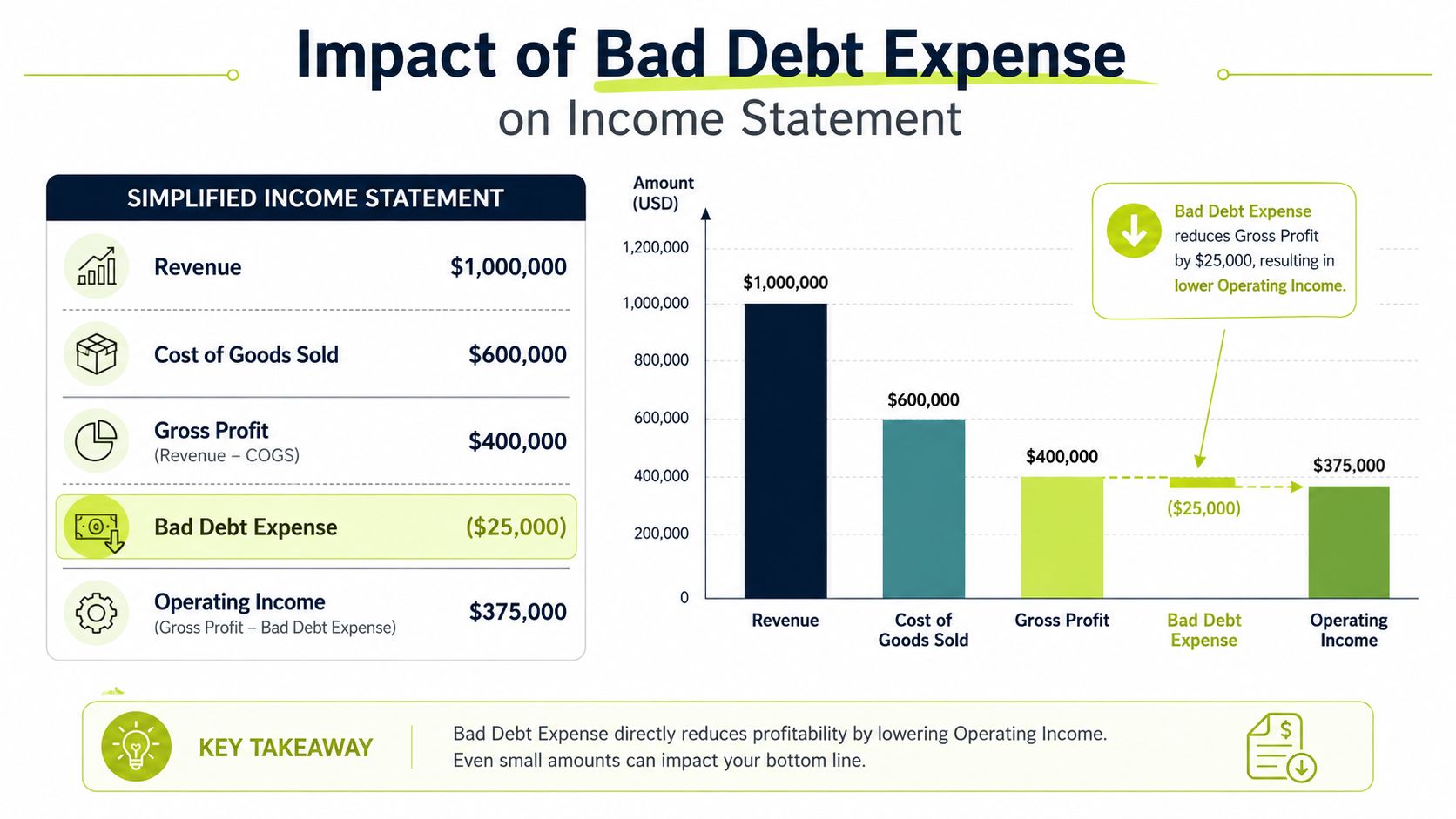
The income statement view is only half the story
Operating margin reflects the full cost base, and bad debt is part of that calculation. The balance sheet tells a different part of the story, because the allowance also changes how much of accounts receivable is collectible.
Read the two together. The expense shows up in profit and loss, while the allowance adjusts receivables to a net realizable value that is closer to economic reality, as covered by Ramp and NetSuite. For a finance team, that means bad debt is both a margin issue and an AR health signal.
Estimated expense and actual write-offs are not the same thing
The estimate affects operating profit before the cash loss becomes final. A later write-off clears the specific receivable, but it does not create another P&L hit if the reserve was already booked.
That timing matters for performance review. Controllers who focus only on write-offs are usually late to the problem. Watching the allowance trend gives earlier warning, which lets AR act while the customer is still reachable, a point also reflected in Allianz Trade.
Margin interpretation for service firms
Professional services leaders often watch gross margin first because delivery labor is the biggest cost. Bad debt sits further down the statement, but it still reduces the cash available to hire, pay bonuses, and absorb slower months.
If you need a practical way to explain the impact to a management team, this margin calculation for SMEs is a useful reference for keeping the discussion grounded. The trade-off is straightforward. A strong project margin does not protect the business if receivables are aging badly.
Tax Treatment and Financial Disclosure Requirements
Book treatment and tax treatment do not always move together. Under financial reporting, bad debt expense is estimated and recorded through the allowance method. For tax purposes, deductions often depend on actual write-offs and proof that the debt is worthless, so book income and taxable income can diverge for a period of time.
Why auditors ask for the allowance logic
Controllers should expect auditors to ask how the allowance was determined, what historical loss experience supports it, and how receivables are segmented for collectability. That is the support for why the reserve is reasonable and why the balance sheet is not overstated.
Educational accounting material also notes that accrual accounting recognizes bad debt in the same period as the related credit sales, typically within SG&A, rather than leaving it on the balance sheet as an asset. That point is consistent with the treatment described in the Cornell accounting guidance and the UTS accounting text.
The tax book difference is a planning item
When the tax deduction depends on actual worthlessness, but the books record an estimate earlier, the result is a temporary difference. Finance teams need to track that difference cleanly so the tax provision does not drift away from the financial statements.
For owner-managed firms, that often shows up as a year-end surprise if the AR team has not documented the write-off timeline carefully. The fix is usually process, not theory. Good documentation also makes it easier to explain the gap between the reserve and the tax deduction when reviewers ask why the numbers do not line up yet.
What disclosure notes should cover
Disclosure should clearly explain the allowance methodology, how management assesses collectability, and what assumptions drive the reserve. If you cannot defend the estimate in plain language, the process is probably not operational enough.
A practical rule helps here. Disclose what a reviewer would need to reproduce the estimate. If the process cannot be followed from the note, the support is too thin.
That is also where a disciplined AR process matters. A clear collection workflow, consistent aging review, and documented write-off criteria make the disclosure easier to support, and a bad debt reduction framework from Resolut can help teams connect policy with day-to-day control.
Reducing Bad Debt Through AR Controls and Automation
Bad debt is classified in accounting, but it's created or prevented in operations. That's why the most effective control set starts before the invoice goes out and continues until the account is resolved.

Controls that actually reduce exposure
Credit screening at onboarding gives you a better starting point than hoping the client pays on instinct. Clear payment terms in engagement letters reduce disputes later. Aging report reviews keep overdue balances visible before they turn into write-offs.
Structured follow-up matters too. The teams that do this well don't treat collections as one email at the end of the month. They work a defined workflow, escalate when needed, and keep the tone firm without breaking the client relationship.
A practical AR playbook like the one from Nexist on receivables management can help shape those operating rhythms, especially when a finance team needs a more consistent follow-up cadence.
Where automation helps
Accounts receivable automation helps teams see risk earlier and act faster. AI AR automation can flag at-risk invoices, prioritize outreach, and keep the follow-up sequence moving without forcing the team to manage every touch manually.
That matters for professional services firms using QuickBooks AR automation or other AR software for professional services, because the work is rarely just about sending reminders. It's about timing, tone, and escalation across different customer types.
What good automation changes
Good automation doesn't replace judgment. It gives collections and finance teams a cleaner queue, better visibility, and fewer accounts slipping through because someone was busy.
Resolut is one option in this space, and it automates AR for professional services with workflows for credit risk, outreach, cash application, and escalation. It also helps teams spot early changes in payment behavior, which is the operational side of keeping bad debt from becoming a recurring P&L problem (bad debt reduction guidance).
If bad debt is starting to show up in your margins, your receivables process is already giving you a signal. Visit Resolut to see how AR automation can help your team stay ahead of collectability issues, reduce manual follow-up, and keep customer communication consistent and human.