
What Does EFT Stand for in Banking? a CFO's Guide
What does EFT stand for in banking? An Electronic Funds Transfer. This guide helps CFOs master EFTs, ACH, and wires to reduce DSO and improve cash flow.
EFT stands for Electronic Funds Transfer, the umbrella term for digital money movement between bank accounts. In the U.S., it's legally defined under the Electronic Fund Transfer Act of 1978 as a transfer initiated through an electronic terminal, telephone, computer, or magnetic tape to authorize a financial institution to debit or credit a consumer's account.
If you're reviewing cash receipts and seeing a mix of labels like ACH, wire, card payment, and EFT, the acronym itself isn't the main concern. What truly matters is whether your team knows what that label means for settlement timing, reconciliation effort, and cash flow predictability.
That matters more in a professional services firm than most payment guides admit. A delayed retainer, a client payment with weak remittance data, or a bank feed entry that doesn't map cleanly to an open invoice can all distort your view of collections. On paper, the money is moving electronically. In practice, your controller still has to close the gap between payment receipt and usable cash insight.
That's why the better question isn't just what does EFT stand for in banking. It's what kind of EFT you're dealing with, how fast it settles, how easily it reconciles, and whether your current process helps you reduce DSO or adds friction.
The Answer Is Simple The Implications Are Not
A familiar month-end scene. You're in the cash report, your bank activity shows one payment as “EFT,” another as “ACH CREDIT,” another as “WIRE IN,” and a card payment lands through a processor with a different naming convention entirely.
Nothing looks wrong. But nothing is clean, either.
For a CFO or controller, that's where confusion starts. The bank says EFT. The ERP says payment received. The client says they paid on time. Your AR team says the invoice is still unmatched. Those are small disconnects, but they add up fast in a firm that lives on utilization, project margins, and disciplined collections.
The short answer is straightforward. EFT means Electronic Funds Transfer. The operational answer is more useful. EFT is the category behind a wide range of digital payment activity, and each rail behaves differently once it hits your books.
Practical rule: If your team uses “EFT” as if it were a single payment method, you're probably hiding meaningful differences in speed, fees, and reconciliation workload.
In professional services, that distinction changes how you manage retainers, milestone billing, recurring client payments, and partner distributions. A payment that arrives quickly but with poor remittance detail can create more work than a slower payment with clean invoice references. A low-cost rail can be the right choice for routine collections, but the wrong one for a time-sensitive funding event.
Finance operators separate terminology from control. The acronym is simple. The implications touch improve cash flow, forecasting discipline, staffing efficiency, and the quality of your receivables process.
What EFT Actually Means for Your Business
At the policy level, the definition is precise. EFT stands for Electronic Funds Transfer, an umbrella term legally defined by the United States Electronic Fund Transfer Act of 1978 as any funds transfer initiated through an electronic terminal, telephone, computer (including online banking), or magnetic tape to authorize a financial institution to debit or credit a consumer's account. This legislative milestone established the foundational regulatory framework for digital banking (Stripe's explanation of EFTs).

It's a category, not a rail
This is the first point many overlook. EFT is not one network and not one settlement method. It's a broad category that includes many types of electronic payments.
That matters because finance teams often use the word loosely. Someone says “the client sent an EFT,” but what they really mean could be ACH, a wire, a card transaction, or another digitally initiated payment. Those are not interchangeable from an operating perspective.
Why the umbrella definition matters
When you treat EFT as a catch-all label, you lose clarity in three places:
- Cash forecasting: Different EFT methods settle on different timelines, so expected cash and available cash don't always line up.
- Compliance and controls: The legal definition exists for a reason. It helps frame what's electronically authorized and what isn't.
- Reporting quality: If your team records every digital receipt as “EFT,” your payment analysis becomes less useful.
The finance problem usually isn't that money moved electronically. It's that the business can't tell which electronic path it took, and that changes how quickly the cash becomes operationally usable.
What this means in practice
For a professional services firm, the right mental model is simple. Think of EFT as the umbrella over most digital payment activity your clients and vendors already use.
That includes routine online payments, card transactions, bank-to-bank transfers, and automated debits. It excludes manual, in-person transactions like a withdrawal at a bank counter, which is one reason the legal definition still matters in operational conversations.
If you want tighter financial control, start by cleaning up language. Don't ask whether a client paid by EFT. Ask which EFT type they used, what data came with it, and how your team will apply it.
The EFT Family Tree Common Types and Their Roles
Most firms don't struggle because payments are too technical. They struggle because everything digital gets lumped into one bucket. A cleaner way to think about it is as a family tree.
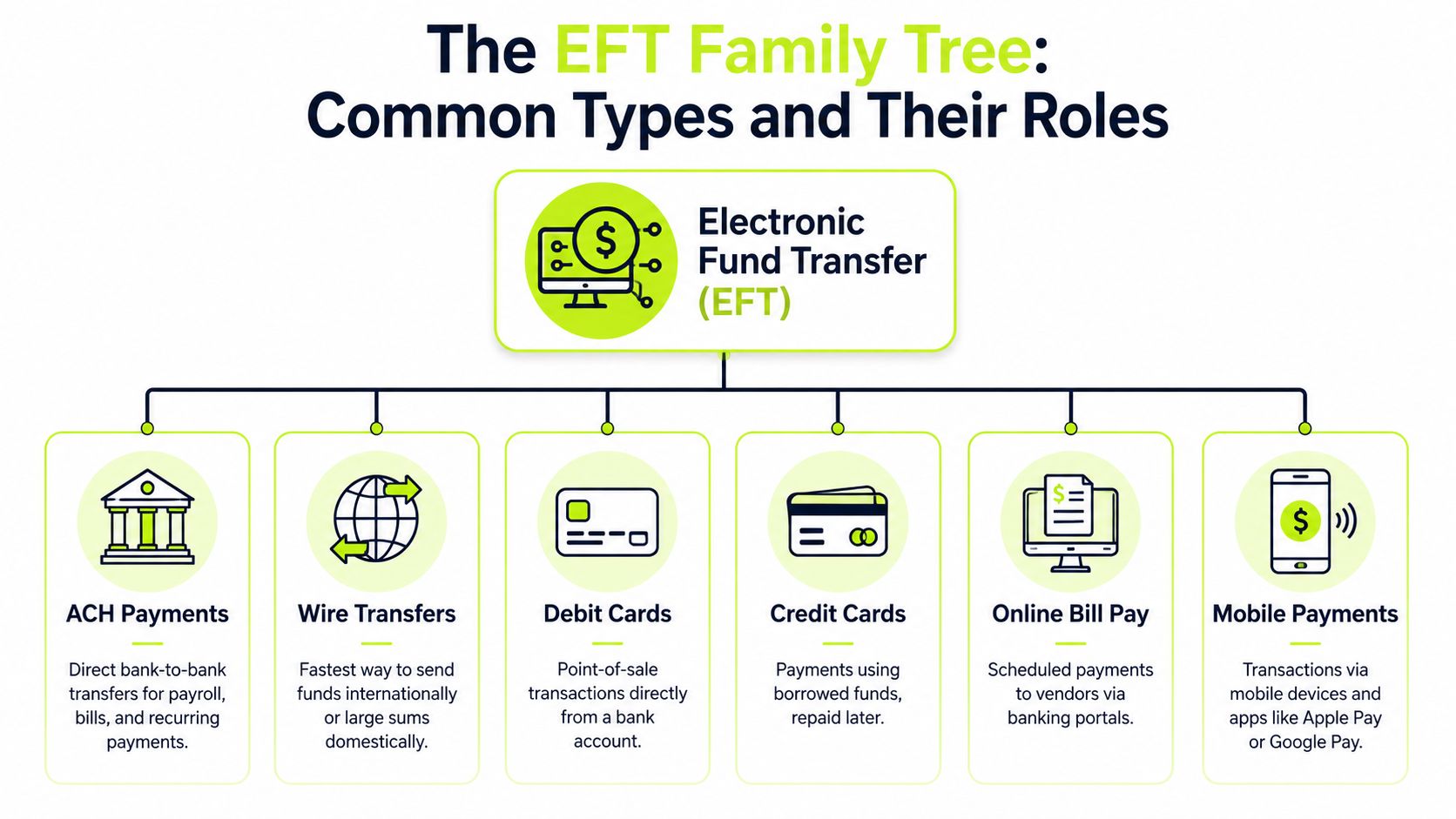
In major U.S. markets, ACH payments are the most dominant subset of EFTs, processed through the Automated Clearing House Network. But ACH is only one branch. The broader EFT category also includes Fedwire, FedNow, SWIFT, and real-time payment networks (Moody Bank's EFT and ACH overview).
The branches that matter most
- ACH payments Best for repeatable, lower-friction bank transfers. Think payroll, recurring retainers, vendor payments, and scheduled client collections. For many firms, this is the workhorse rail.
- Wire transfers Best for urgent or high-value transactions where speed matters more than cost. Common in large settlements, cross-border activity, or time-sensitive closings.
- Debit and credit card payments These are also EFTs. If a client pays an invoice online with a Visa, Mastercard, or American Express card, the payment is part of the EFT world even if your team thinks of it as “card revenue.”
- Online banking and bill pay Clients often use their banking portal to initiate payment. From your side, this may land with limited remittance detail unless your intake process is tight.
- Mobile wallet payments Apple Pay and Google Pay sit under the same umbrella. They matter less for large B2B invoices, but they still fall into the broader EFT structure.
Matching the rail to the workflow
Different rails fit different finance jobs.
A recurring monthly engagement fee fits ACH well. A same-day transaction tied to a closing or legal milestone may justify a wire. A card works when convenience matters more than processing economics. Online bill pay is often fine, but it can create a reconciliation nuisance if the remittance arrives separately from the funds.
If your team handles payroll internally, it also helps to understand how payment setup behaves in accounting tools. This walkthrough on direct deposit in QuickBooks is useful context when you're mapping operational workflows across banking and accounting systems.
A practical way to classify receipts
Use three questions:
- How fast does the money need to settle?
- How much data comes with the payment?
- How much manual work will this create after receipt?
Those questions matter more than the acronym on the bank line.
EFT vs ACH vs Wire Transfers Choosing the Right Rail
The finance decision isn't whether EFT is good or bad. The decision is which rail fits the transaction. For most firms, the comparison is ACH versus wire, with card payments added when client convenience is part of the collections strategy.
What the trade-off looks like
According to the Princeton OTA payment system reference, ACH transactions typically settle within 24 hours for $0.20–$1.50, while wire transfers offer near-real-time settlement, often under 10 minutes, but cost $15–$50. The same source notes that adopting real-time EFT rails can reduce DSO by 2–5 days compared to legacy ACH.
That's the core trade-off. ACH is inexpensive and efficient for volume. Wires are expensive but fast. Real-time rails can materially improve cash velocity when timing matters.
Payment Rail Comparison Speed Cost and Use Case
Payment Rail | Settlement Speed | Typical Cost | Ideal AR Use Case |
|---|---|---|---|
ACH | Within 24 hours | $0.20–$1.50 | Recurring invoices, retainers, scheduled client payments |
Wire transfer | Near-real-time, often under 10 minutes | $15–$50 | Urgent, high-value, time-sensitive receipts |
Real-time EFT rails | Faster than legacy ACH | Varies by provider and bank relationship | Situations where faster cash application helps reduce DSO |
Where firms make the wrong call
The wrong choice usually shows up in one of two ways.
First, some firms overuse wires for routine receivables because speed feels safer. That drives up transaction cost without solving the underlying issue, which is often weak invoice data or inconsistent follow-up.
Second, firms default to ACH even when timing is critical. If a payment delay creates downstream pressure on payroll, partner draws, or vendor commitments, a cheaper rail can become the more expensive choice.
Fast settlement is valuable when the timing of cash changes operating decisions. It's less valuable when the real bottleneck is invoice matching.
A better selection logic
Use ACH when the payment is predictable, recurring, and not time-sensitive. Use wires when certainty and immediacy are worth the higher fee. Consider real-time rails when the value of earlier cash visibility outweighs process inertia.
If your team is refining how credits hit receivables, this guide to what ACH credit means in AR workflows is a useful companion.
For CFOs, that's the heart of the decision. Don't optimize one variable in isolation. Optimize the full path from payment initiation to posted cash.
The Hidden Reconciliation Costs in Electronic Payments
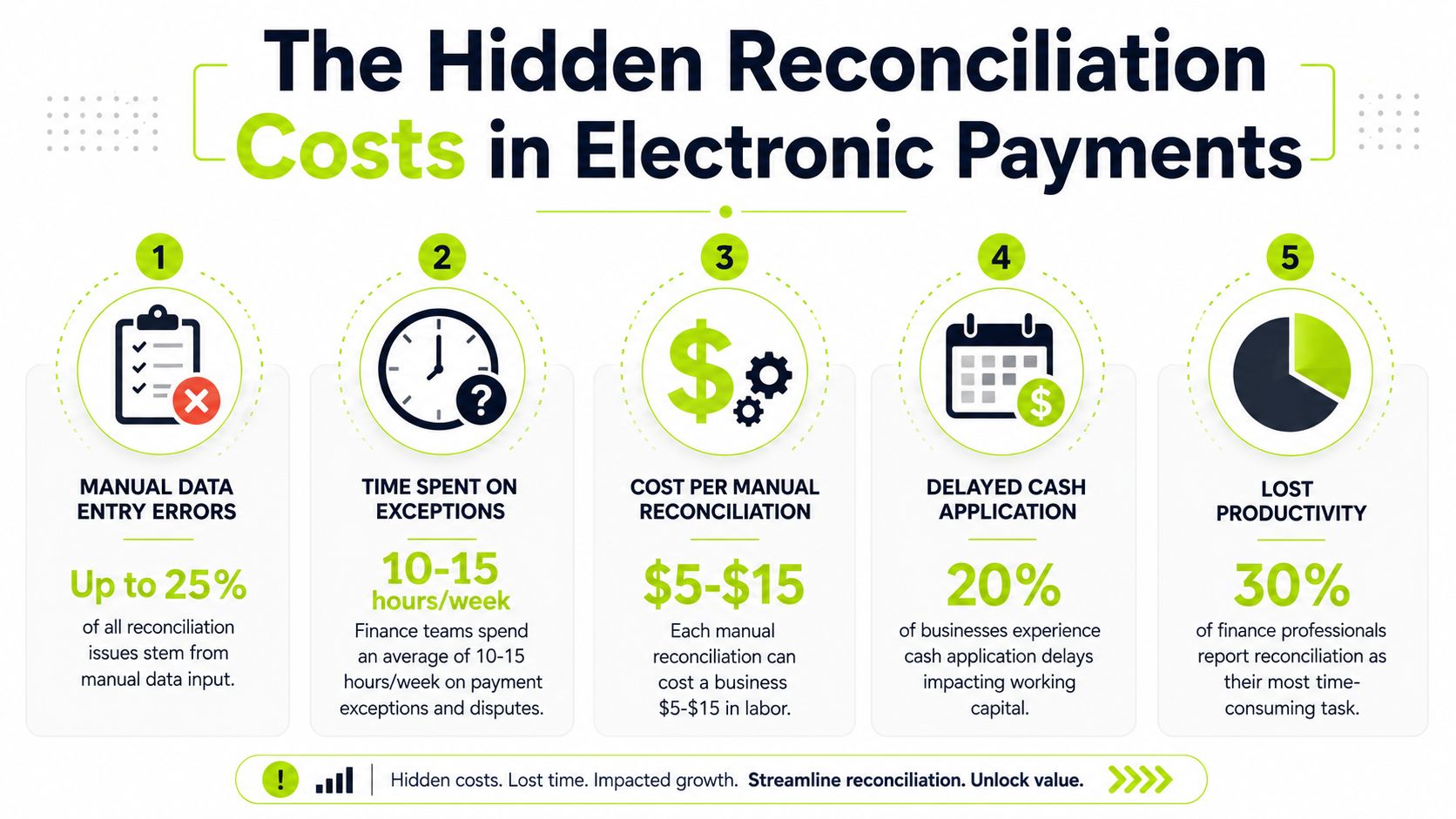
Electronic doesn't always mean simple. In fact, some of the hardest receivables problems show up after the payment has already moved.
A common example is check truncation, where a paper check is converted into an electronic transfer. From the client's perspective, they mailed a check. From the bank's perspective, the funds may move electronically much earlier than your team expects.
Where the timing mismatch shows up
The Consumer Financial Protection Bureau explains that when a check is converted to an EFT, funds often leave the payer's account days before the recipient receives notification, creating a 2–5 day discrepancy in cash application that AR systems must reconcile manually (CFPB guidance on check-to-EFT conversion).
For a finance team, that gap creates three problems at once:
- Forecast distortion: The client believes payment is gone. Your books may still show the invoice as open.
- Cash application lag: The money movement and the remittance trail don't arrive in sync.
- Collections noise: Teams may follow up on invoices that are functionally in motion but not yet reconcilable.
Why this matters in professional services
Professional services firms often run lean finance teams. That means small timing exceptions create disproportionate interruption.
A consultant invoice with a check reference, an EFT conversion, and no clean remittance note can sit in exception handling longer than it should. Meanwhile, project leaders ask whether the client has paid, ownership wants a clean cash forecast, and accounting needs the period closed.
The painful part isn't just delayed cash. It's delayed certainty.
That's also why return and exception handling matters. If your team works with ACH-heavy payment portfolios, this piece on protecting your MCA portfolio from returns is useful background on how return codes affect operational control.
What works better than manual chasing
The firms that handle this well don't rely on inbox searches, spreadsheet notes, and tribal memory. They tighten three things:
- Payment instructions on the invoice
- A disciplined remittance intake process
- Automated matching for bank activity and open receivables
If reconciliation is still too dependent on human memory, this overview of automated payment reconciliation is worth reviewing. The goal isn't only faster posting. It's cleaner forecasting and fewer false exceptions.
How to Optimize Your AR Process with EFTs
Once payment volume grows, EFT management becomes a systems question. The problem usually isn't receiving digital payments. It's turning those receipts into posted cash without adding headcount every time volume rises.
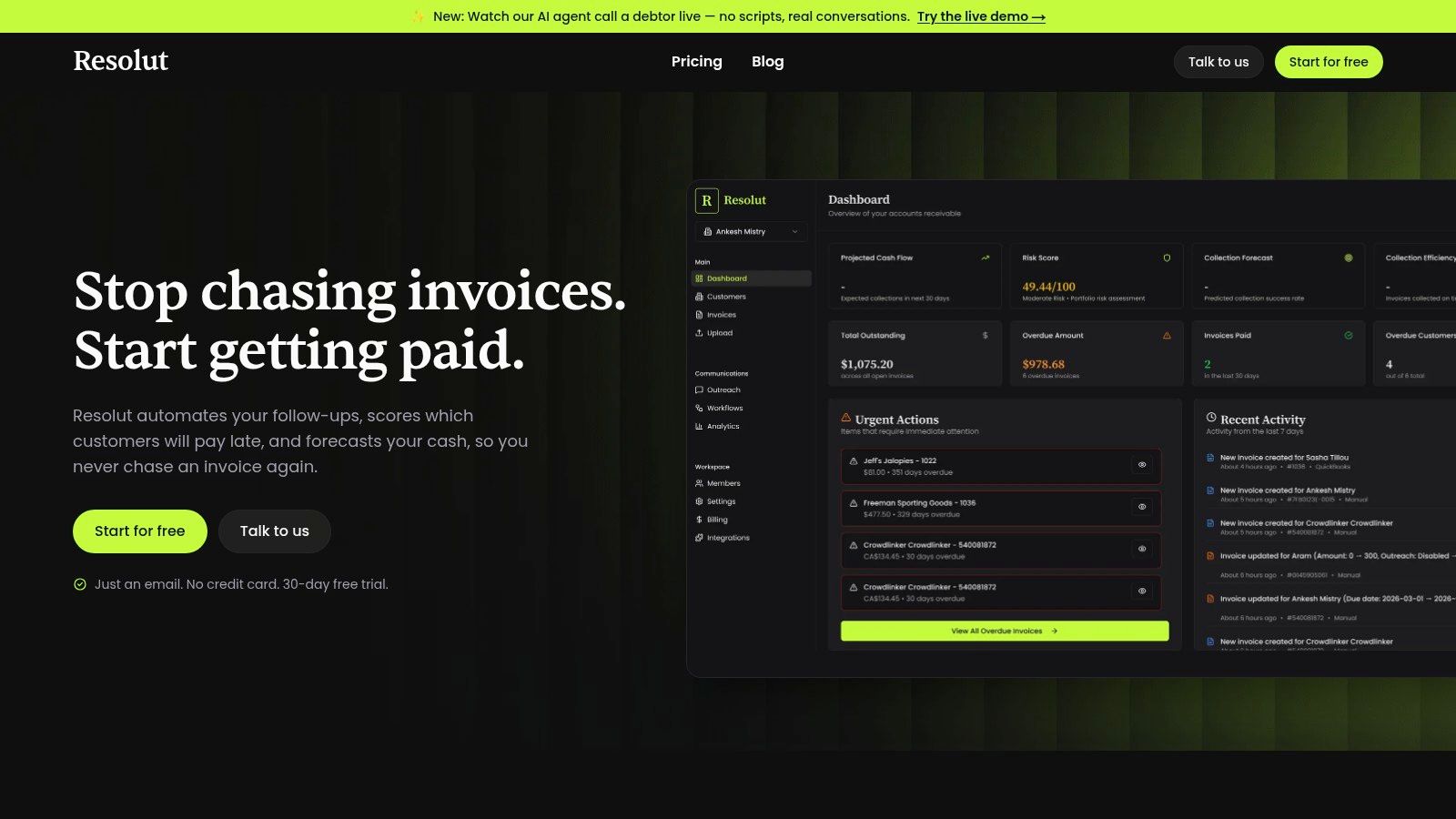
That's where accounts receivable automation changes the equation. The best setups don't just collect money. They identify the payment type, capture remittance detail, match receipts to invoices, and push the result into the accounting system with minimal manual intervention.
Why traceability matters
EFTs have a built-in advantage. They are fully digital and traceable, leaving a clear, immutable record on both sender and receiver bank statements. That traceability enables automated cash application systems to instantly reconcile incoming payments against outstanding invoices, which helps reduce manual reconciliation errors and supports faster DSO improvement (video explanation of EFT traceability and cash application).
That's the operational bridge between payment rail knowledge and actual finance performance.
What strong AR automation looks like
In practice, AR software for professional services should do more than post a payment. It should support the workflow around the payment.
- Invoice-aware matching: The system should connect receipts to the right invoices, not just the right customer.
- Remittance capture: If a client sends partial references or pays multiple invoices together, the platform should handle the complexity without forcing manual cleanup.
- Accounting sync: For teams running QuickBooks AR automation, the handoff to the ledger has to be reliable and timely.
- Exception routing: Not every receipt will match cleanly. Good systems isolate exceptions instead of making every payment a manual review.
Where AI AR automation helps
AI AR automation can be useful, especially in firms with project billing, recurring retainers, split payments, or multiple entities. AI is most valuable when payment descriptions are inconsistent, remittance comes through several channels, or clients don't follow formatting instructions.
Used well, it helps finance teams:
- Reduce DSO by accelerating cash application
- Improve cash flow by making receipts visible sooner
- Free up staff time for analysis, dispute resolution, and collection strategy
- Cut avoidable follow-ups on already-paid invoices
A good payment stack also needs a clean orchestration layer around intake and posting. This overview of automated payment processing is a helpful reference if you're evaluating how bank transfers, cards, and reconciliation fit together.
What doesn't work
Three things usually fail.
One is relying on bank memos alone to identify invoice intent. Another is treating every unmatched payment as an accounting issue rather than a workflow issue. The third is assuming your ERP or bookkeeping system will solve reconciliation by itself.
It usually won't. Not without cleaner payment instructions, stronger intake discipline, and automation built for receivables operations.
From Definition to Financial Control
If someone asks what does EFT stand for in banking, the literal answer is easy. The useful answer is that EFT is the framework behind most electronic money movement your firm depends on every week.
For a CFO, controller, or firm owner, the important distinction isn't the acronym. It's knowing that different EFT types create different outcomes for speed, cost, visibility, and reconciliation effort. ACH, wire, card, and real-time rails all move money. They don't create the same cash experience inside your business.
That's where finance teams either gain control or give it up.
The operating takeaway
A stronger receivables function usually comes down to a few practical habits:
- Classify payment rails correctly: Don't let “EFT” become a vague catch-all in reporting.
- Align the rail with the use case: Cheap isn't always efficient, and fast isn't always better.
- Design for reconciliation: Clean remittance and matching discipline matter as much as payment acceptance.
- Automate where traceability already exists: Digital records are only valuable if your team can use them quickly.
Good cash management starts before the money hits the bank. It starts with choosing the right rail and building a process that can recognize it.
In professional services, that discipline shows up in lower friction, cleaner forecasting, and a more credible view of receivables. It also makes conversations with partners, project leaders, and clients more straightforward because the finance team isn't guessing where a payment stands.
That's the true value behind understanding EFTs. It's not terminology. It's control.
Resolut automates AR for professional services, helping finance teams apply payments accurately, follow up consistently, and improve cash flow with a process that stays human where it matters.