10 Credit Risk Assessment Template Options for AR in 2026
Compare 10 credit risk assessment template options, from Excel scorecards to application forms, with scoring criteria and AR workflow tips for 2026.
It's Tuesday, and a new client wants net 60 on a six-figure engagement. Sales needs an answer before the proposal goes out, but the credit discussion exists only in an email thread and a phone call.
A credit limit is only as useful as the paperwork behind it. Record who reviewed the customer, what evidence supported the terms, how much exposure was approved, and what should happen if payment slips.
For CFOs, controllers, and owners of professional services firms with $3M–$50M in revenue, exposure includes work performed before billing as well as invoices already issued. A healthy-looking receivables balance can still hide substantial unbilled work.
A template standardizes a decision. It doesn't collect the invoice.
The ten options below serve three decisions: setting limits with scorecards and calculators, collecting evidence through intake and reference forms, and documenting or carrying decisions into ongoing execution. These tools do different jobs. An application gathers facts; a scorecard helps interpret them; a platform can support follow-up after approval.
Before requesting financial documents, reviewers should understand the uses of bank statements. Account activity can inform a capacity review, but it does not replace financial statements, payment history, or a clear exposure calculation.
Choose the file that fits the decision at hand, then connect its approved terms to AR follow-up. A template records the limit and supporting evidence; your collections process still needs to track overdue invoices and exposure.
1. resolutai Homepage
Resolut is the platform option rather than a downloadable credit risk assessment template. It combines credit risk assessment, collections, billing, customer outreach, and cash application in a shared operating system.
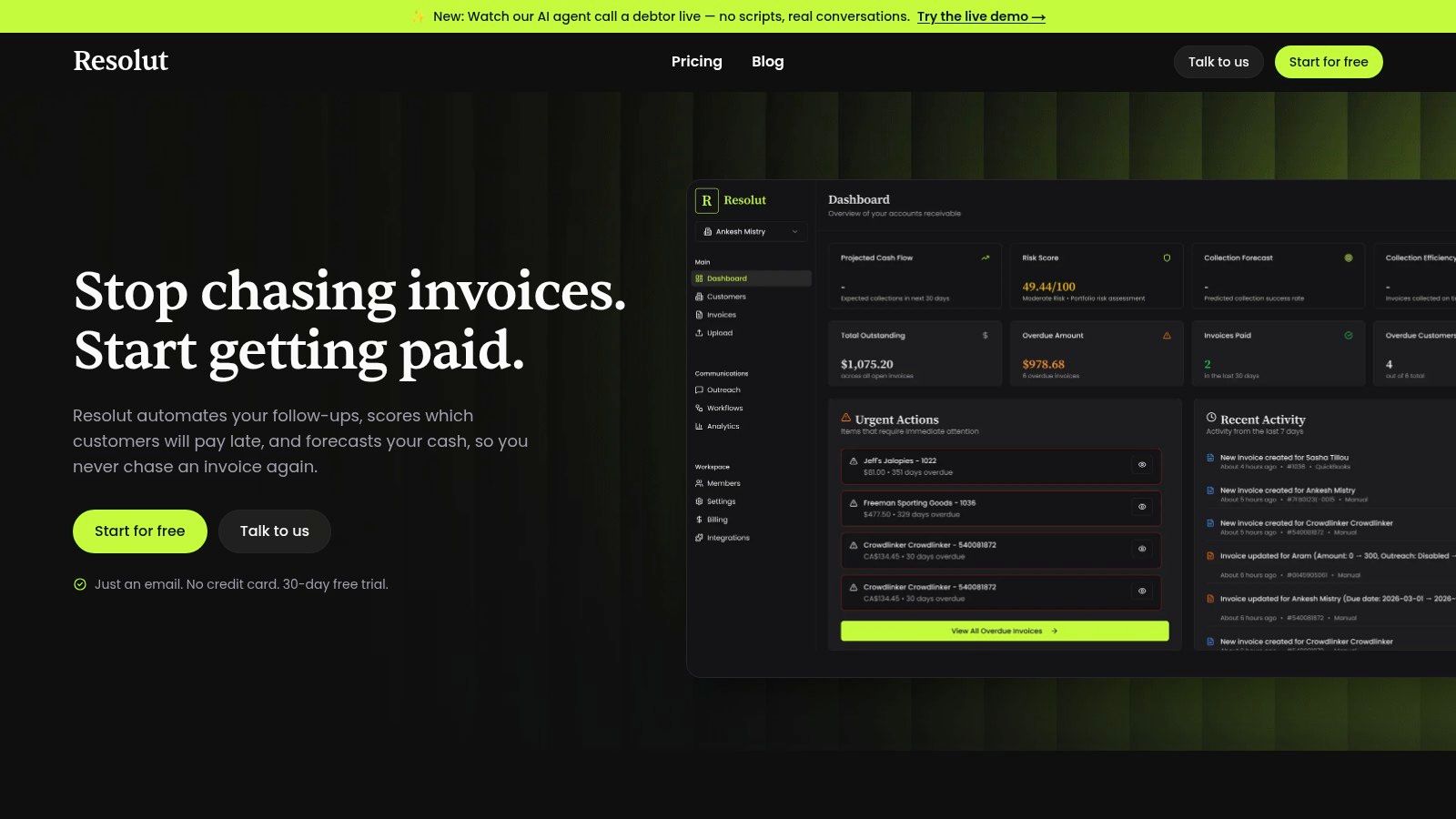
Its strongest fit is a firm that already makes reasonable credit decisions but struggles to carry them into daily AR follow-up. An approved limit has little operational value if nobody notices overdue invoices or continued delivery beyond that limit.
Where the platform earns its place
Resolut flags potentially risky invoices and personalizes outreach through email, SMS, and phone. A payment portal supports flexible payment methods, while automated cash application reduces manual payment matching.
Autopilot and co-pilot modes let finance choose between greater automation and human review. For a relationship-sensitive consulting or accounting firm, I'd start with approval controls over disputed accounts, changes in tone, and legal escalation.
- What works: Connected accounts receivable automation can turn risk segmentation into assigned outreach, payment options, and escalation.
- What needs verification: The available homepage information doesn't specify pricing, integrations, or implementation requirements.
- What it cannot replace: Your firm still owns credit policy, engagement terms, dispute decisions, and authorization to suspend work.
For firms evaluating AI AR automation, ask for a demonstration using a disputed milestone invoice, a partially paid retainer, and an account approaching its limit. Those situations reveal more than a clean reminder sequence.
If you need QuickBooks AR automation, verify the actual integration, synchronization rules, and treatment of credits and unmatched payments. Don't assume connectivity from a general automation claim.
Visual idea: Show an account timeline connecting approval, invoice delivery, dispute ownership, promised payment, and cash application. Mark where a person must approve the next action.
2. Aston AI, Customer Risk Management Excel Template
For a controller deciding how much unsecured exposure to approve, Aston AI's Customer Risk Management Excel Template offers a more direct starting point than a generic risk register. It scores customer creditworthiness and connects the result to a proposed credit limit.
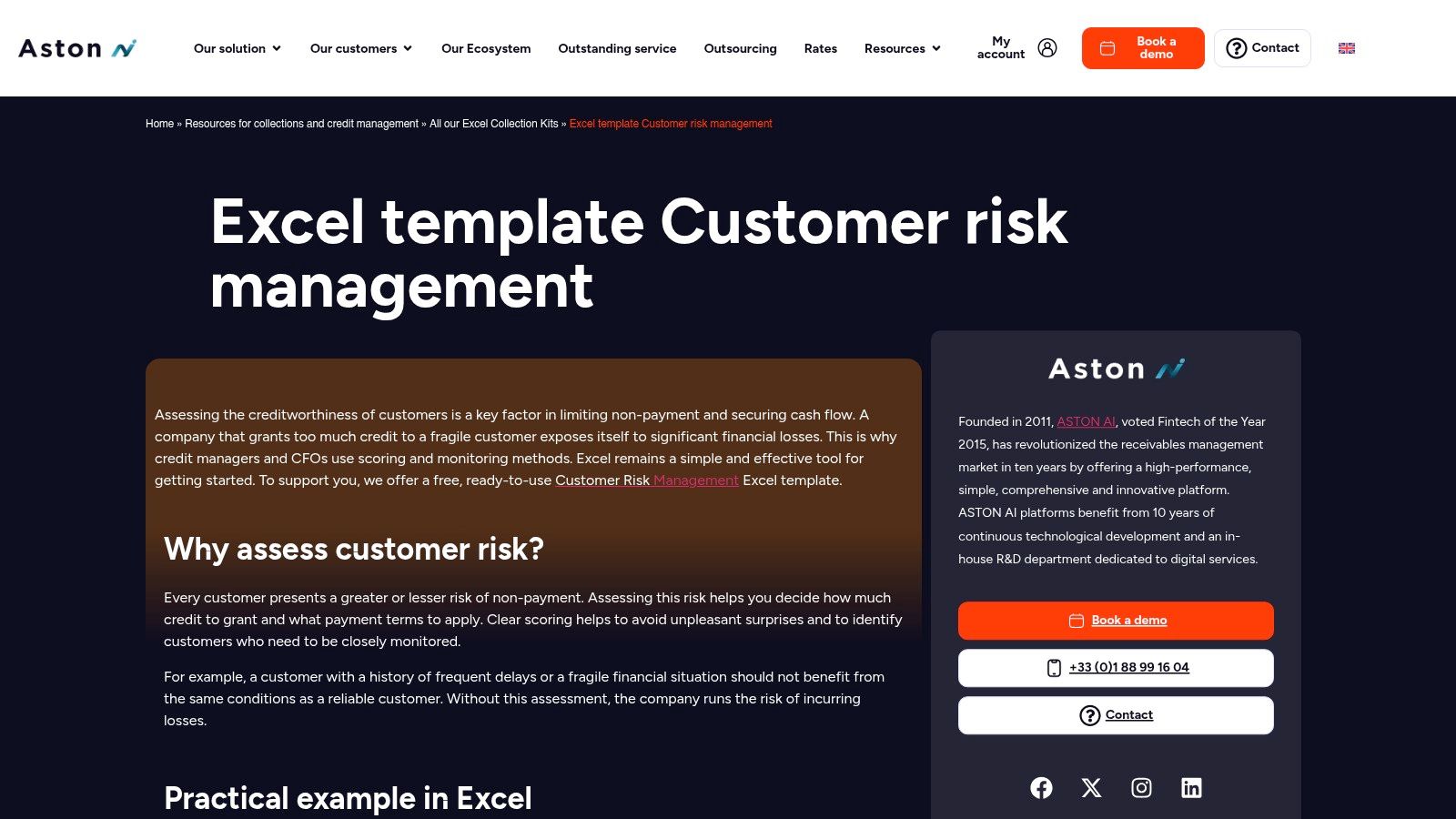
The free workbook considers financial condition, payment history, industry, and business volume. It calculates an overall score and compares outstanding balances with credit limits; a user guide supports setup.
Make the limit reflect delivery exposure
A professional services firm should extend the analysis beyond posted invoices. Include work performed but not billed and the work your team will complete before a hold can take effect.
Say a design agency bills after client acceptance. A customer can remain below its invoice limit while the delivery team accumulates substantial unbilled work. Record both exposures before approving another phase.
- Strength: A practical connection between customer assessment and limit setting.
- Trade-off: Inputs require manual maintenance, with no live payment behavior or external financial feed.
- Boundary: European-origin assumptions need review before applying them to US customer terms and policies.
Use a controlled master file, protect formulas, and retain the approved version. This credit risk analysis Excel template guide can help frame the supporting analysis.
The workbook won't alert a collector when a customer breaks a payment promise. Assign someone to refresh balances and reopen the assessment when behavior changes.
3. HighRadius, Business Credit Scoring Model and Credit Templates
Sometimes the immediate problem is inconsistent intake, not a missing score. HighRadius combines a business credit application with an Excel scoring model, making it useful when sales and finance currently collect different information.
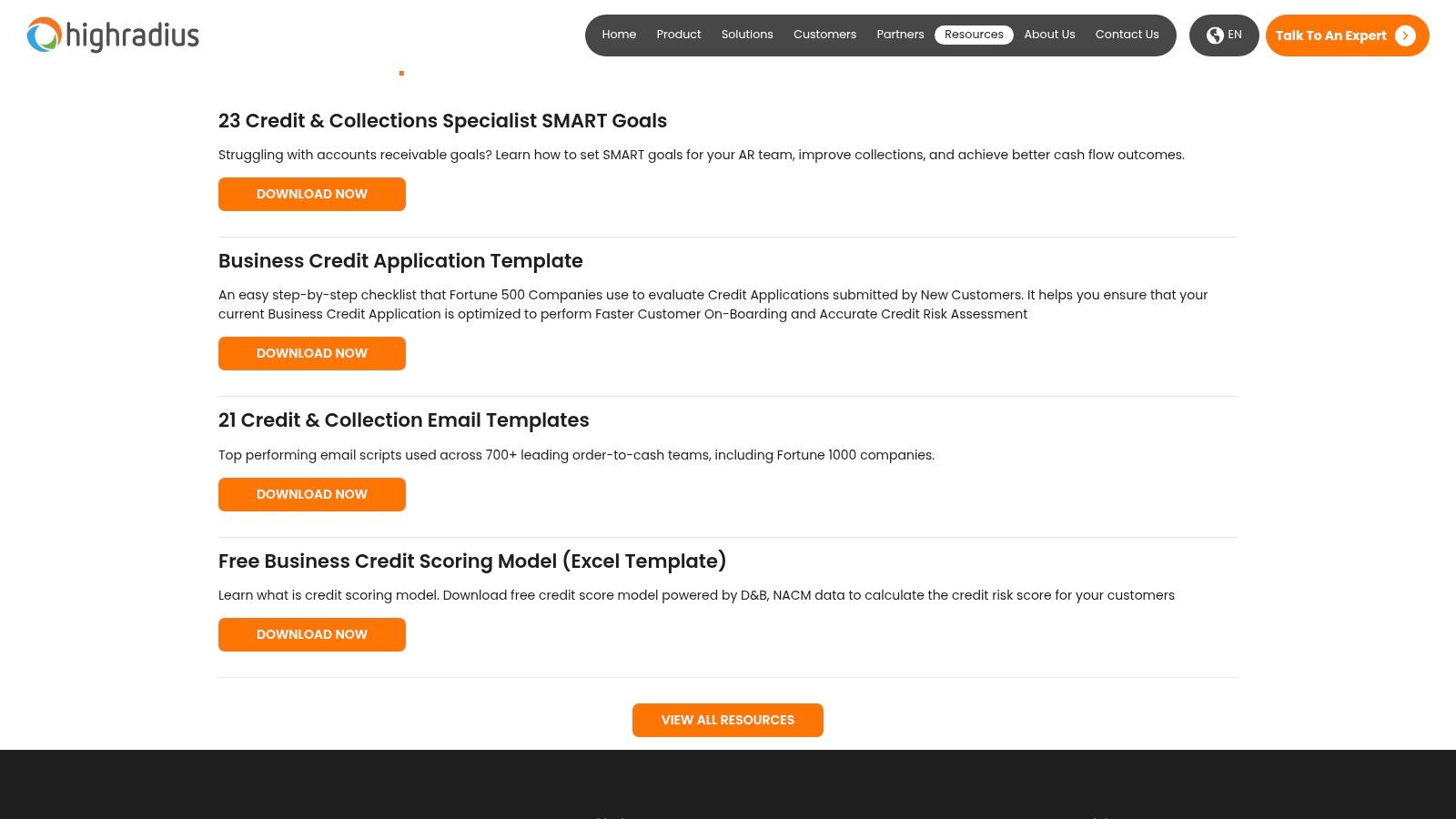
The free model draws on D&B and NACM data concepts. That doesn't mean downloading it supplies current bureau information or automated decisioning.
Keep the resource library separate from the software
The HighRadius credit template library also includes related credit and collections resources. Its broader platform offers automated applications, risk scoring, and collections workflows, but those capabilities aren't functions of the downloaded spreadsheet.
Use the application to establish customer identity, requested terms, and supporting evidence. Then configure the scorecard around your own approval thresholds, weights, and exposure policy.
- Useful pairing: Intake and scoring resources can reduce the handoff gaps between sales and finance.
- Required work: Your team must supply customer data and company-specific decision rules.
- Important limit: The resource page doesn't publicly specify software pricing.
For AR follow-up, transfer the approved limit, terms, reviewer, and next review date into the customer record used by collectors. Leaving those fields only in an application folder makes enforcement difficult.
This option suits a firm building a consistent process from scattered documents. It won't maintain that process without an owner, current evidence, and a connection to the aging report.
4. Upward Insights, Customer Credit Risk Calculator
Should you offer open terms, request a deposit, or bill differently? Upward Insights' Customer Credit Risk Calculator focuses on that commercial decision.
The free Excel workbook generates a customer risk score and suggests three invoicing or payment-term options. Its emphasis on prospective customers makes it useful before an engagement letter fixes expectations.
Use the output to negotiate workable terms
Say a consultancy is considering a client with limited financial information and a lengthy procurement process. The useful answer isn't just approve or decline. It may be a deposit, milestone billing, or a smaller initial scope.
The calculator offers a starting point for that discussion, but its methodology and validation are described in limited detail. Missing inputs should remain visibly missing rather than turning into favorable assumptions.
Practical rule: An incomplete assessment should produce a conditional decision, not a confident-looking score.
The spreadsheet is easy to adapt to internal review steps. Record which invoicing arrangement finance approved, who accepted the exception, and when the decision expires.
Its limitation is evidence quality: the workbook can't verify customer information or establish that its suggested terms fit your firm's risk appetite. Compare these credit risk assessment tools by the decisions they support, not by score presentation.
After approval, collectors need the agreed billing arrangement and escalation conditions. A calculator won't detect that the customer's payment process has changed.
5. Credit Research Foundation, Model Business Credit Application
A reliable assessment starts with knowing which legal entity owes the money. The Credit Research Foundation's Model Business Credit Application is an intake and documentation tool, not a scoring worksheet.
Use the Credit Research Foundation website to check the current canonical version. The circulated PDF is hosted by a law firm, so confirm the document before adopting it.
Adapt supplier language to services
The model collects business identity, company information, and applicant details, alongside a terms-and-conditions framework. That's more useful than a basic contact form when a customer requests payment terms.
Professional services firms should align it with the engagement agreement. Confirm the contracting entity, billing entity, authorized signatory, invoice destination, and any purchase-order requirements.
- Best use: Establish a consistent application record before extending B2B credit.
- Necessary adaptation: Have counsel review terms, authorizations, and conflicts with your engagement documents.
- What it cannot do: Produce a customer risk score or recommend a credit limit.
Don't confuse a signed application with verified capacity to pay. Finance still needs an assessment of the evidence and an approval decision.
For collections, capture the operational details that prevent avoidable delays: who approves invoices, where supporting time records belong, and how the customer raises disputes. A complete application helps only if those details reach billing and AR.
6. BusinessFormsPro, Customer Credit Analysis Form
When a customer asks for a higher limit, the missing document is often the reviewer's recommendation. BusinessFormsPro's Customer Credit Analysis Form provides a place to record that judgment.
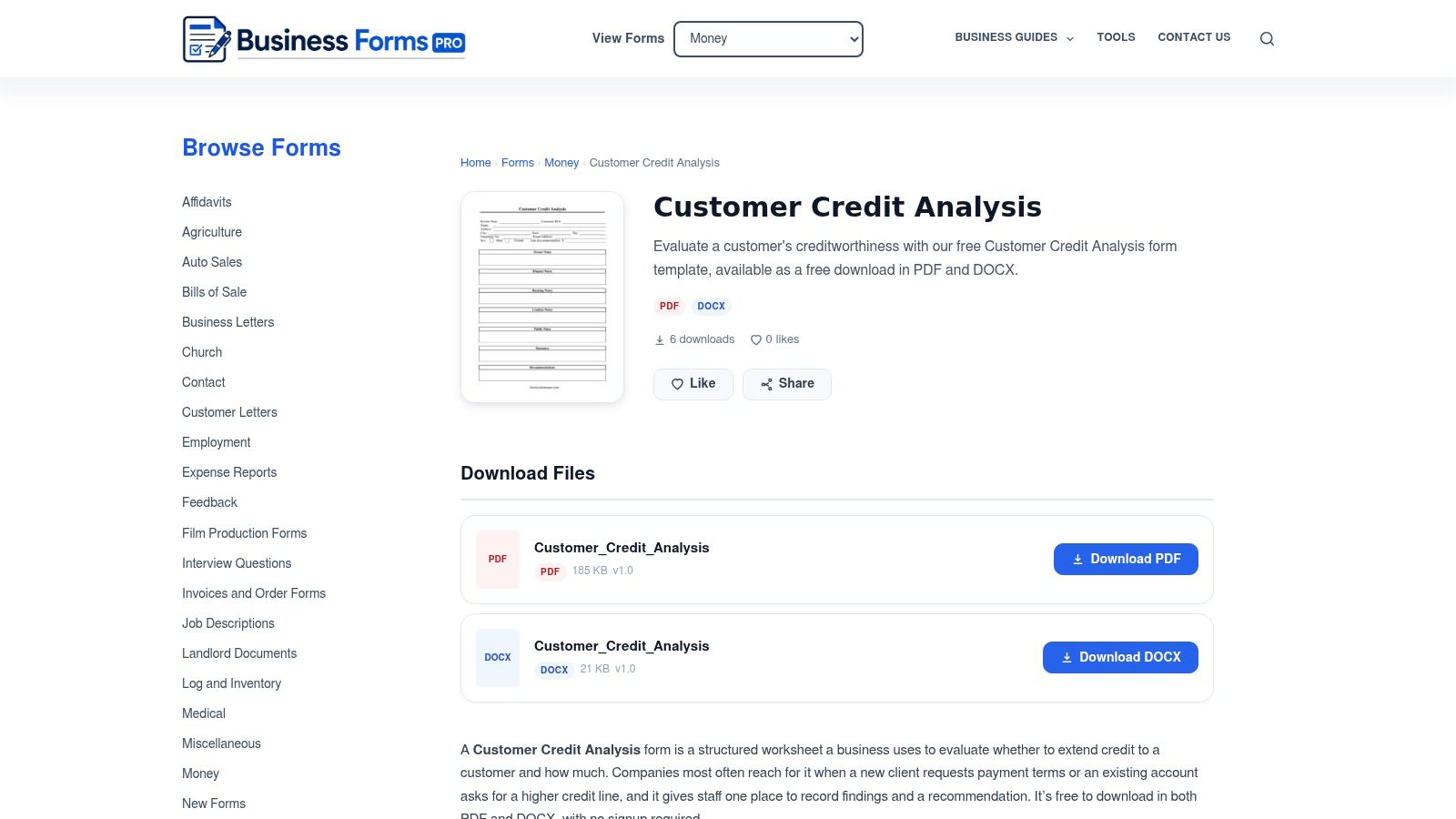
Available free in PDF and DOCX formats, it suits new credit requests and limit changes. It's a review worksheet, not a complete application or a source of external customer information.
Write a recommendation someone can enforce
A useful review explains the request, evidence, current exposure, proposed decision, and conditions. Add approval authority and an expiration date when adapting the editable document.
Avoid recommendations such as acceptable risk without an explanation. State whether finance supports the requested limit, requires a deposit, or permits additional work only after payment clears.
- Advantage: A simple, editable record of human review without building a form from scratch.
- Weakness: No defined scoring methodology or meaningful automation.
- Separate requirement: Customer agreements and payment terms still need their own documentation.
Connect the approved recommendation to the next AR action. If approval depends on clearing overdue invoices, name the person who confirms receipt before delivery resumes.
This form is particularly useful when exceptions need a written rationale. It won't make reviewers consistent by itself; give them common criteria and require evidence for each exception.
7. Paidnice, Business Credit Application Form Template
Customer onboarding often fails at the handoff. Sales collects a form, finance approves terms, and billing later discovers that nobody confirmed the customer's invoice requirements.
Paidnice's Business Credit Application Form Template combines a copyable application with guidance on application checks and monitoring payment behavior.
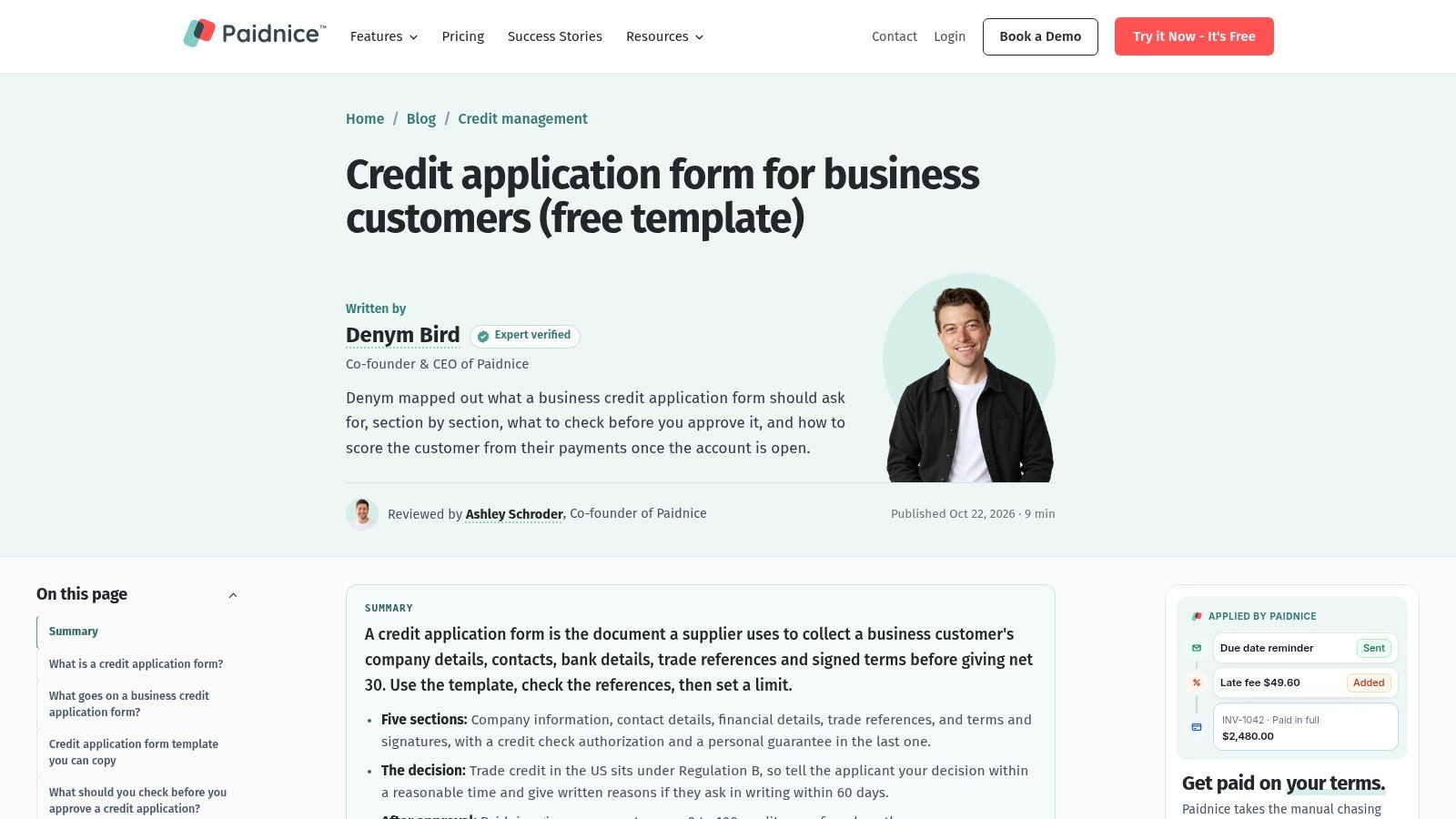
Choose the format your team will maintain
Word, Excel/CSV, and printable PDF options make the free template adaptable to different onboarding processes. Paidnice states that entries made in its browser-based downloads aren't sent to Paidnice.
The form primarily gathers information and authorization. It doesn't provide a weighted scoring model, establish your approval authority, or determine appropriate terms.
- Good fit: A firm formalizing B2B payment-terms applications.
- Policy work: Define your own evidence requirements, credit limits, and approval rules.
- Legal work: Review consent and contractual language before sending it to customers.
For service engagements, add fields for the accounts-payable contact, portal requirements, purchase-order owner, and supporting documentation. Those details help distinguish administrative delays from genuine payment deterioration.
Route the completed application into a named review queue rather than a shared inbox with no owner. Once approved, copy the terms and collection contacts into the system used for follow-up.
The template supports onboarding discipline. It cannot monitor whether the customer keeps the promises made during onboarding.
8. Docsie, Credit Risk Assessment Template
Docsie's Credit Risk Assessment Template is strongest when the question is who reviewed what, using which evidence. It's more documentation framework than ready-made trade-credit scorecard.
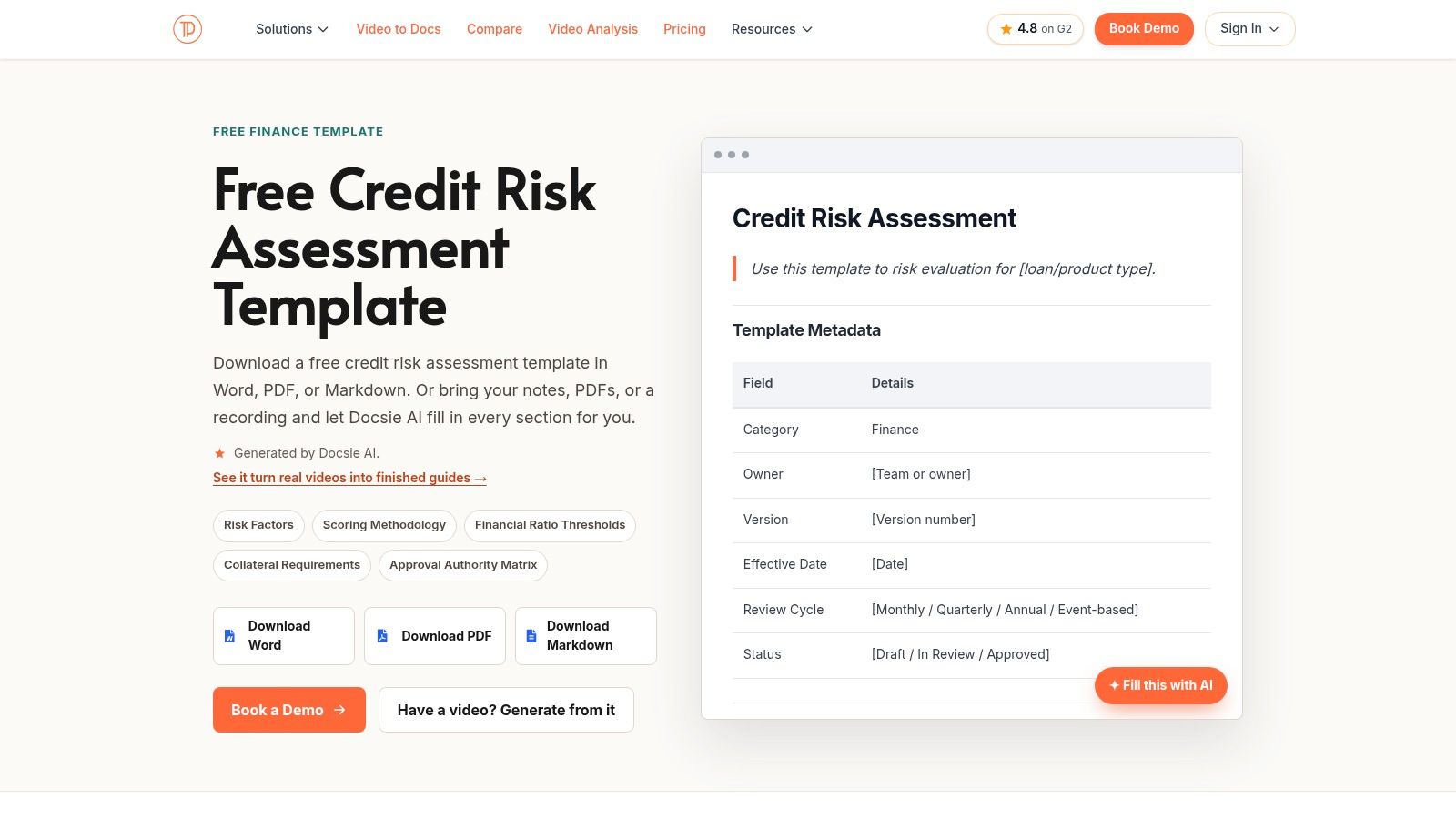
Word, PDF, and Markdown versions include risk factors, weights, evidence sources, ownership, status, and review cycles. That structure helps a finance team preserve the reasoning behind approvals and exceptions.
Document the trigger as well as the review
The generic placeholders require adaptation. Docsie doesn't supply customer data, tested scoring thresholds, or a spreadsheet-based limit calculation.
Use its review fields to record what should reopen an assessment: repeated broken payment promises, expanding disputes, a change in ownership, or exposure beyond the approved level. This explanation of credit risk assessment helps distinguish evidence gathering from the eventual decision.
A review date tells you when to look again. An event trigger tells you when you can't wait.
For automated scores, preserve the model version, input date, reason codes, reviewer, and override rationale. The Government Accountability Office's analysis of AI in financial services identifies model risk management, transparency, performance testing, and independent validation as important controls.
Docsie can document those controls, but it won't execute them. Someone must validate alerts and authorize changes to customer terms.
9. Highako by HighRadius, Credit Scoring Sheet
Weighted scoring helps when reviewers reach different conclusions from the same facts. Highako by HighRadius provides a downloadable Credit Scoring Sheet with weighted criteria, customer classification fields, and sample score-to-terms bands.
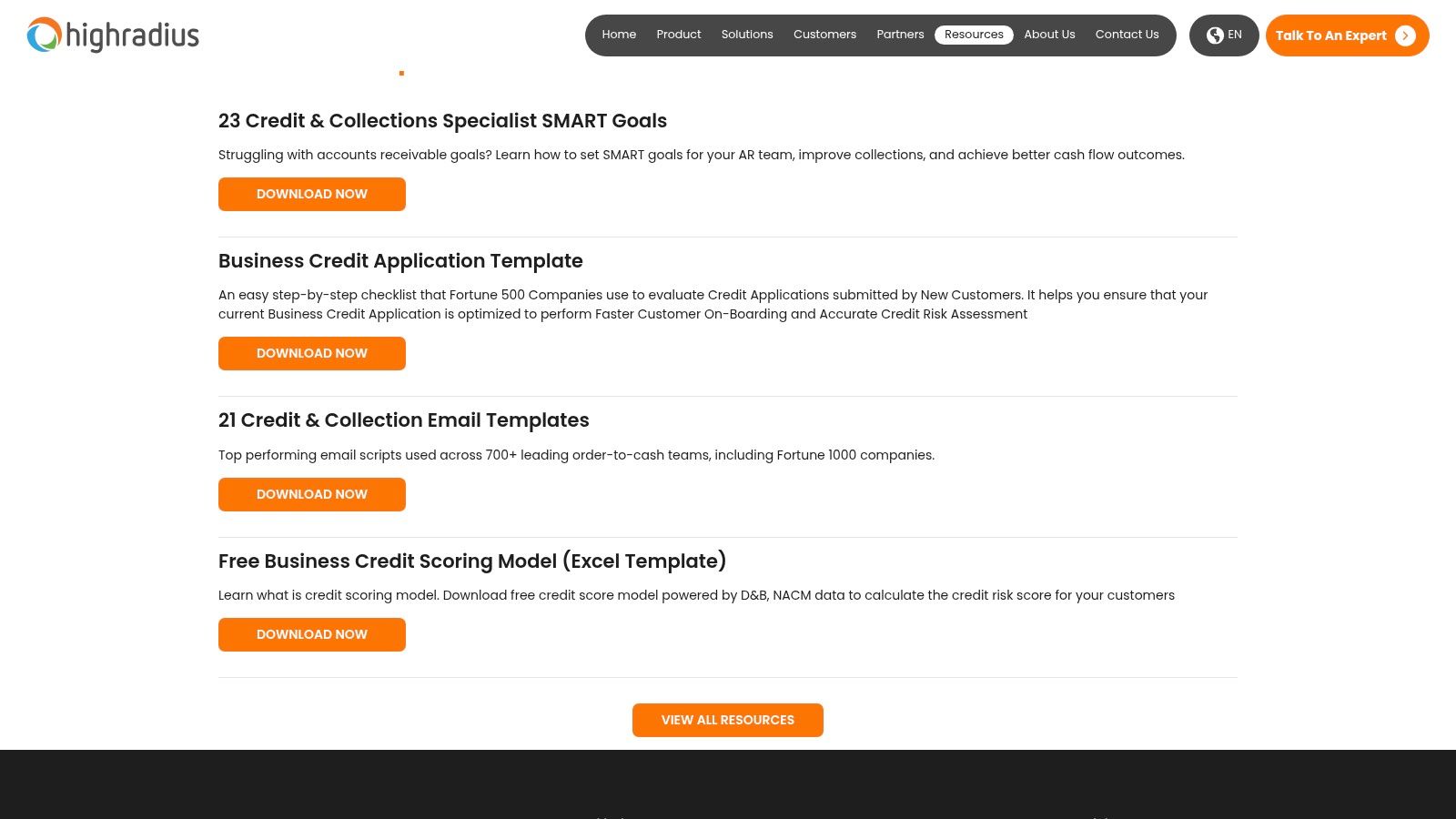
Find the worksheet through the HighRadius credit resources website. Treat the sample sales and credit-review factors as material for policy design, not a validated model for your firm.
Replace the sample assumptions
Some sample classifications relate to payment or lease terms rather than ordinary B2B services credit. Review the weights and thresholds before using the result to approve exposure.
A profitable customer with slow invoice approval may need a different billing arrangement, not the same response as a customer with deteriorating liquidity. Keep those causes separate in the scoring criteria.
- Strength: A concrete structure for discussing weights and improving reviewer consistency.
- Customization burden: Replace sample classifications and score-to-terms bands with your own policy.
- Hard limit: The worksheet doesn't supply current financial statements or bureau information.
Before rollout, ask reviewers to score the same anonymized accounts independently. Investigate differences in interpretation and unclear evidence requirements.
Then compare classifications with actual payment outcomes. A scorecard that looks orderly but doesn't distinguish collection problems needs revision, not more decorative risk bands.
10. Smartsheet, Credit Reference Form
References can strengthen an assessment, but they're supporting evidence. Smartsheet's Credit Reference Form collects bank and trade-reference information without scoring the customer or recommending approval.
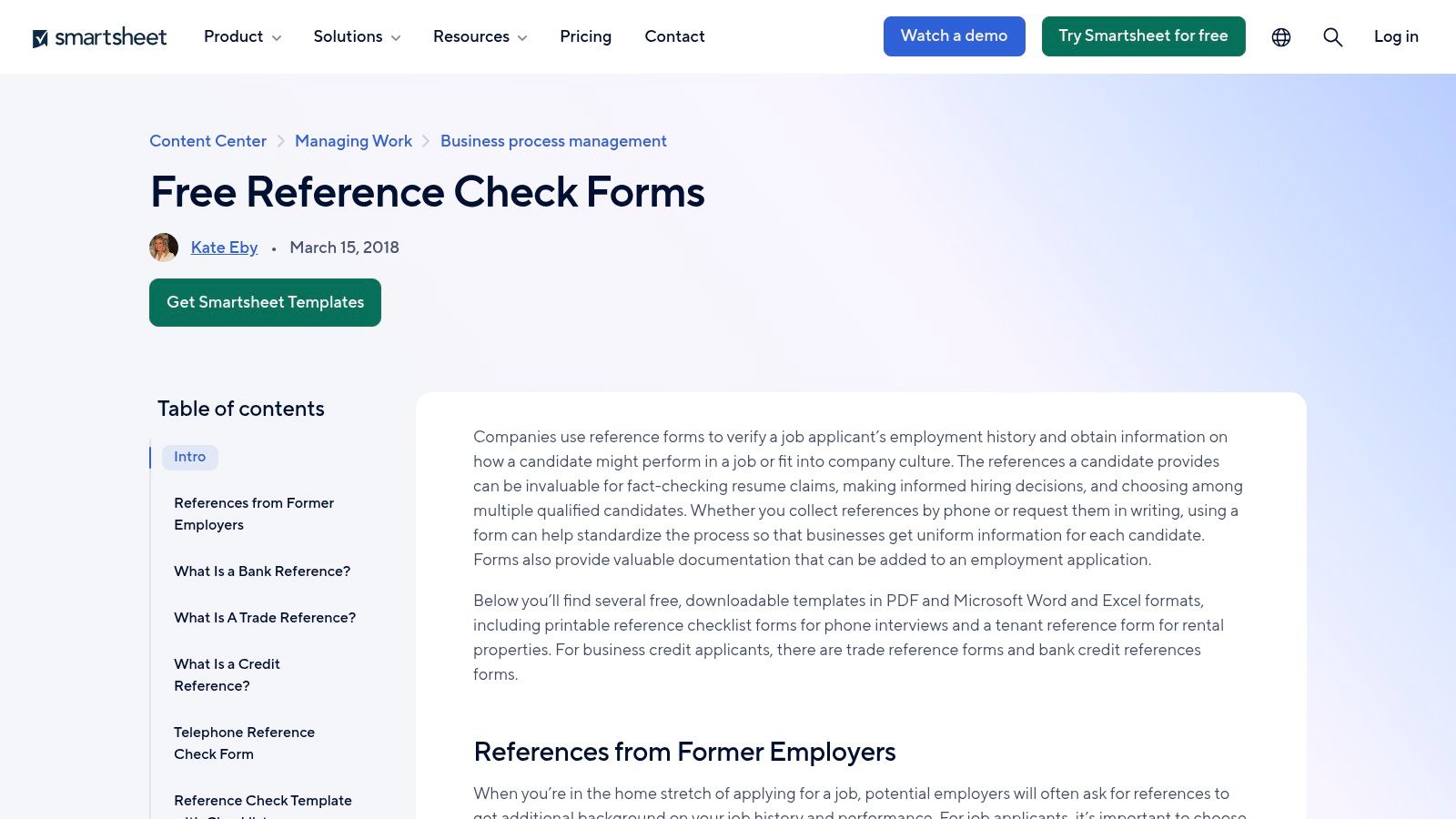
The free form comes in Excel, Word, and PDF formats. Editable fields make it easy to standardize business details and reference questions.
Ask about comparable exposure
A positive reference carries more weight when the supplier's experience resembles your proposed arrangement. Ask about the relationship, usual terms, payment timeliness, disputes, and whether the reported experience concerns comparable exposure.
Record the response date and how you verified the respondent. A customer-selected reference may provide a narrow view, and an unanswered request isn't proof of financial distress.
- Useful role: Supplement an application and internal scorecard with external observations.
- Operational drawback: Responses can arrive slowly or remain incomplete.
- Missing functions: No scoring, approval workflow, or credit-limit process.
For a professional services engagement, ask whether delays arose from payment capacity, invoice approval, or disputed work. Each answer points to a different control.
Pair the form with a decision record rather than filing it as an isolated attachment. Collectors need the relevant implications, such as a strict documentation requirement or known procurement delay, not just a favorable reference.
How the ten templates differ on format, built-in scoring, live data, and best fit
Item | Format | Built-in Scoring | Live Data | Best For |
|---|---|---|---|---|
Resolut AI Homepage (Recommended) | AI-powered accounts receivable platform | Risk assessment and at-risk invoice flags | Uses receivables and payment activity; external data feeds unspecified | Automating receivables, collections, and customer outreach |
Aston AI, Customer Risk Management Excel Template | Excel spreadsheet | Multi-factor score and credit-limit calculation | No; inputs require manual updates | B2B customer risk scoring tied to credit limits |
HighRadius, Business Credit Scoring Model and Credit Templates | Excel templates and application form | Credit scoring worksheet | No; bureau data is not provided live | Combining customer intake with manual credit scoring |
Upward Insights, Customer Credit Risk Calculator | Excel workbook | Risk score with suggested payment-term options | No; depends on entered information | Connecting customer assessment to payment-term decisions |
Credit Research Foundation, Model Business Credit Application | Business application document | No scoring; information intake only | No | Collecting business customer details before extending credit |
BusinessFormsPro, Customer Credit Analysis Form | PDF and DOCX form | No defined scoring method | No | Documenting a manual credit review and recommendation |
Paidnice, Business Credit Application Form Template | Word, Excel/CSV, and PDF template | No weighted scoring model | No; payment behavior guidance is provided | B2B credit onboarding and application collection |
Docsie, Credit Risk Assessment Template | Word, PDF, and Markdown template | Customizable risk-factor fields; no preset scoring | No; data sources are documented manually | Documenting repeatable risk reviews and controls |
Highako by HighRadius, Credit Scoring Sheet | Excel-oriented worksheet | Weighted scoring and sample classifications | No; current financial or bureau data not included | Creating a customized internal scoring process |
Smartsheet, Credit Reference Form | Excel, Word, and PDF form | No scoring or approval recommendation | No; references must be collected | Gathering bank and trade references for a credit review |
Start With the Template That Fits Your Next Credit Decision
Choose the tool that answers the question in front of you. Use an application for missing customer information, a scorecard for limit setting, a reference form for supporting evidence, and a documentation framework for review ownership.
Don't introduce every file at once. For a firm with inconsistent approvals, a maintained decision record is more useful than an elaborate scoring model nobody updates.
Assign the work before adding complexity
Name the controller as policy owner, an AR lead as monitoring owner, and the engagement partner as the person responsible for resolving service disputes. Set a weekly review of exceptions and overdue accounts, with scheduled reassessments based on exposure and customer risk.
Track DSO and the share of invoices past due for one quarter before adding complexity. Define whether that share measures invoice count or invoice value, then keep the definition consistent.
- At approval: Record the limit, terms, evidence date, approver, and next review.
- During delivery: Monitor billed and unbilled exposure before accepting more work.
- After invoicing: Assign follow-up, dispute resolution, payment promises, and escalation.
DSO needs context. Synovus identifies a typical professional-services DSO range of 40–55 days, but warns that a firm with net-30 terms and a 55-day DSO has a serious collection problem.
Compare actual performance with the terms you agreed, not only an industry range. Separate administrative disputes from customers that can't or won't pay, because reminders won't resolve missing approvals or contested deliverables.
Visual idea: Pair a DSO trend line with past-due invoice value, annotated when billing requirements, credit terms, or follow-up ownership changed. This helps finance distinguish operational improvements from changes in customer mix.
Connect the decision to collections
Every approved limit needs a collections plan. Specify the invoice recipient, reminder approach, dispute owner, conditions for pausing further unsecured work, and authority to release a hold.
When spreadsheet updates and follow-up queues start diverging, evaluate AR software for professional services. Ask vendors to demonstrate how a changed risk assessment affects outreach, human approval, payment matching, and reporting.
A credit risk assessment template standardizes judgment; it doesn't chase invoices. To reduce DSO and improve cash flow, finance needs both a defensible decision and reliable execution after that decision.
Resolut automates AR for professional services, consistent, accurate, and human.
Resolut connects credit risk assessment with collections, personalized outreach, billing, and cash application, so approved terms can guide daily AR work. Visit Resolut to discuss how automated workflows and human review could support your firm's credit policy and collections process.