Customer Authentication: Boost Cash Flow in 2026
See how modern customer authentication reduces payment friction, lowers DSO, & improves cash flow for professional services firms. Essential guide for finance
A payment can look routine on the calendar and still stall at the last step. The invoice is approved, the client has funds, the relationship is healthy, and then the payment fails because the customer authentication step breaks at the portal, the device, or the collections channel.
For a professional services firm, that is not a nuisance. It is a cash flow event, a client experience issue, and a control failure in the same moment. When finance teams treat customer authentication as a front-end security issue only, they miss where it hits the ledger, inside the receivables workflow, where a valid payment can be delayed, disputed, or abandoned.
When a Secure Payment Becomes a Failed Payment
A controller usually hears about customer authentication only after a payment stalls. The client was ready to pay, but the portal asked for one more step, the SMS code arrived late, or the client questioned the message because it came through an unfamiliar channel. What looks like a clean security control from the outside can become a failed payment from the finance side.
That is the operational problem. In receivables, the question is not only whether an account is protected. It is whether the right customer can prove identity quickly enough to move money without creating doubt or friction. If the process feels clumsy, the invoice stays open, the collector follows up again, and the firm takes on more administrative drag on top of slower cash.
For a B2B firm, that drag often shows up before it becomes a write-off. It appears in extra touches, longer disputes, and more time spent explaining that the request is legitimate. A clunky authentication flow can also damage trust at exactly the wrong time, during collections outreach, when the customer is already deciding whether the message is real.
Practical rule: if the authentication step makes a paying client hesitate, finance should treat it as a collections issue, not just a security setting.
The broader market is moving because the stakes keep rising. The customer authentication market reached $18.6 billion in 2025 and is projected to reach $67.3 billion by 2034, reflecting how central secure verification has become as businesses shift toward automated, AI-driven orchestration (marketintelo.com). In receivables, that shift is significant, billing portals and payment methods now sit inside the control framework, not outside it.
A related operational lens on failed payments and missed bank pulls is NSF banking meaning, which connects payment failure to working-capital discipline. Security and cash flow are part of the same operating decision, and collections teams feel the result when authentication gets in the way of payment. The same caution applies to protecting private SMS communications, because the channel used to verify a payer can affect whether the client trusts the request enough to complete it.
Authentication Beyond the Login Screen

A collections manager can lose a payment before the invoice is even disputed. The client gets the reminder, pauses at the verification step, and decides the request feels risky or inconvenient. In B2B professional services, that hesitation shows up as delayed receipts, extra follow-up, and more manual work for finance.
That is why customer authentication has to be handled beyond the login screen. In receivables, the primary control point is not only account access, it is the moment a client confirms a payment, approves a bank pull, or responds to an outreach message from collections. If the flow feels too strict, payment intent drops. If it feels too loose, the finance team takes on more fraud and invoice dispute risk.
The common categories still matter in this setting. Knowledge is something the user knows, usually a password or PIN. Possession is something the user has, such as a phone or token. Inherence is something the user is, like a biometric fingerprint. Strong Customer Authentication combines at least two independent factors, and for remote transactions it also requires dynamic linking, where the authentication code is tied to the specific amount and payee. That framework is useful, but collections teams still have to decide how it works when the customer is approving a real payment under time pressure.
The gap in most security writing is that it stops at access control and never gets to collections friction. Finance teams need a process that helps confirm the right payer without making the exchange feel adversarial. The article on passwordless authentication challenges across the customer journey speaks directly to that problem, and the email verification API guide is another useful reference for reducing bad contact data before it creates payment delay. In practice, bad contact data turns a simple reminder into a chase, and that slows collections just as much as a weak approval flow.
A finance operator should frame the question more narrowly. Authentication at the AR layer is not just, “Who are you?” It is, “Can this person approve this payment on this channel without creating extra risk or extra delay?” That is the level where billing, collections, and cash flow meet.
Hosted payment flows also matter because they shape how much trust a client gives the request in the first place. The workflow examples in hosted payment gateway show why payment confirmation and authentication should be designed together, since a good setup reduces doubt instead of adding another handoff for the customer to question.
A good collections authentication flow protects the transaction without forcing the client to feel accused.
A Controller's Guide to Authentication Methods
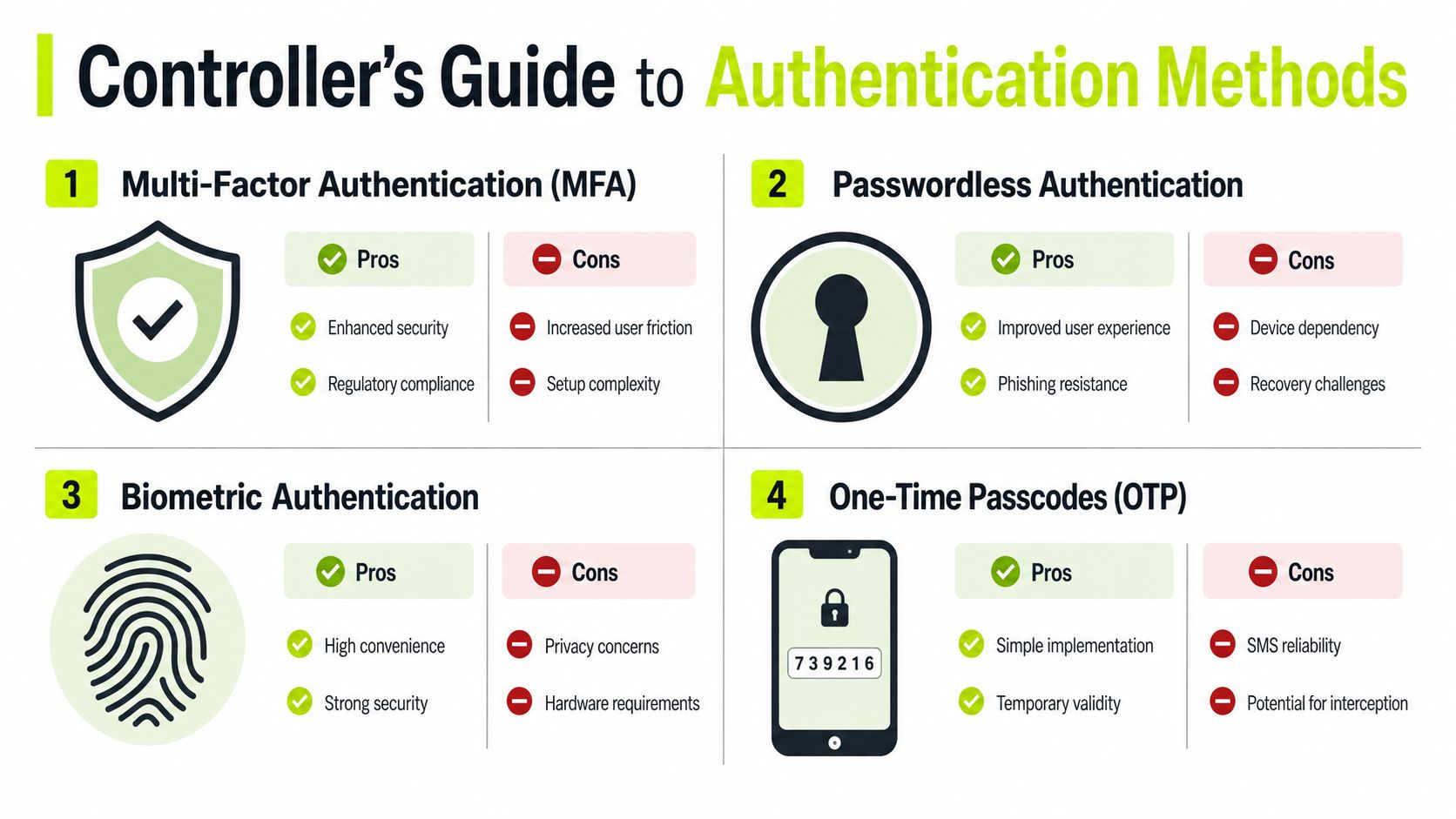
Finance leaders don't need a cryptography seminar. They need to know which methods create speed, which create friction, and which ones fit recurring B2B payments without turning every invoice into a support ticket.
MFA and OTP, the familiar baseline
Multi-factor authentication (MFA) adds a second step, usually a code, device prompt, or biometric confirmation. It's the baseline control many teams already understand, and it's useful when the account risk is heightened or the client is changing payment details.
One-time passcodes (OTP) are easy to deploy, which is why they show up everywhere. The trade-off is obvious in receivables, because if the message delivery path is unreliable or intercepted, payment approval slows down or gets rerouted into manual follow-up.
Passwordless, biometric, and device-based controls
Passwordless authentication reduces password fatigue and can make repeat client access smoother. It's also more resistant to phishing than password-only flows, but it depends heavily on device recovery and user enrollment quality.
Biometric authentication is often the cleanest user experience. Fingerprint or face approval feels fast for a trusted client, but finance teams should still care about device support, privacy handling, and what happens when the user changes hardware.
Where 3DS and tokenization fit
3D Secure 2.0 matters when card payments are part of the AR stack. It helps push authentication into the card flow itself, which can reduce exposure on card-not-present transactions when it's implemented well.
Tokenization is different. It protects stored payment credentials by replacing them with tokens, which reduces sensitivity if payment details are stored or reused. It doesn't replace authentication, but it lowers the blast radius when a payment method is saved for recurring billing.
Operational shortcut: if the method slows down trusted repeat payers, ask whether the risk is high enough to justify that friction.
For teams using B2B online payment methods, the right question is not “which method is strongest?” It's “which method creates the fewest failed payment attempts for this client segment, with this invoice type, on this channel?”
Balancing Friction with Payment Success
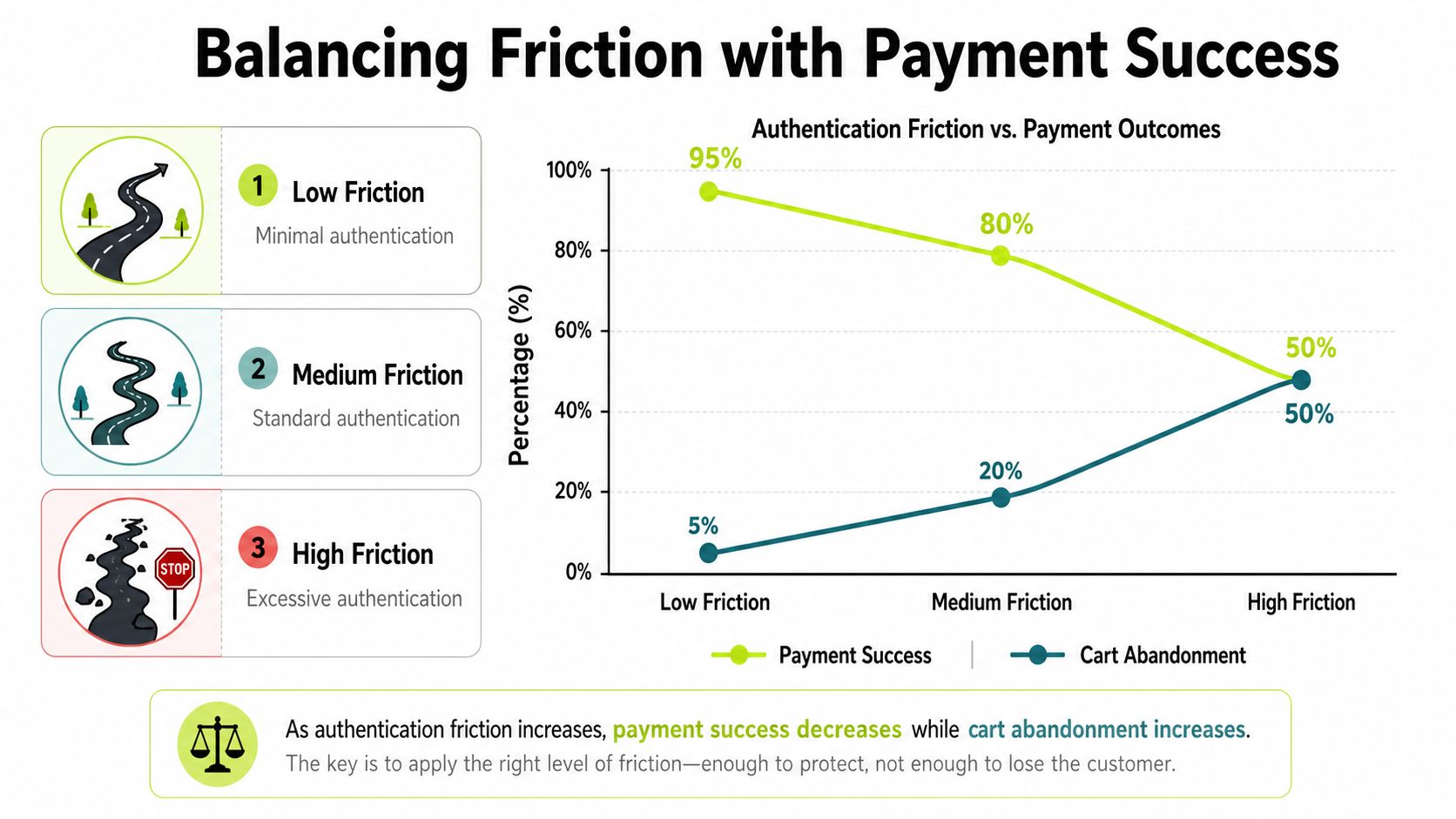
A payment can be secure and still fail the finance team. In receivables, every extra challenge can turn into a delayed invoice, a back-and-forth with the customer, or a manual cleanup step that should never have been needed. The goal is calibrated friction, not maximum friction.
Strong Customer Authentication already reflects that logic. It requires at least two independent factors from knowledge, possession, and inherence, and for remote transactions it requires dynamic linking, where the authentication code is cryptographically tied to the exact amount and payee (Auth0). That is a targeted control, not a blanket obstacle.
Why uniform security creates avoidable drag
A high-value, unfamiliar payment should not be treated the same way as a trusted recurring debit. A stable client paying a routine invoice should not face the same burden as a first-time payer who is also changing bank details. If every transaction gets the same level of challenge, the client experience gets worse and the finance team spends more time recovering payments the system should have collected cleanly.
Adaptive or step-up authentication helps AR teams avoid that problem. It lets finance reserve stronger verification for riskier events, such as a new payee, an unusual amount, or a change in funding source. Trusted repeat activity can stay lighter, which supports conversion and reduces the chance of a legitimate payment stalling halfway through the process.
The collections angle matters as well. A payment that stalls during authentication often shows up as a collections task, even when the customer intended to pay. Finance teams then have to decide whether to resend instructions, verify identity again, or wait for the client to retry. That is operational drag, and it sits squarely inside cash flow management.
The regulatory side still matters. PSD2 made SCA a legal requirement in the EU for applicable remote transactions, and that changed the operating model for payment teams. Security cannot be optional, and payment success cannot be treated as secondary. The task is to meet the rule without creating avoidable failure points for receivables.
What good balance looks like in practice
A workable policy starts with transaction context, not with technology fashion. Invoice age, payment history, client relationship, and channel trust all matter. So does the cost of a false decline, because blocking a real payment can do more harm than asking for one more step on a clearly risky transaction.
A practical review usually looks like this:
- Trusted recurring clients: keep the flow light unless something changes.
- High-risk payment changes: add step-up verification and tighter linking.
- Collections outreach: confirm intent without pushing the customer into a suspicious-looking loop.
- Card payments: align the authentication method with the card flow, not against it.
For B2B professional services, the collections friction blind spot emerges. A firm can do everything right on the invoice side and still lose days of cash because the payment experience makes a good client hesitate. The best setup protects the account, protects the relationship, and keeps finance from having to intervene on routine receipts.
The point is simple. Authentication is a dial, not a switch. When finance teams set it by risk, they protect revenue and preserve the relationship at the same time.
The Financial Impact on AR Metrics and Cash Flow
The finance case for better customer authentication is easier to make when you stop treating it as a technical line item. A failed payment step is a receivables event, because it pushes cash further out, creates extra touches for collections, and adds noise to the close. That's why authentication belongs in the same conversation as working capital, not just compliance.
The market context shows why this is becoming a bigger issue. Nearly 60 percent of employed adults worldwide still relied on username and password combinations for personal account authentication in 2024, while 34 percent used mobile SMS-based authentication, even as phishing-resistant authenticators rose from 8.6 percent to 14.0 percent of users in one year, a 63 percent year-over-year increase (Statista). Legacy methods still dominate, but the direction of travel is clear.
For AR teams, that shift matters because legacy methods are often the least comfortable fit for high-value B2B collections. They create more room for credential stuffing, SMS delay, and user doubt. When the payment path depends on them, the finance team inherits the operational mess.
Where the cost shows up
The first cost is manual follow-up. If a payer can't clear the authentication step, someone on your team has to chase, explain, resend, or escalate. That's time your collectors should be spending on real exception work, not re-running a failed workflow.
The second cost is DSO pressure. Failed or delayed payment authorization doesn't always become an overdue invoice immediately, but it pushes receipts further from the due date and makes the aging report less trustworthy. That weaker visibility makes cash planning harder for Controllers and CFOs.
The third cost is relationship strain. Every extra verification prompt creates a chance for a client to feel mistrusted. In professional services, that matters because the commercial relationship often extends beyond a single invoice.
The business case for better automation
There's also a hard-dollar side to the argument. Deloitte's Finance Operations benchmark confirms that organizations fully implementing AI-driven AR automation, covering cash application, collections intelligence, and dispute routing, achieve average annual cost savings of $4.20 per transaction compared to manual processing (Deloitte benchmark via Stealth Agents). That isn't an authentication stat by itself, but it shows how much operational waste disappears when the receivables process is orchestrated well.
According to 2026 data, professional services firms that don't follow up on 100 percent of overdue invoices every month miss a documented 76 percent uplift in collection rates from consistent cadence alone (Chaser). That tells you the biggest wins usually come from disciplined workflow, not from one dramatic tool swap.
The practical takeaway is blunt. If customer authentication creates avoidable friction, it becomes part of your collections cost base. If it's tuned correctly, it supports faster receipt, cleaner reconciliation, and better visibility across the AR stack.
Using Automation to Reduce Failed Payments
A payment failure is often a workflow failure, not a security failure. In professional services, the primary issue is usually collections friction, a trusted client gets slowed down by a step that should have been invisible, or a riskier payment slips through with too little challenge. AR automation earns its keep by deciding when to authenticate, how much verification to apply, and when the path should stay light for a payer the finance team already knows.
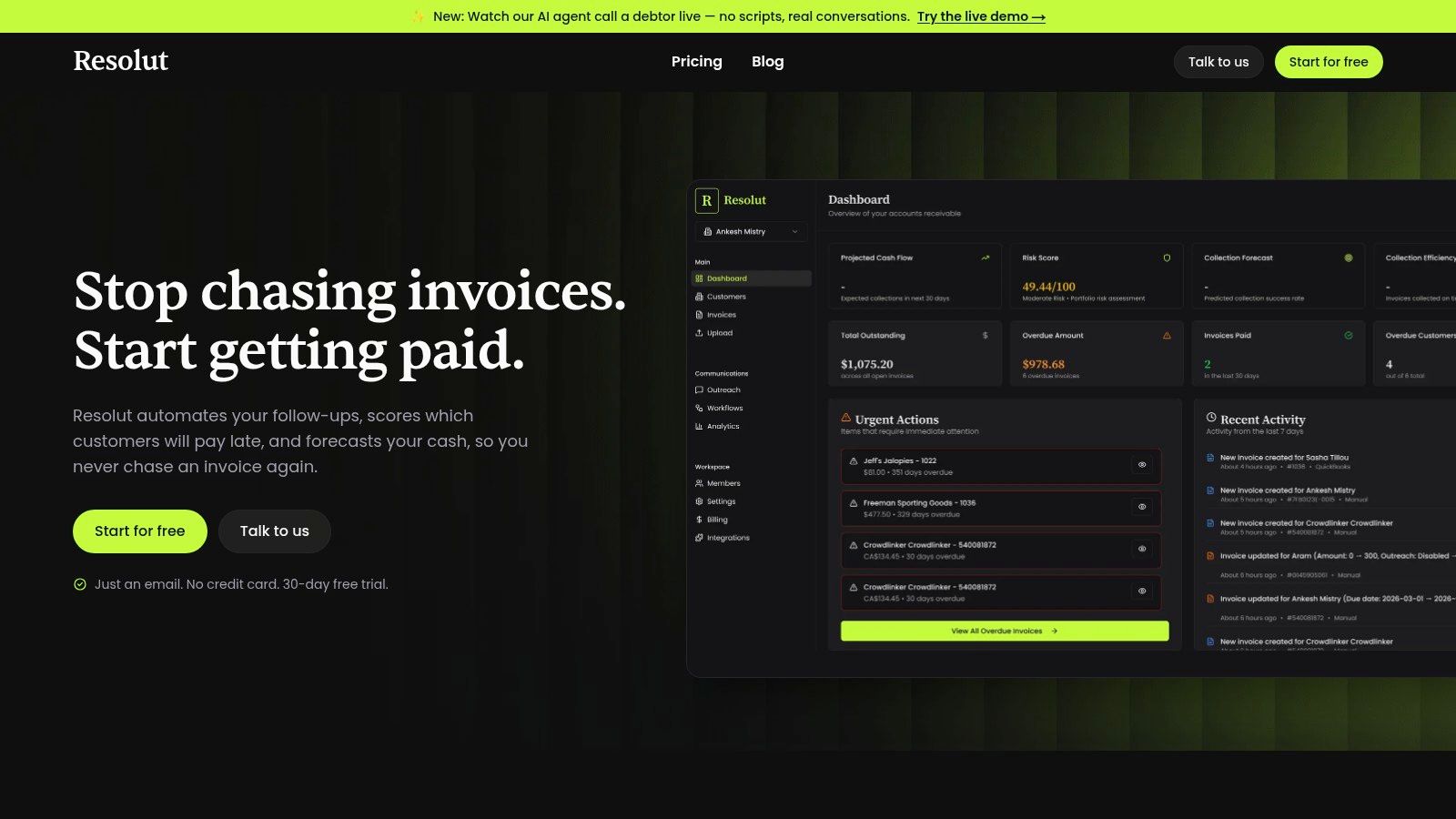
The operating model has to be adaptive. New payment methods, changes in billing details, or other higher-risk actions call for tighter verification. Recurring clients with a stable history should not be forced through the same checks unless the risk profile changes. That balance keeps automation from becoming another source of failed collections.
The broader market points in the same direction. The customer authentication market has been expanding as firms look for verification that protects transactions without interrupting business flow (marketintelo.com). In receivables, the same principle applies. Finance teams need payment recovery that stays fast, but still protects cash and reduces avoidable reversals.
What to look for in the workflow
The platform should connect authentication to the rest of the receivables process instead of bolting it on after the fact. Finance teams need the ability to tune friction by client risk, invoice age, channel trust, and payment method. The workflow should also reduce manual reconciliation, because authentication only helps if the payment can be matched, posted, and closed without extra cleanup.
For professional services firms, that means the system has to handle complex billing and support quick cash application. Versapay's work on professional services AR points to AI-driven cash application automation for that reason, since manual reconciliation still slows cash visibility (Versapay). The same operational logic applies across the AR stack, especially when teams use QuickBooks AR automation or other mid-market finance systems and need tighter control without adding admin overhead.
The practical rule is simple. Customer authentication should reduce doubt, not create it. If your current process makes good clients hesitate, the workflow needs redesign before you add more reminders or more people to the queue.
If you are rethinking receivables this quarter, start with the payment steps that create the most friction and the most manual follow-up. Compare them with your client risk profile, your payment methods, and the time your team spends resolving avoidable failures. A system that handles that orchestration with less noise can take pressure off collections and give finance a clearer view of what is getting in the way of cash.