
Does Soft Pull Affect Credit Score? Key Facts
Wondering does soft pull affect credit score? Learn the truth about soft inquiries and why they have no impact on your credit rating.
No, soft pulls do not affect credit scores. That matters because finance teams can screen risk, prequalify customers, and monitor exposure without creating score damage that slows approvals or spooks applicants.
For CFOs, controllers, and firm owners, this is not a consumer trivia question. It's a workflow question. A soft pull is a clean way to gather signal before you decide whether a hard inquiry is worth the friction, and that distinction matters in accounts receivable automation, AI AR automation, and any credit review process built to reduce DSO and improve cash flow.
The Short Answer on Soft Pulls
A soft pull does not affect a credit score. It can show up on a report, but it's treated as informational, not punitive, and that's the whole point.
That's why finance teams can use soft checks for early-stage screening without creating score drag. The bureaus and consumer-finance guidance are aligned on this. Soft inquiries are used when someone is reviewing credit for non-lending reasons, prequalification, or self-review, while hard inquiries are tied to a real application decision and can lower a score (CFPB guidance on credit inquiries).
For operators, the practical takeaway is simple. Use soft pulls when you want signal, not commitment. Use hard pulls only when you're ready to make the approval decision or when the application flow requires it. That keeps customer friction low and preserves trust.
Practical rule: if the question is “should we learn more?”, start with a soft pull. If the question is “are we extending credit now?”, that's when a hard pull belongs.
This is why soft checks fit neatly into AR software for professional services and QuickBooks AR automation workflows. They let a team separate discovery from decisioning. In plain English, you can sort accounts by risk earlier, without making every prospect pay a score penalty just to get to the next step.
The key is not just that soft pulls are harmless. It's that they're operationally useful. They help finance teams qualify faster, keep the experience cleaner, and avoid wasting hard inquiries on accounts that were never ready anyway.
How Credit Inquiries Actually Work
A credit inquiry is a record that someone accessed a credit file. The score model then decides whether that access should matter.
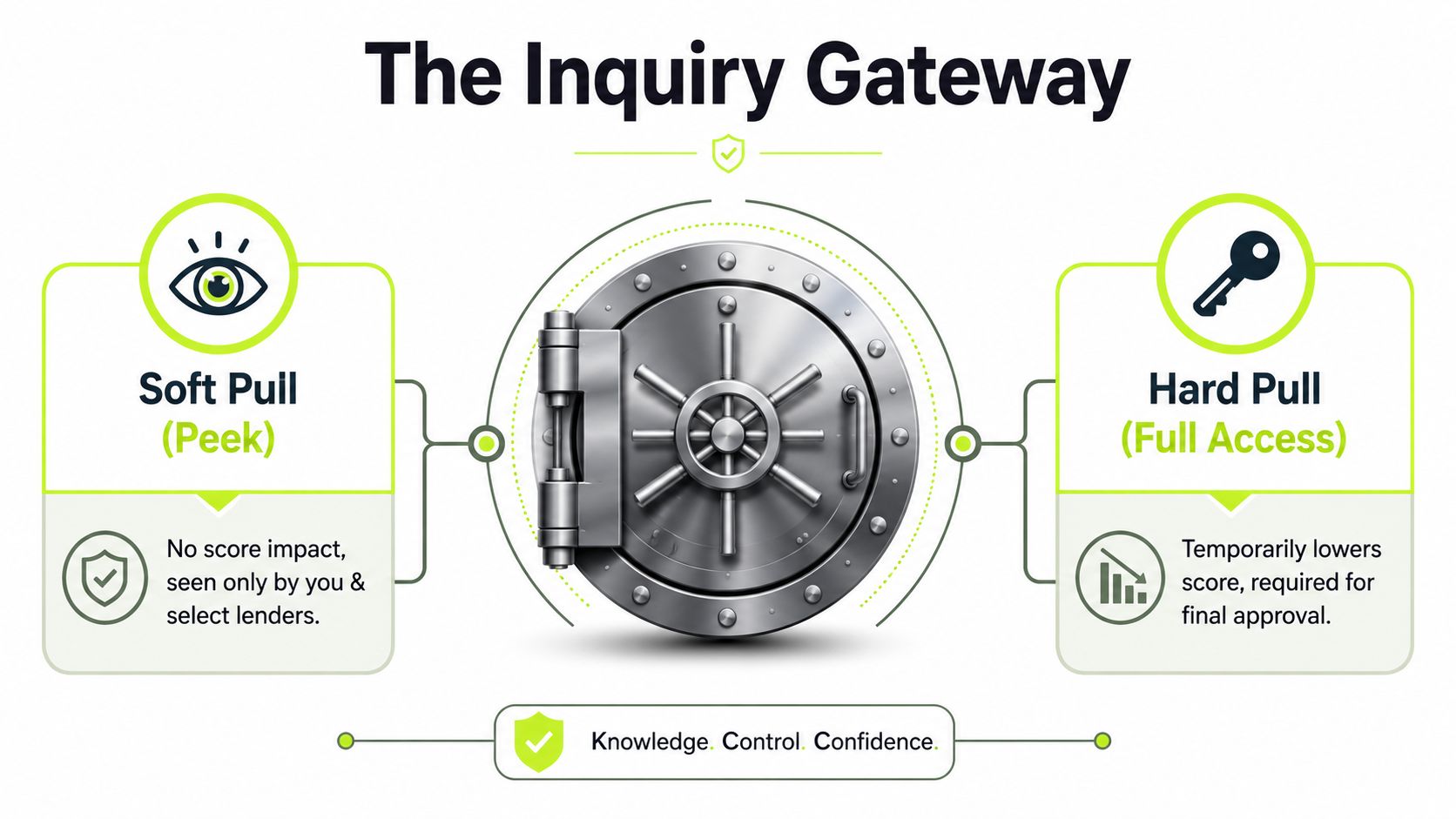
Soft Pulls Are Informational, Hard Pulls Are Decision-Linked
A soft inquiry is informational access. A hard inquiry is tied to a real application decision. That split is why the model treats them differently. Soft inquiries show up for self-monitoring, prescreening, employment screening, insurance screening, and other non-application reviews, and they do not affect scores (CFPB credit inquiry guidance).
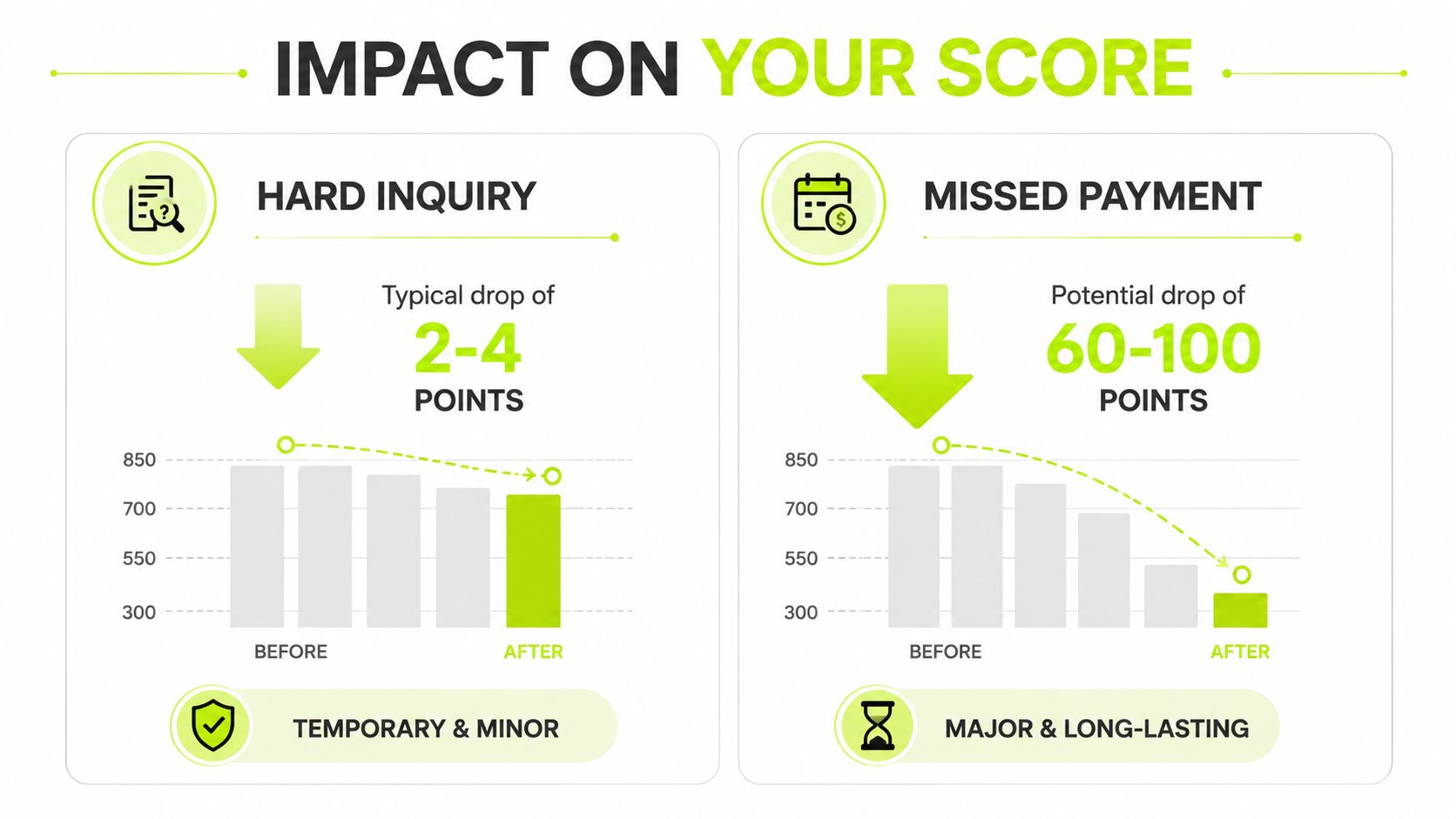
Hard inquiries matter because they usually mean a lender is evaluating new credit. That is a real risk signal, so the scoring model responds. FICO's explanation of credit inquiries says hard inquiries can have a small impact on a score, while a missed loan payment can do far more damage (credit bureau guidance from Experian).
A score model reacts to behavior, not curiosity.
That is the right operating model for credit work. If the file shows a consumer or business being screened, reviewed, or prequalified, that is informational. If the file shows a live application, that is a commitment signal. The model is built to care much more about the second one.
For a closer look at how inquiry data fits into broader decisioning, see credit underwriting. Inquiry type is only one input. It does not replace income analysis, aging review, payment history, or internal exposure checks.
What Finance Teams Should Remember
- Soft inquiry: informational, score-neutral, useful for screening.
- Hard inquiry: decision-linked, score-sensitive, used for final approval.
- The main signal: a consumer or business asking for new credit, not merely being reviewed.
Finance teams should use that distinction deliberately. Keep soft pulls early in the workflow, and save hard pulls for the point where the account is advancing toward credit approval.
Soft Versus Hard Inquiries Compared
The cleanest way to separate the two is by how they behave inside a credit workflow. Both are inquiries, but one is informational and the other is tied to a live credit request. That difference matters in underwriting, AR screening, and any approval process where you want to avoid adding friction too early.
Attribute | Soft Inquiry | Hard Inquiry |
|---|---|---|
Trigger | Self-checks, prequalification, employment or insurance screening, non-lending review | Formal application for new credit |
Score impact | Does not affect your credit score | Can lower a score |
Visibility | Visible on the consumer's report, but not shown to third parties who buy the report | Visible on the report and part of credit decisioning |
Report duration | Can remain visible for up to 2 years | Can remain visible for up to 2 years |
Typical use | Monitoring, prequalification, screening | Final lending application |
Decision role | Background signal | Approval signal |
The important part is simple. Visibility and score impact are not the same thing. A soft inquiry can still appear on the report, but it does not create score damage, which is why it works well for early screening and routine monitoring.
Why That Matters in Practice
Finance teams should sequence approvals with that difference in mind. Use a soft pull when you need to qualify a lead, confirm a profile, or assess a prospect before you spend underwriter time. Save the hard pull for the point where the customer is serious and the application is moving forward.
The report still keeps a record of the inquiry for up to 2 years, so the footprint can remain even when the score does not move. That matters in credit operations because the file still shows activity, and repeated hard pulls can make a customer look more credit-seeking than they really are. The FTC and Equifax both describe this distinction clearly.
For finance operators, the rule is straightforward. Soft first, hard later. That keeps the pipeline cleaner, preserves conversion, and avoids unnecessary hard inquiries in workflows where a soft check already gives you the information you need.
Where Soft Pulls Actually Show Up
Soft pulls appear in more places than many realize. The easiest ones to recognize are self-checks and prequalification. If someone looks at their own credit, that's a soft inquiry. If a lender checks a file for a pre-approved offer or prequalification step, that's usually soft too (Credit Karma).
The Everyday Scenarios
Employment and insurance screening are also classic soft-pull use cases. The CFPB is clear that those reviews will not affect credit scores, and they're not treated like new credit applications (CFPB).
In B2B credit, the pattern is similar, even if the language changes. A vendor may run a soft check during onboarding, trade setup, or limit review to decide how much exposure to allow before invoicing. That's especially common when a team is trying to improve cash flow without putting friction in front of a new customer.
Many AR platforms and underwriting tools do this without the customer noticing the mechanics, only the result, such as a longer setup flow, a smaller initial limit, or a request for more documentation.

Soft pulls are useful because they let you ask questions before you ask for commitment.
That's the right sequencing for accounts receivable automation. First, learn enough to decide whether an account deserves special handling. Then, if needed, move to a harder approval step. It's cleaner, faster, and easier to explain to the customer.
How to Read Your Own Report
If you're reviewing a report internally, the soft inquiry usually tells you the reason indirectly. Self-checks point to monitoring. Prequalification points to shopping or screening. Employer and insurance inquiries point to non-lending review. B2B review points to a seller or finance team deciding whether the account should get open credit terms.
Discover says multiple soft credit checks in a week will not change your score (Discover). That's useful context for teams that worry about repeated screening. The repetition itself isn't the issue. The issue is whether the team eventually converts that screening into an unnecessary hard pull.
Why Hard Inquiries Move the Score and Soft Ones Do Not
Hard inquiries move the score because they usually mark real borrowing activity. Soft pulls do not, because they are information checks, not credit-seeking events. That distinction matters in credit operations and in B2B receivables work, where the goal is to screen accounts without creating avoidable friction.
The Scoring Logic
A hard inquiry tells the scoring model that someone is actively seeking credit now. That is a live risk signal. A soft pull only shows that a file was reviewed for a permitted reason, such as monitoring, prequalification, or internal screening. The model does not treat that as new debt demand.
FICO's public explanation is straightforward, and the commercial meaning is even clearer. A hard inquiry can trim a score slightly, while a missed payment can hit far harder. That is the right hierarchy for any lender or AR team using credit risk assessment methods, because repayment behavior tells you more than a search for information ever will.
What That Means Operationally
If an account is only being reviewed, use a soft pull. If the customer is formally applying for credit, the hard inquiry belongs at that stage and not before. Soft pulls can be repeated without score impact, while hard pulls should be reserved for real applications and real decisions.
That is the part finance teams often get wrong. They either hard pull too early and create friction, or they avoid inquiry-based screening altogether and lose useful signal. The better approach is simple, soft pull first, hard pull only when the account has earned a real approval step.
For CFOs, controllers, and AR managers, the rule is practical. Use soft pulls to screen, sort, and prioritize. Use hard inquiries only when you are ready to underwrite, because that is the point where the customer should expect a stricter step.
What Soft Pulls Do Not Tell You
A soft pull is not invisible. It just isn't score-bearing.
Visibility Has Limits
Soft inquiries can appear on the consumer's report, but they are not shown to third parties who purchase the report, according to the CFPB (CFPB). That means they still matter for the person reviewing their own file, and they can still be useful internally.
What they do not tell you is whether an applicant will repay. A soft pull is a screening tool, not a promise. It can help you decide whether to continue, but it won't replace the key variables that move collections: payment history, cash position, invoice behavior, and internal exposure.
A soft pull is a filter, not a verdict.
That distinction matters in AR and credit operations. Teams sometimes overread the presence of a soft inquiry and assume it means the customer is shopping around or under stress. Usually, it just means someone looked.
Why This Matters for Finance Teams
Soft pulls can still shape how a lender or finance team sequences the next step. If the screening result looks borderline, the team may request more documentation before a hard application. If the result looks clean, they may move faster.
For B2B credit, that sequencing is where operators win. A soft pull helps you avoid unnecessary hard checks while still getting enough signal to size risk. It also gives your team a paper trail when you need to explain why a customer was placed on tighter terms.
The mistake is thinking “no score impact” means “no operational meaning.” That's wrong. The data point still exists, and it still informs process.
Best Practices for Finance and AR Teams
Use soft pulls early, and use them intentionally. That's the simplest rule.
Start With Soft, Escalate With Purpose
Run a soft pull when you need to qualify a prospect, set an initial limit, or decide whether a customer deserves manual review. If the account clears your internal thresholds and the customer is ready to proceed, you can move to a hard inquiry only when the final application requires it.
Communicate that sequence plainly. Customers usually accept credit checks when they understand why they're happening. They resist them when the process feels vague or excessive.

For teams building QuickBooks AR automation or broader AR software for professional services, the communication layer should be part of the workflow, not an afterthought. Tell the customer what kind of check is happening, why it's happening, and whether it can affect their score. That keeps the process clean.
Use Soft-Pull Data as an Input, Not a Crutch
Fold soft-pull results into your risk review, but don't let them overpower payment behavior or invoice aging. A soft inquiry is one signal. It is not the file.
The best finance teams use it to speed onboarding, keep audit trails clean, and avoid unnecessary hard inquiries. They also document when a customer was screened and why the account moved to the next stage. That helps with consistency and protects the team when questions come up later.
For a practical framework on selecting the right workflow tools, see credit risk assessment tools. The right stack should reduce manual work, not add mystery to the approval path.
The best outcome is boring in the best way. Faster onboarding. Fewer unnecessary hard inquiries. Better visibility into receivable risk. That's the standard worth enforcing.
If you want your AR process to be more disciplined, start by removing unnecessary friction from credit checks and tightening the handoff from screening to approval. Resolut automates AR for professional services, consistent, accurate, and human.