Top Payment Orchestration Platforms: A CFO's 2026 Guide
Top payment orchestration platforms compared for 2026: routing, vaulting, integrations, pricing signals, and where AR orchestration fits your finance stack.
For many CFOs, payment orchestration starts with a problem, not a strategy. A gateway rate hike lands in your inbox, a processor blips during invoicing week, or a client drops out of a payment flow that looked fine to engineering and awkward to everyone else. If you run a professional services firm, that pressure shows up in cash flow, DSO, and the time your team spends chasing money instead of running the business.
That is why this list matters. The top payment orchestration platforms are not just transaction routers across more gateways. They shape acceptance, redundancy, reconciliation, and the amount of manual work finance has to absorb after the invoice goes out. For firms living in QuickBooks, juggling retainers, milestone bills, and late payments, the question is whether the orchestration layer helps reduce DSO or just adds another dashboard.
The market is growing because buyers are treating orchestration as core infrastructure, not a side project. Mordor Intelligence estimates the market rises from USD 2.65 billion in 2025 to USD 7.27 billion by 2031, with an 18.31% CAGR over 2026 to 2031, and says cloud-based deployments accounted for 77.20% of the market in 2025, while large enterprises held 63.30% share (Mordor Intelligence). That points to where the finance pain is being solved first, and where the stack is maturing.
For broader context on the transaction stack, see the comparison of the best payment gateway for global e-commerce and the practical role of payment gateways for business.
1. Spreedly
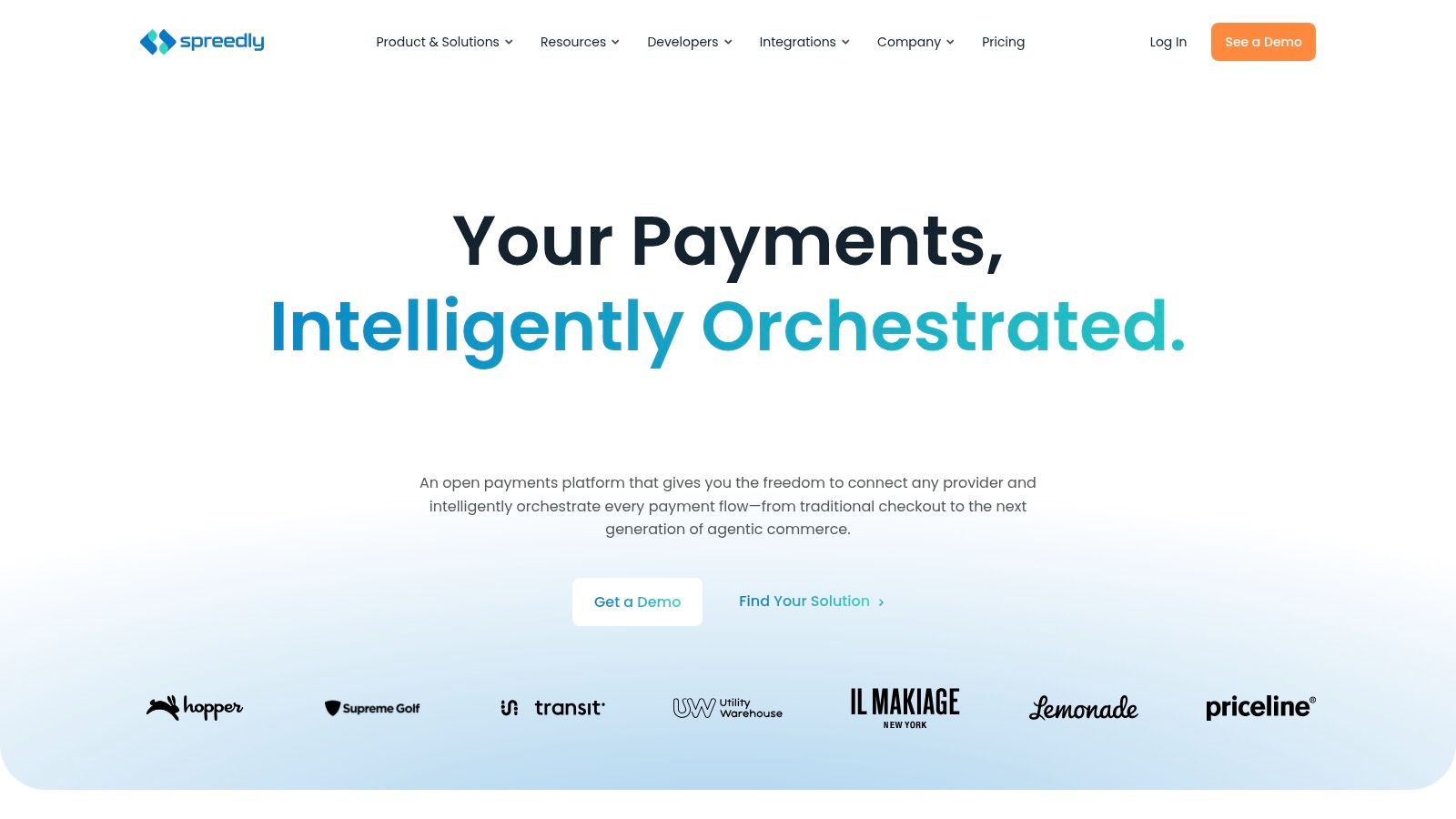
Spreedly is the cleanest answer when your main problem is provider freedom. It gives you a broad connectivity layer, a mature token vault, and the ability to move volume without getting trapped inside one processor's economics. For CFOs, that matters because vendor influence is real when you can shift traffic without rebuilding the whole payment stack.
The platform's website makes the positioning clear, and the product's long-standing reputation is reinforced in a 2026 industry roundup that notes Juspay processes over 300 million transactions daily across more than 150 countries with 99.999% uptime, while merchants using intelligent routing and retry logic commonly see 3% to 8% improvement in payment outcomes. Those scale and recovery figures are from the roundup, but they're useful as a benchmark for what enterprise orchestration can deliver when routing is done well (2026 industry roundup).
Where it fits in a finance-led stack
Spreedly works best when finance wants portability first, not a full operating layer. It centralizes vaulted tokens, supports wallets like Apple Pay and Google Pay, and gives teams routing and retry logic across providers and regions. That makes it a strong fit for firms that expect their payment mix to change and don't want a painful migration every time a PSP renegotiation happens.
The trade-off is cost and structure. Pricing is quote-based, and add-ons can stack up. If you're a mid-sized professional services firm looking for AR software for professional services rather than a pure payments abstraction layer, Spreedly may feel like more infrastructure than you need.
Practical rule: choose Spreedly when provider portability is the objective, not when you need finance automation around billing, reconciliation, and receivables.
- Strength: Very broad connector coverage and strong documentation.
- Strength: Token portability reduces PSP lock-in.
- Trade-off: Premium pricing can be hard to justify if your volume is modest.
- Trade-off: Extra vault and add-on costs can erode the headline economics.
For buyers comparing payment stack options, the internal overview of payment gateways for business is the right companion read because gateway choice and orchestration choice are not the same decision.
2. Gr4vy
Gr4vy is built for teams that want control without having to stand up all the plumbing themselves. Its single-tenant, infrastructure-as-a-service model gives regulated or security-sensitive buyers more isolation than a shared setup, which matters when your finance team is wary of handing sensitive payment data to another shared environment. If your approval chain includes legal, security, and a cautious controller, that design will land better than a purely lightweight SaaS pitch.
The practical appeal is speed plus control. Gr4vy offers orchestration and failover routing, tokenization, SDKs, dashboard rules, webhooks, and both no-code and API options. That gives ops and engineering a way to share ownership without forcing every adjustment through a developer ticket queue.
Why finance teams care
The finance case is simple. Better routing and cleaner provider failover can support steadier collections, fewer failed card attempts, and less manual exception handling when payments fail during a billing cycle. For a professional services firm running recurring retainers or installment billing, that means fewer stalled invoices and more predictable cash receipts.
The platform is newer than some incumbents, so diligence matters. References vary by vertical, and the pricing model won't map neatly to volume-only platforms. That's not a flaw, but it does mean CFOs should test total cost of ownership against actual operational relief, not against glossy connector counts.
Operational note: if your team can configure routing, retries, and vault behavior without engineering, you'll feel the benefit inside AR faster than you will in the payments inbox.
Gr4vy is a strong choice for companies that already have process discipline and want modern controls. It's less compelling if your real problem is collections friction, invoice follow-up, or bank-reconciliation drag, because it stops closer to the transaction layer than a full AR automation system would.
3. Primer
Primer is what happens when orchestration is treated like an operating system for payments instead of a routing engine. It bundles multi-PSP routing, fallback logic, 3DS, acceptance analytics, and reconciliation visibility into a single platform. For finance operators, that breadth matters because the pain usually isn't one failed authorization, it's the chain reaction that follows when teams can't explain it, fix it, or reconcile it cleanly.
The product is also one of the better fits for organizations that want non-technical teams to make changes. Primer's positioning as a unified payments infrastructure is a better fit for finance-led organizations than a bare routing layer, especially when treasury, operations, and billing all need a shared view of what happened.
What it solves that buyers usually underweight
Most lists overemphasize connector breadth and underweight the work that comes after a payment attempt. Primer's visibility and reporting are the point. If a controller wants to know why a client's card failed, what provider handled the retry, and whether the next attempt should use a different rail, that visibility reduces the back-and-forth that kills productivity in a small finance team.
The platform is enterprise-oriented, and the breadth means more to evaluate up front. That's fine if your firm has recurring billing complexity, mixed payment methods, and a real need to manage authorization performance. It's not fine if you want something light enough to bolt onto a simple checkout flow and move on.
The internal primer on what payment orchestration is is worth reading alongside this one because the category is broader than most vendor decks admit.
Finance takeaway: Primer is a strong fit when acceptance, reconciliation, and reporting need to live together, not in separate tools your team reconciles by hand.
If you're trying to improve cash flow without building another spreadsheet layer around payments, Primer is one of the most serious candidates on this list.
4. APEXX Global
APEXX Global speaks to a different buyer, the enterprise merchant that wants routing discipline and optimization services, not just connectivity. Its rules-based routing engine supports cascading, smart split, and A/B routing, and its focus on global acquirers and APMs makes it a good fit where payment performance is tied directly to margin. For finance teams, that's the sort of platform that can justify itself if routing control has a measurable impact on approval quality.
The platform's documentation around routing concepts and performance monitoring is a plus because it suggests operational maturity, not just connector marketing. Buyers in this category should expect collaboration cycles, because these tools are usually shaped around large-scale deployment and not self-serve experimentation.
Best use case
APEXX is most useful when the business already feels the cost of provider dependency. If one acquirer goes down or underperforms, a finance team can't afford to wait for a manual response while invoices age and customers drift into overdue status. The right orchestration layer should let you move traffic where it performs better, not where a sales deck says it should.
This is also a platform where the enterprise orientation cuts both ways. Smaller firms may find it heavier than they need, and the pricing model isn't public. That means a CFO has to evaluate implementation effort, support model, and actual routing improvement together.
- Good fit: large merchants with multiple acquirers and real routing complexity.
- Good fit: teams that need performance analytics as part of the payment workflow.
- Watch out: smaller finance teams may not want the implementation overhead.
- Watch out: public pricing isn't there, so build a proper TCO model.
APEXX belongs on a shortlist when payment reliability is a board-level concern and your team needs a platform that can carry enterprise process, not just transactions.
5. BR-DGE
BR-DGE is one of the better options for firms that care about independence. Its connector breadth, network tokenization, and real-time data layer make it attractive to teams that don't want to be locked into a single provider's economics or road map. That independence matters in payments because vendor influence shrinks once switching costs go down.
The product also stands out for its developer-friendly posture. The PCI-aware Web SDK and REST API make it easier for technical teams to integrate without turning orchestration into a long internal project. For a CFO, that means lower friction when the business wants to change routing behavior or add a new provider.
Where it earns its keep
BR-DGE is especially useful when your finance organization already knows that provider diversity is a risk-control decision, not a procurement preference. If one processor underperforms, or a wallet path becomes more important in a new market, orchestration should let you shift quickly. The platform's reporting and monitoring support that kind of operational discipline.
It also has a stronger European profile than many incumbents and is expanding its US and global footprint. That can be an advantage if your footprint is international and you need the platform to stay neutral across markets.
Strong connector counts matter less than whether your finance team can reweight traffic without waiting on engineering.
The drawback is visibility in the US market and a typical enterprise sales motion. That's not a problem if you buy like an operator, but it can slow down a small firm that wants a fast decision. For professional services businesses with international clients and multi-currency exposure, BR-DGE is a serious option if provider choice is a strategic concern.
6. Paydock
Paydock is the most bank-friendly option in this group. It serves merchants and financial institutions, and it's often white-labeled by banks, which tells you the platform is built for control, compliance, and partner distribution rather than flashy consumer checkout experiences. For CFOs in regulated environments, that posture can be a feature, not a drawback.
The platform's low-code, API-first design makes it workable for both technical teams and ops teams, while its configurable rules across gateways and fraud or identity tools give institutions room to align payment behavior with policy. If you're a finance leader trying to standardize payment handling across several business units or partner channels, that architecture is useful.
Why it matters for receivables
Paydock's real appeal for finance isn't routing alone. It's that the platform is comfortable sitting inside a broader payment operations model where banks, platforms, or partners need branded control. That can matter if your receivables flow includes multiple client experiences, different payment methods, and separate operational teams.
The trade-off is implementation time. White-label projects naturally take longer, and pricing is fully customized, so buyers should expect a detailed commercial process. That's not unusual for this category, but it does mean you need to know whether you're buying orchestration or a partner-facing payment product.

For a deeper look at the finance side after payments land, the internal guide on automated payment reconciliation is the right follow-on. That's where many orchestration projects either pay back or create more work.
Paydock makes sense when compliance, control, and brand consistency sit above pure optimization. It's less attractive if you just want a lean orchestration layer for direct merchant billing.
7. IXOPAY
IXOPAY is one of the most complete orchestration platforms on this list, and it shows. The feature set includes 3DS, DCC, risk checks, scheduling, BI, customer profiles, and a normalized API across multiple PSPs and APMs. For CFOs, that breadth is useful because it pulls several adjacent payment problems into one operating layer instead of making finance own a patchwork of point tools.
The platform is also serious about enterprise paperwork and legal readiness, which is often the difference between a smooth procurement process and a stalled one. If you've ever lost weeks to security review, MSA edits, and compliance back-and-forth, you know that matters as much as product demos do.
Where IXOPAY stands out
IXOPAY is particularly strong for businesses that want multi-tenant and white-label options. That puts it in play for PSPs, acquirers, and large merchants with complicated provider relationships. It's also a credible option for firms that need more than routing, because its reporting and data normalization are designed to support real finance operations.
The downside is that it's an enterprise implementation. That means solutioning, module selection, and commercial complexity. Buyers need to model total cost carefully because the wrong module mix can make the platform feel more expensive than the sales process suggested.
CFO lens: IXOPAY is a good choice when you need a platform that behaves like an operating layer, not a thin abstraction over gateways.
If your team already handles high-volume receivables or complex partner billing, IXOPAY has enough depth to be worth the evaluation. If your pain is mainly overdue invoices and collections workload, the platform may be stronger than your use case requires.
8. CellPoint Digital
CellPoint Digital is the specialist on this list. It was built for travel, and that specialization shows in the way it handles multi-currency flows, refunds, ancillaries, and split or tiered payments. For airlines, hospitality, and mobility businesses, that specificity is a real advantage because generic orchestration tools often miss the quirks that make travel payments painful.
Its advisory and optimization services also matter. Travel businesses don't just need a platform, they need someone who understands the payment patterns around bookings, cancellations, and add-ons. That's a different problem from a professional services firm managing retainers, but it's the right answer inside its niche.
What finance leaders should notice
CellPoint's data model is useful because it gives finance, commerce, and payments teams a shared view of the transaction lifecycle. That can shorten the time it takes to resolve exceptions and understand where money is getting stuck. For any CFO, the value is in faster decisions and fewer blind spots.
The limitation is obvious. If you're not in travel, this is usually too specialized. Pricing is not public, and enterprise onboarding is the norm. That means it should be shortlisted only when the payment journey itself is unusually complex and the vertical fit is strong.

For a professional services firm, CellPoint is a reference point, not a default pick. It's proof that orchestration gets more useful when it understands the business model, not just the payment method.
9. Akurateco
Akurateco is built with PSPs, acquirers, banks, and merchants in mind, and its white-label orientation is the main signal. The platform advertises extensive APM coverage, merchant management, reporting, settlements, and pricing per merchant, which makes it a strong institutional choice when the goal is to package payment capability under your own brand.
That makes Akurateco especially relevant if you're a platform business rather than a direct B2B services firm. If you need to offer orchestration to your own customers, or if your payment setup is part of a larger partner strategy, this kind of back-office depth matters more than a slick checkout demo.
Decision point for CFOs
The practical issue is fit. The website leans hard into provider and white-label use cases, so direct-merchant buyers should confirm that the platform is the right size for their needs. A CFO should ask whether the back-office tooling will reduce operational load, or whether the setup is more than a smaller finance team wants to inherit.
The breadth of payment methods is appealing, but localization depth varies by market and pricing is undisclosed. That means your evaluation should include implementation support, reporting quality, and how much control finance gets over settlements and merchant-level economics.
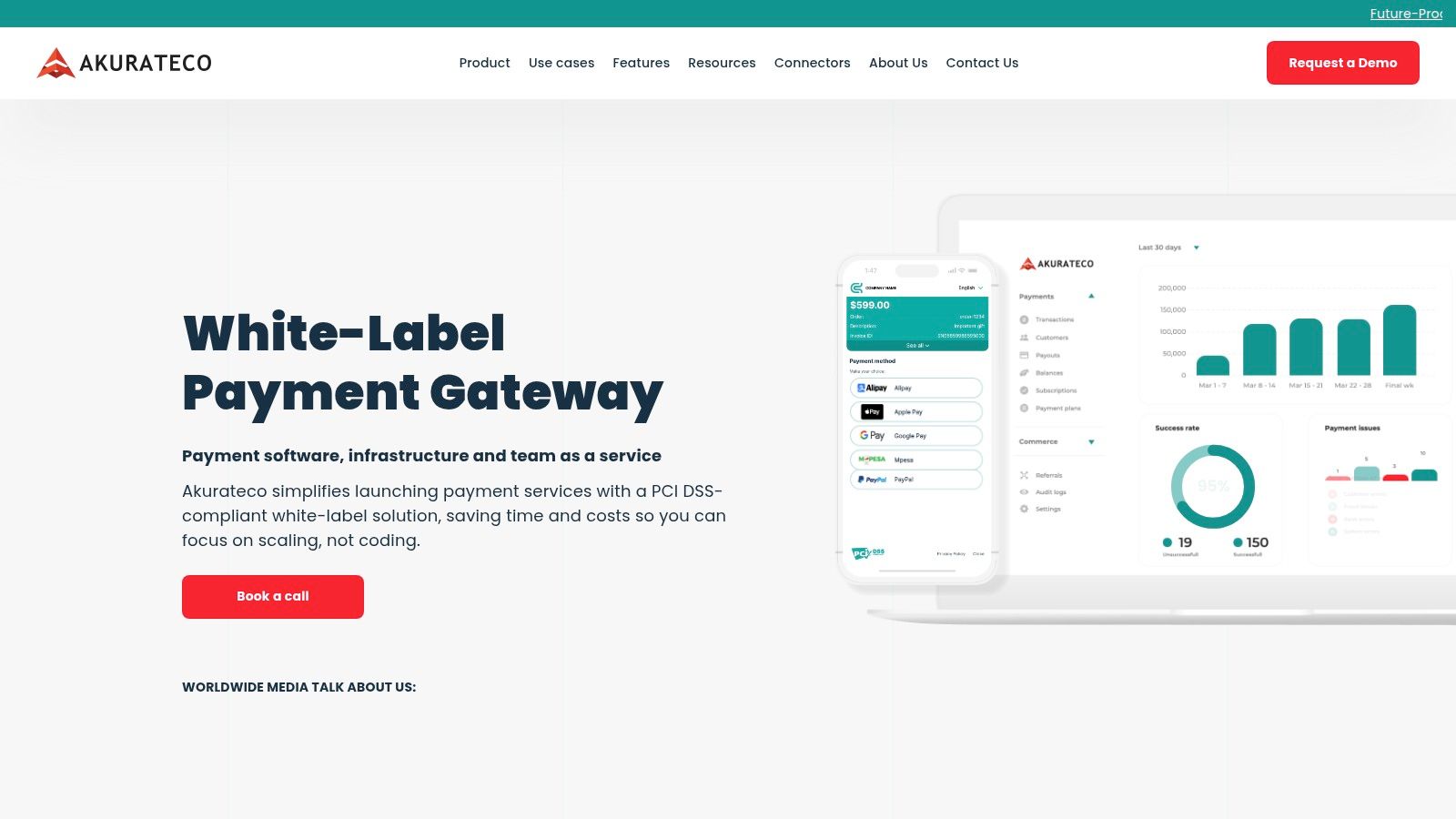
Akurateco belongs on the list when the business model is institutional, branded, and multi-merchant. It's less compelling for a mid-market professional services firm that just wants cleaner invoicing and fewer payment exceptions.
10. Payrails
Payrails is the most finance-forward platform in this group. It goes beyond orchestration into reconciliation, chargeback management, payouts, analytics, fee monitoring, and a token vault. For a CFO, that breadth is important because it shifts the conversation from “Can we route payments better?” to “Can we run the full payment lifecycle with less manual work?”
That matters in the professional services world. If your AR team is bouncing between invoicing, collections, payment matching, and exception handling, an orchestration platform that also covers those adjacent tasks can reduce the amount of swivel-chair work your staff carries every week. It also makes the business case easier to defend because the benefit shows up in both payment success and operating efficiency.
Why it stands apart
Payrails is modular, which is the right design for teams that want to implement in stages. You don't have to rebuild your whole stack at once, and that's often the only sane way to modernize finance operations inside a growing firm. Its 100+ integrations and modern architecture make it a credible choice for teams with enough complexity to need structure, but not enough appetite for a giant rip-and-replace project.
The vendor is newer, so connector coverage should be checked carefully against your actual corridors and workflows. Pricing is not public, which means the commercial conversation needs to be grounded in the work it removes, not the features it lists.
If your real pain is reconciliation and chargebacks, not just routing, Payrails deserves a hard look.
For finance-led teams trying to build AI AR automation into the broader payment stack, this is one of the few platforms that starts to feel adjacent to AR, not just checkout.
Top 10 Payment Orchestration Platforms Comparison
Vendor | Core features | Unique selling points | Target audience | UX/Quality ★ | Price/Value 💰 |
|---|---|---|---|---|---|
Spreedly | Token vaulting, connector library, routing & retries | ✨ Token portability & widest connector coverage 🏆 | 👥 Enterprises needing broad gateway/PSP support | ★★★★★ | 💰💰💰 (quote-based) |
Gr4vy | Orchestration, tokenization, SDKs, no-code tools | ✨ Single‑tenant IaaS for stronger data isolation | 👥 Regulated or security‑sensitive orgs | ★★★★ | 💰💰 (fit-dependent) |
Primer | Multi‑PSP routing, 3DS, reconciliation, analytics | ✨ Unified payments infra + reconciliation visibility | 👥 Finance/ops teams at enterprise scale | ★★★★ | 💰💰💰 (enterprise) |
APEXX Global | Rules-based routing, multi-currency, analytics | ✨ Routing optimization + advisory services | 👥 Global enterprises / large merchants | ★★★★ | 💰💰💰 (enterprise) |
BR-DGE | Smart routing, network tokens, PCI-aware SDK | ✨ Independent provider choice; strong EU pedigree | 👥 Merchants seeking vendor neutrality | ★★★★ | 💰💰 (enterprise sales) |
Paydock | Multi-acquirer routing, white‑label, fraud modes | ✨ Bank-grade white‑label + low-code/API-first | 👥 Banks, platforms, partners | ★★★ | 💰💰 (custom) |
IXOPAY | Normalized API, 3DS, DCC, BI, white‑label options | ✨ Feature-rich orchestration for PSPs & acquirers | 👥 PSPs, acquirers, large merchants | ★★★★ | 💰💰💰 (modular pricing) |
CellPoint Digital (OSO) | Routing, refunds, ancillaries, multi-currency | ✨ Travel‑native orchestration & deep industry fit 🏆 | 👥 Airlines, hospitality, mobility | ★★★★ | 💰💰💰 (vertical enterprise) |
| Akurateco | Orchestration, 700+ APMs, back‑office tooling | ✨ Rapid white‑label time‑to‑market for PSPs | 👥 PSPs, banks, marketplaces | ★★★ | 💰💰 (custom) | | Payrails | Orchestration, token vault, recon, chargeback ops | ✨ Full lifecycle ops + modular integration approach | 👥 Teams building modern payment stacks | ★★★★ | 💰💰 (enterprise sales)
From Comparison to Decision
A procurement team can approve a connector list and still miss the key outcome. A CFO has to care about what happens after the invoice goes out, after the reminder lands, and after the third failed payment attempt. In a professional services firm, the payment layer should improve cash flow, reduce DSO, and give clients a payment experience that does not send them back to your team for help.
Start with the operating problem, not the vendor category. If the issue is PSP lock-in, gateway redundancy, and routing control, a true orchestration platform like Spreedly, Primer, IXOPAY, or BR-DGE belongs on the shortlist. If the problem sits deeper in receivables, with collections, reminders, cash application, and reconciliation all consuming time, routing alone will not fix it. AR-driven orchestration fits better than another payments layer in that case.
That choice should be judged like a medical billing services comparison from medical billing services comparison, where the task is to match operational needs to platform capability. The point is not to buy the longest feature list. It is to choose the system that removes the most manual work from finance.
For CFOs at firms between $3M and $50M, the better decision is usually the one that cuts manual reconciliation, speeds up follow-up, and gives cleaner payment visibility. If your current stack leaves AR buried in spreadsheets, late notices, and payment exceptions, a pure orchestration layer may only solve part of the problem. A platform built for receivables, like Resolut, sits closer to that pain.
Use the shortlist with discipline. Check routing rules, settlement visibility, reconciliation effort, and how much support your team will need to stay out of the weeds. Then choose the tool that reduces operational drag, not the one that only adds another control panel to your day.
Resolut automates AR for professional services, so your team can collect faster without adding more manual chase work. It brings billing, outreach, cash application, and payment follow-up into one flow that fits the way finance teams operate. If you want a cleaner path to stronger cash flow and less AR noise, visit Resolut and see how it fits your stack.